
Made-in-Brazil Soy Sauce
Made-in-Brazil Soy Sauce The Birth and Potential of Japanese Brazilian Soy Sauce
From Molho de Soja to Shoyu
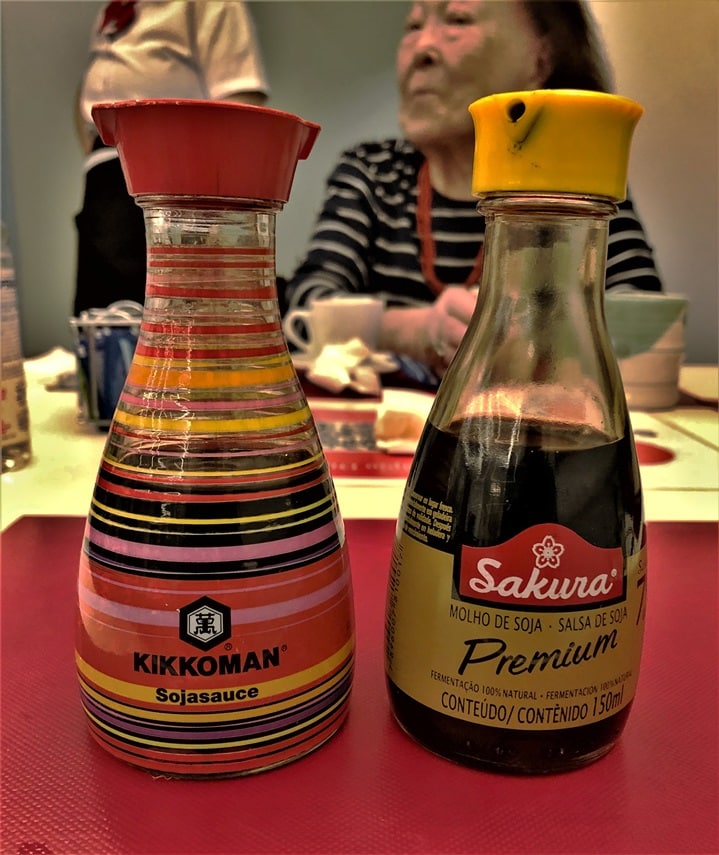
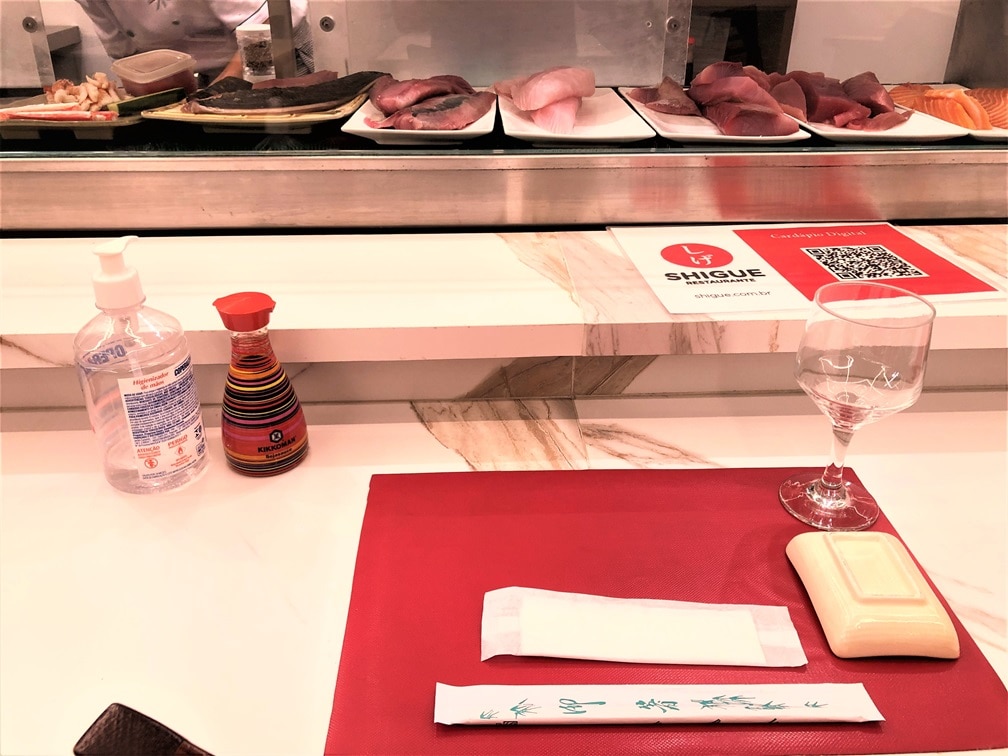
Brazil’s most widely known dish is churrasco, a Brazilianstyle barbecue. However, because of the Japanese food boom, Japanese restaurants are now said to outnumber churrasco restaurants in the country. As of 2022, there were an estimated 1,300 Japanese restaurants in Brazil.*1 Furthermore, even among churrasco restaurants, sushi and sashimi are commonly included on the menu. Customers will surely see soy sauce in these restaurants, as well. While soy sauce used to be called molho de soja, meaning “soy sauce” in Portuguese, it is now usually called shoyu (the Japanese word for soy sauce). If you look closely, you will notice that two different varieties of soy sauce are placed on the tables in some restaurants, while in other restaurants each corner has its own soy sauce. Why are two varieties on the table, or why does the variety differ by where the table is located? The deep relationship of soy sauce with Japanese immigrants is behind this phenomenon.
Immigrants and Soy Sauce
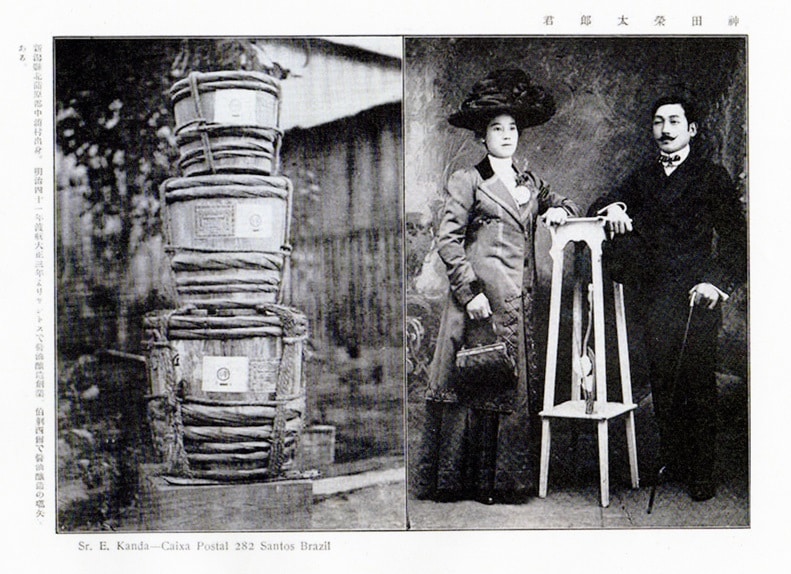
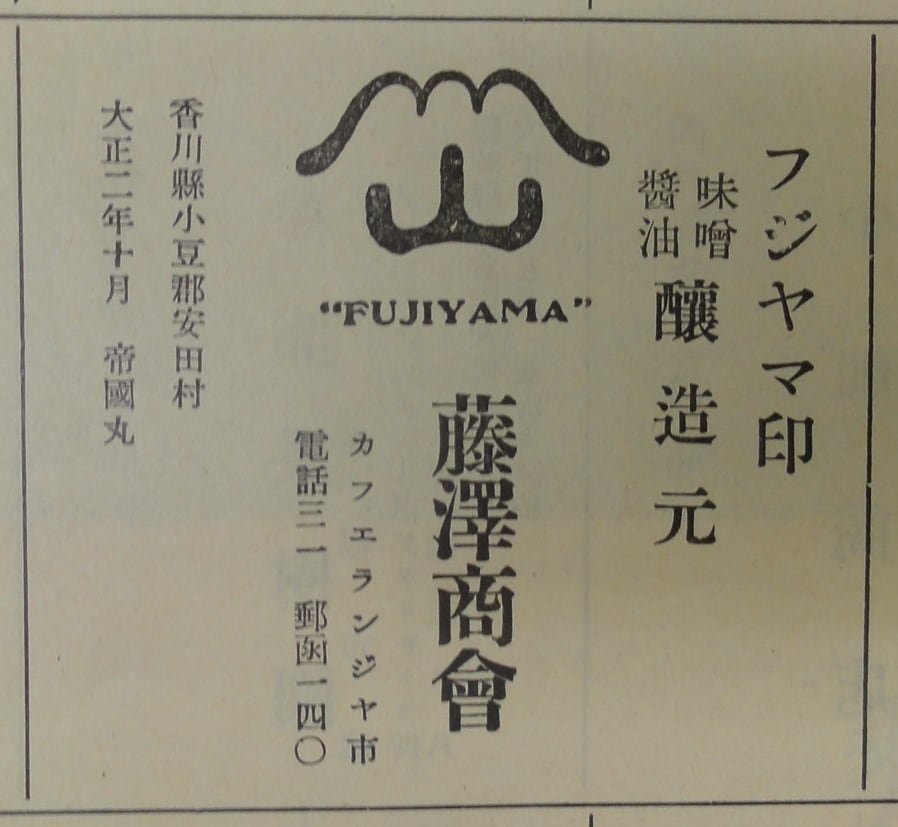
Over a century ago, an immigrant who arrived in Brazil onboard the Kasato Maru in the first wave of Japanese mass immigration in 1908 began producing soy sauce. His name was Eitaro Kanda, and he was from Nakaura Village, Kitakanbara District (present-day Shibata City) in Niigata Prefecture. He is said to be the pioneer who began commercial brewing in Santos City around 1914. Sadly, there is little information as to Kanda’s character and career, the background of production, or what his soy sauce was like. Other soy sauce company names, such as Fujisawa, Kuroshima, and Maruyama, are seen in printed advertisements, but there is no further information remaining on them, either. For Japanese who migrated overseas, food was a major issue. It is said that in Brazil they were relieved to learn that rice was available. According to Tomoo Handa, a basic diet consisting of miso (fermented soybean paste), soy sauce, and rice was common among the Japanese immigrants.*2。
The First Soy Sauce
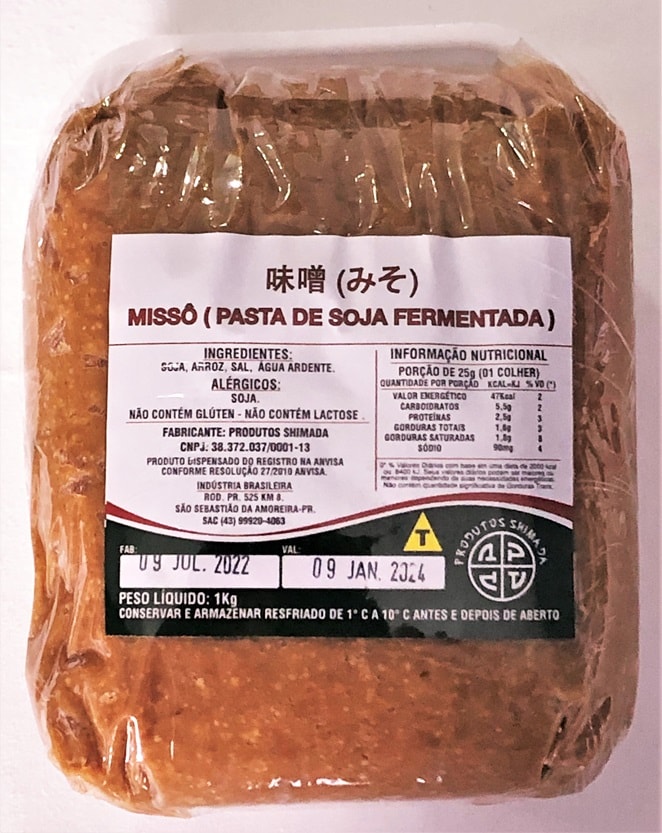
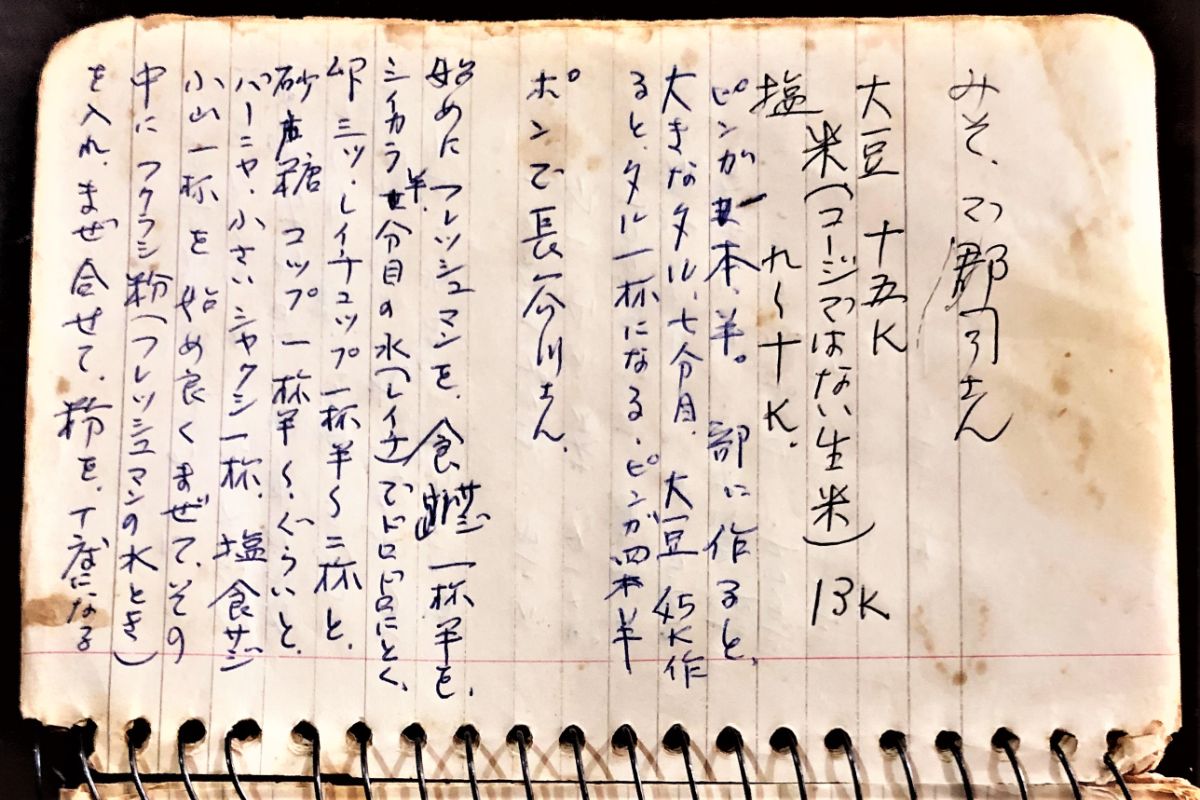
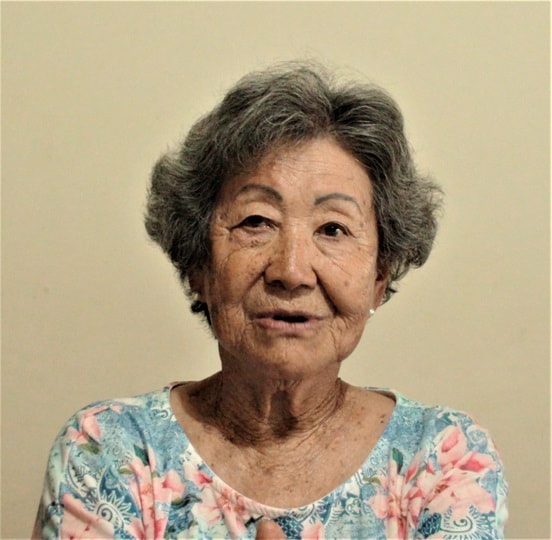
While the commercial production of soy sauce in Brazil began around 1914, how did the early immigrants manage to have soy sauce at home? Though the early immigrants are of course no longer alive to answer, local secondgeneration (Nisei) and third-generation (Sansei) Japanese Brazilians provided provided some answers. “I heard from my grandmother that in those days when soy sauce was not available, she caramelized sugar in a pot, dissolved it with hot water, and used it after adding salt as a substitute soy sauce,” said a Sansei in Londrina who owns a Japanese restaurant. “My mother said that in those days when soybeans were unavailable, she made what she called tomato soy sauce. I was small at that time, so I have no memory of what it was like,” said a Nisei food company owner in Presidente Prudente. A Japanese-language newspaper published in 1928 has a recipe for feijão soy sauce using feijão beans in place of soybeans.*3 As testified to by the many Japanese Brazilians interviewed, even today a considerable number of families make miso at home. Further, there are many who remember that their parents or grandparents made miso and soy sauce at home. It can be understood that it was quite a common practice. Various factors are behind these unusual approaches to making miso and soy sauce. Among other things, a major difference from Japan is the vastness of the land. Japanese immigrants who migrated to the inland farming area in particular found a living environment that was completely unlike that in Japan. It was common to be several kilometers to the next-door neighbor’s house and some 10 kilometers to the center of the town, with expanses of forests and fields lying in between. One Nisei farmer in Assaí in the state of Paraná*4 still lives today at a site 18 km from the center of the town. When his family initially moved in there, the place was in the middle of a virgin forest and he had to walk four kilometers each way to and from school. His commute took him through mountains with troops of monkeys who often terrified him and threw things at him. He also often heard them howling. Sometimes he simply could not make it to school, and instead just had lunch and killed time before returning home. While going to the center of the town for shopping today is just a brief drive by car, the same trip several decades ago was a day-long adventure on foot or horseback. In addition to these difficulties, there was only a limited selection of commodities that could be purchased in town in the first place, so it was normal for each family to supply themselves with most of what they needed. Each family had to manage everything on their own, from the ingredients to the recipe. Those who brought soybeans and koji mold with them made miso and collected tamari sauce from the miso. Those who did not bring these ingredients with them were allowed to share with those who had. It is not an exaggeration to say that this practice has continued to this day. Commercial brewing and distribution have since expanded and miso and soy sauce are readily available at supermarkets. Procurement has become a great deal easier. Yet, when word goes around locally that “so-and-so’s” miso is delicious, that miso is adopted as a local brand by a number of regular customers and buyers. The Shimada family’s miso is a typical example of this, and today is produced in batches of as much as 600 kg at a time. Although their product has recently been seen in the supermarket, the bulk of their clientele is the family’s acquaintances and friends. At present, a Sansei woman who succeeded her mother-in-law is running the business. Although her recipe is slightly different from the original, as she makes a point of continuous improvement, the handwritten note her mother-in-law initially used remains as a guide.
|
“To make miso, make koji mold with rice first. When the koji is ready, prepare soybeans. Rinse and soak them in water and boil them to an appropriate softness. If the beans are overcooked and become too soft, mashing will be difficult… I was told so, and often helped her mash beans… Then, the mashed beans, koji prepared earlier, and salt were mixed. She used to say the addition of sake makes it taste better. However, sake was not easily obtainable. She then told me to add a small amount of pinga (a Brazilian distilled spirit made from sugarcane juice) instead, so it would facilitate fermentation and make the miso delicious… To make soy sauce, soybeans were roasted and kept in stock. Then koji was prepared with rice. Prepared koji was mixed with roasted soybeans, and the mixture was placed in a wooden barrel and mixed with salt. She told me the quantity of salt, as well. Then, water was added and the mixture was stirred using a long rod every day.” |
A Nisei farmer in Assaí related, “My grandmother did not know how to make miso and learned from a previous immigrant who showed her how.”In addition to the above, a Sansei restaurant owner in Assaí remembered the family’s miso tasting good enough that it was spread around to relatives and acquaintances. To cope with this increased demand for miso, she said her grandmother was using a betoneira (concrete mixer) to blend the ingredients to make miso at home, as she provided 20 kg for each family. Even today, there are a number of people who make sweets such as karinto (Japanese traditional snack), as well as miso, at home and sell it to people around them. It is a cottage industry, and their workplace is not a factory but a spacious kitchen in their house. Their sales range is confined to a very limited local area and is a word-of-mouth business.
Present Status of Soy Sauce Made in Brazil
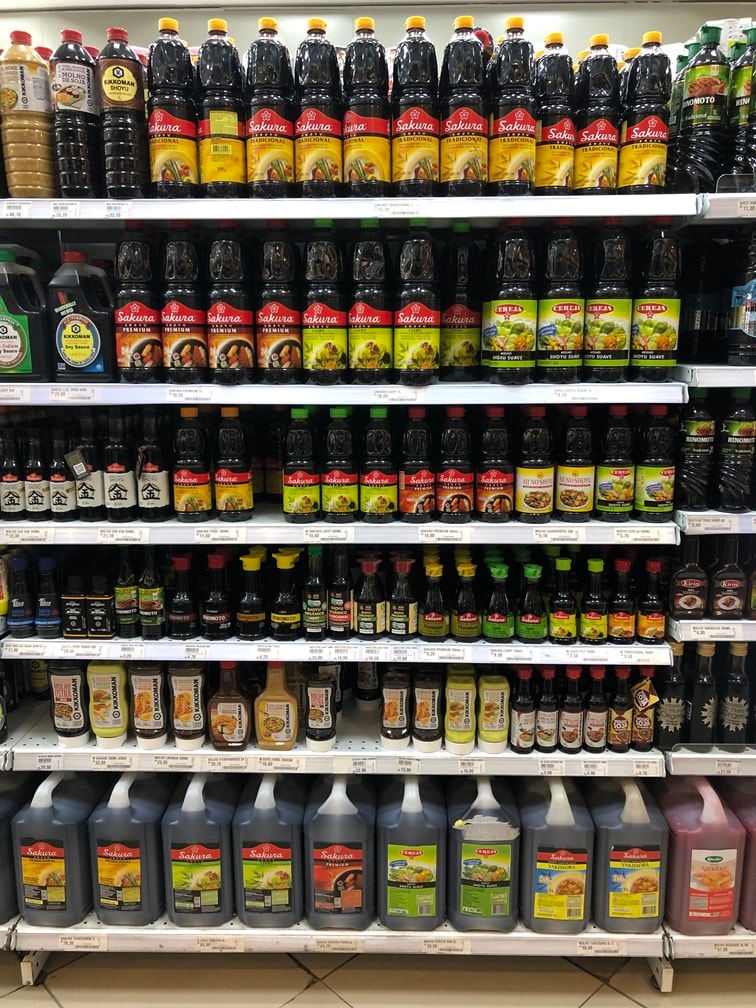
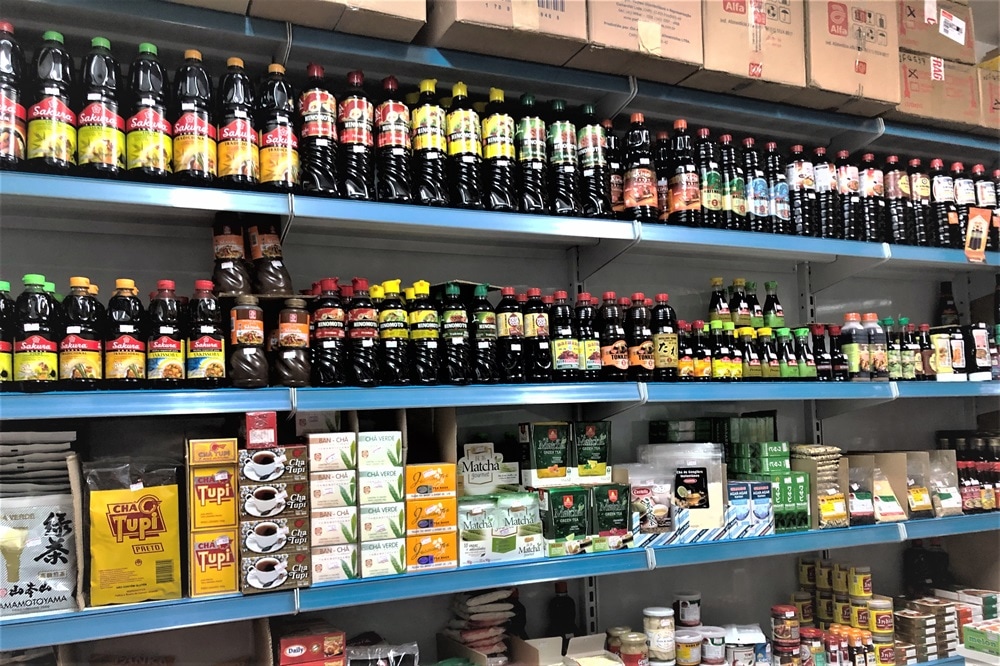
Today, at grocery stores run by Japanese Brazilians and rather large-scale supermarkets, the shelves are crammed with a wide variety of soy sauces from many different manufacturers in many different sizes. Most of them are made in Brazil, and their manufacturers are Japanese Brazilian soy sauce companies. Major brands include Sakura Shoyu, Hinomoto Shoyu, Maruiti Shoyu, Mitsuwa Shoyu and Tozan Shoyu. Kikkoman and Yamasa soy sauce have recently entered this market, as well. While the main consumers of soy sauce are Japanese Brazilians, considering the Japanese Brazilian population accounts for less than 1% of the entire population of Brazil,*5 there is no doubt that non-Japanese Brazilian buyers are increasing. In reply to my inquiry regarding consumer soy sauce preferences, a Sansei grocery store owner in Curitiba made an interesting observation. “I worked in Japan as a migrant worker, so I know soy sauce in Japan and know it tastes good. However, compared with soy sauce in Brazil, it certainly is salty.” When asked which soy sauce is most popular, he said, “There of course are some who come to buy a particular brand, while others ask for my recommendations for delicious soy sauce, and yet others ask for the cheapest one.” He also said, “If the customer doesn’t care about price, I sometimes recommend Kikkoman, but it is three times the price of other brands, which makes me reluctant to recommend it. For those who want the cheapest soy sauce, I just give them a low-priced one without saying anything.” A Japan External Trade Organization survey of June 2022 introduced 11 varieties of soy sauce sold in Brazil. The imported soy sauces can cost up to seven times more than the cheapest local brands. The cheapest brand made in Brazil was around 10 Real for a liter bottle, while the most expensive Japan-made soy sauce was over 70 Real for the same size. (The exchange rate at that time was one Real to 26.5 yen). I asked every Japanese Brazilian I encountered which soy sauce they used at home and got various responses. A few said they always bought the same brand of soy sauce, some said they bought whatever soy sauce was on sale, and others confessed that they were unable to discern any differences in taste. I got the impression that those who were particular about soy sauce and always bought the same specific brand were a small minority.
History of Japanese Brazilian Soy Sauce Companies
I had the opportunity in November 2022 to interview the presidents or representatives of five major Japanese Brazilian soy sauce manufacturers (Sakura Shoyu, Hinomoto Shoyu, Maruiti Shoyu, Mitsuwa Shoyu and Tozan Shoyu) and asked them the following six questions. Though MN Shoyu was unable to attend an interview before publication, they provided a written response to the questions. The purpose of my inquiry was to determine whether their soy sauces have inherited any traditions from Japanese soy sauce, and what characteristics their soy sauces exhibit.
- 1What led the company to start soy sauce production?
- 2Where was the founder from?
- 3What difficulties were encountered in the early days?
- 4What information is exchanged with experts in Japan?
- 5What are the differences between soy sauce in Japan and Brazil?
- 6What are the preferences of Brazilian consumers and have there been changes in their preferences?
The following are the responses.
What Led the Company to Start Soy Sauce Production?
Surprisingly, none of the founders of these companies started as experts in soy sauce production, nor had they any special knowledge of it. As stated above, most Japanese immigrants before WWII made miso and soy sauce at home. Those who did not know how managed to learn by watching others who did, as there was usually somebody around who knew how. They might have had no other choice than to learn. This practice was not peculiar to immigrant societies overseas. In prewar Japan as well, homemade soy sauce was quite common, and it was only after 1950 that commercial soy sauce became common nationwide.*6 These founders started soy sauce companies in Brazil to respond to the growing demand and business potential.
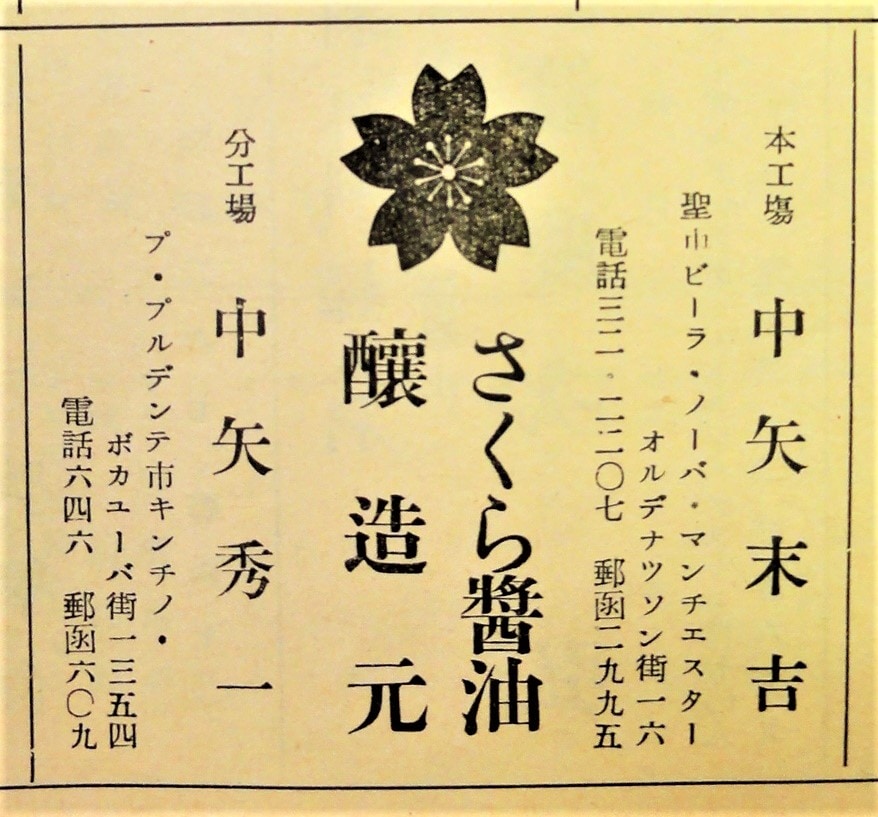
Suekichi Nakaya, the founder of Sakura Shoyu, hailed from Matsuyama, Ehime Prefecture. He emigrated to Brazil in 1932, where he started to work in a coffee plantation. He later moved to São Paulo City (in 1940), which, at that time, already had many Japanese residents.*7 He got a job in a store run by one such Japanese person. This was where he started to make miso and soy sauce, as the owner said that somebody in the store had to do it. At that time farming areas where a considerable number of Japanese immigrants lived were called colonies, and in colonies there always were a few residents who made miso and soy sauce.*8 Probably because of that environment, Suekichi would have learned naturally, said Renato Kenji Nakaya, who is Suekichi’s son and the current president. He is a Nisei born in 1944.
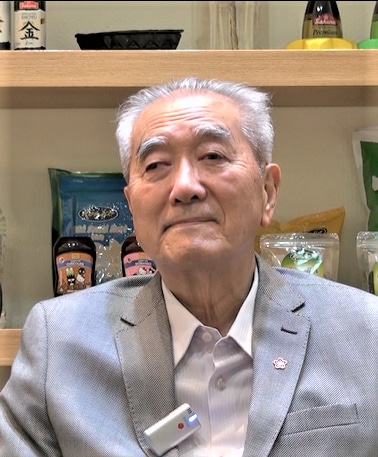
One of the Hinomoto Shoyu founders, Kenichi Fukuhara was from Orio Town, Onga District (presentday Yahatanishi Ward in Kitakyushu City), Fukuoka Prefecture. In 1913, at the age of 13, he emigrated to Brazil with his uncle and aunt, Masao and Tomo Fukuhara. However, both his uncle and aunt soon became ill and returned home, leaving Kenichi alone in Brazil. Luckily, Kenichi was entrepreneurial, so he went on to start a menthol processing factory. In 1948, he bought a beverage factory and established a company. In 1957 he started producing soy sauce. Kenichi’s son and the current president, Kazuo Fukuhara, a Nisei born in 1939, said, “He started soy sauce production, but not because he knew how to make it. As soy sauce and miso were mostly homemade at that time, most probably he would have started making soy sauce by learning from somebody around him.”
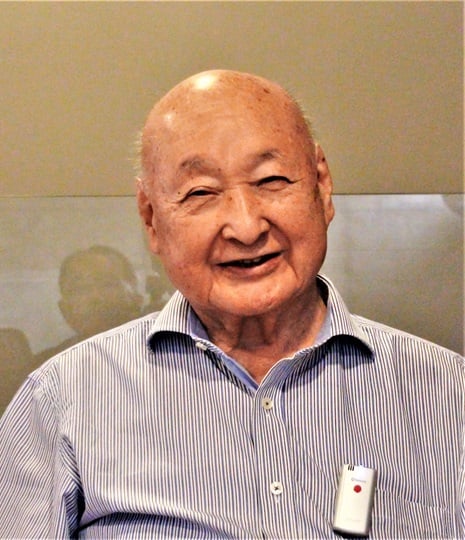
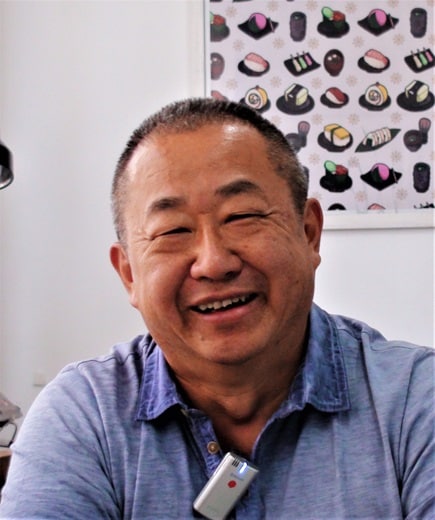
The founder of Maruiti Shoyu, Seiichi Ueda was from Takamishima Village (present-day Tadotsu Town), Nakatado District, Kagawa Prefecture, and emigrated to Brazil in 1926. His physical frailty made him unsuitable for farming, so he temporarily returned home to consider a different business. Thinking that just two soy sauce brewers would not be sufficient to supply 3,000 households along the Noroeste line,*9 he studied the soy sauce production method at a brewery in Shodoshima in Kagawa Prefecture and returned to Brazil. He founded Maruiti Shoyu at Guaiçara in 1930 and began to ship soy sauce to São Paulo City around 1953. He built a factory in Ipiranga District in São Paulo City in 1960 and promoted soy sauce under the brand name Hatenkoo. (Hatenkoo is known as a fairly sweet soy sauce.) According to the current president, Samuel Buyo, a Nisei born in 1961, the reason sweet soy sauce was popularized might be because many Japanese Brazilians were from the Kyushu region. Hatenkoo has a number of regular customers who love this brand and support the business, Buyo said. In the 1970s, some problems arose in the management of Maruiti Shoyu and the company was transferred to the Buyos in 1972. Samuel Buyo’s father, who had experience running a soy sauce brewery in Japan, and his maternal grandfather took over the business.
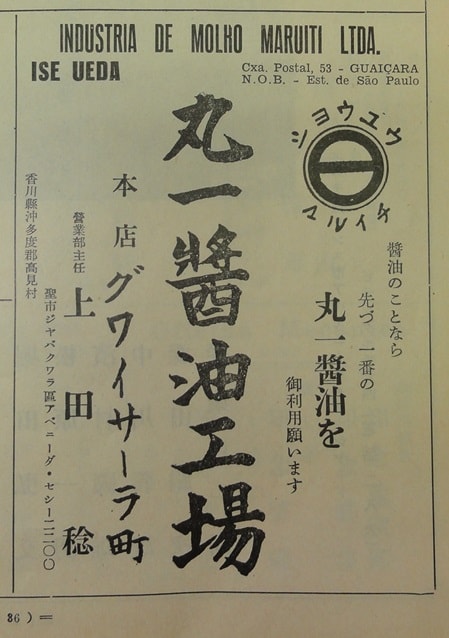
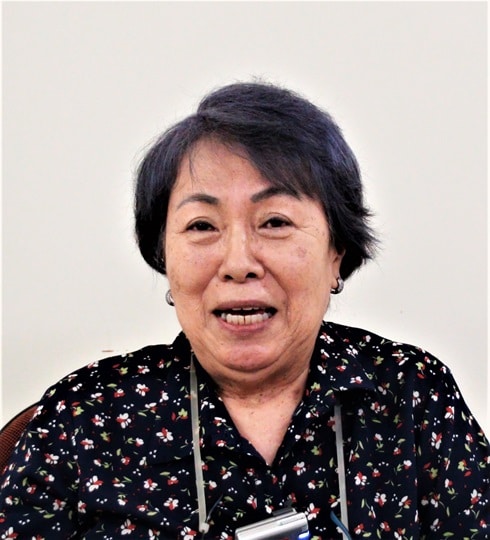
The founder of Mitsuwa Shoyu, Yuichi Oki came from Matto Town, Ishikawa District (present-day Hakusan City), Ishikawa Prefecture. He emigrated to Brazil in 1933 as part of a family of seven, including his eldest son,Motoichi. Before leaving Japan, Yuichi was running a sake brewery, and his reason for moving to Brazil seems to have been to produce rice vinegar. However, Yuichi died shortly after arrival. Thereafter, Motoichi bought a small beverage company and brought over his younger brother and brother-in-law to manage it. As it would have been difficult to maintain his company with alcoholic beverages alone, he began to produce pimento sauce using Brazilian peppers. Thereafter, around 1967, he began the production of soy sauce, for which he brought in a Japanese man who had experience in soy sauce production from São Paulo. This person trained him and his employees. However, there remains no record of who he was or how he worked. Indústria Agrícola Tozan Ltda., known for the Azuma Kirin brand of sake, became a subsidiary of Kirin Holdings Company, Ltd. in 2015 following an investment by Kirin Brewery Company, Ltd. in 1975, and then became a subsidiary of Kikkoman Corporation in 2020. According to Hideyuki Ozaki, the current president of Kikkoman do Brasil Indústria e Comércio de Alimentos e Bebidas Ltda., Tozan started producing and marketing sake in 1935, and started producing soy sauce in 1966. Ozaki said that a brewing engineer who graduated from Tokyo University of Agriculture named Mitsuru Sano joined the company and sparked the idea of launching a soy sauce production business along with several quality improvements of sake. Unfortunately, as Sano has passed away, there is no way to find what characteristics the then-Tozan Shoyu had. Since 2020, engineers from Kikkoman have come to the company to provide guidance, and the company produces both Tozan Shoyu (Azuma brand) and Kikkoman Soy Sauce.

Regarding MN Shoyu, MN Food was already known for propolis and organic products. They began producing organic miso and soy sauce initially for use in their ramen products, and later started selling organic soy sauce to consumers in 2020. MN Food started producing and selling organic soy sauce using organic soybeans to respond to the niche needs of the organic product market. The founder is Norihito Matsuda from Maebashi City, Gunma Prefecture.*10
Where Was the Founder From?
As stated above, the prefectures that the founders were from included Ehime, Fukuoka, Kagawa, Ishikawa, and Gunma. It is unlikely, though, that the soy sauces their companies produce have been influenced by the soy sauces of these prefectures. Except for Ueda, who founded Maruiti, none of these founders studied the production process in their prefectures before departing for Brazil. They got lessons in Brazil from people who were around them, and it is unknown where these people were from. Moreover, the possibility that new preferences in soy sauce would have been added in individual regions*11 is fully imaginable.
Buyo of Maruiti told an interesting story. As mentioned, Buyo’s family had been running a soy sauce brewery in Japan. Buyo brought soy sauce made in Brazil to his uncle in Japan, who said it was no good. He then decided to bring a Japanese engineer from Gorobei Soy Sauce Brewery (in Okayama at that time) to Brazil in 1972 to provide guidance for one year. The soy sauce he subsequently produced was a failure and was not accepted by the domestic market of Brazil. At this point, Buyo realized that soy sauce for the Japanese market was simply different from that for Brazil’s market. The soy sauce made to Japanese standards did not sell because it was salty and light-colored. The Buyos reinstated the original production process in Brazil and resumed business.
In descending order of prevalence Japanese emigrants to Brazil came from Kumamoto, Fukuoka, Okinawa, Hokkaido, and Hiroshima.*12 While the possibility of immigrants from these prefectures inf luencing the production of soy sauce in Brazil cannot be denied, there is no concrete evidence supporting it.
What Difficulties Were Encountered in the Early Days?
With the exception of MN Shoyu, which began to sell soy sauce in 2020, the difficulties faced in the early days of business were similar among the long-established soy sauce companies. All pointed out the use of corn in place of wheat, which was difficult to procure. They also commonly mentioned the difficulties of acquiring quality raw materials and quality control of the materials. In addition, with no distribution network in place, expanding sales outlets was also a challenge. According to the current president of Sakura Shoyu, Nakaya, the procurement of wheat was difficult early on, as it was an imported product. Salt and rice were also difficult to source. Salt came from northern Brazil at that time, and marine transportation was problematic. Rice is needed to prepare the koji mold essential to the production of soy sauce and miso. Although, under ordinary circumstances, rice grown in paddy fields is preferable, such rice was not available at that time. Instead, rice came from southern Brazil and Uruguay. In addition to the procurement of these raw materials, temperature and moisture control are important in koji mold preparation. This entailed demanding work, as at that time koji mold had to be stirred twice or more in the middle of the night. As a result, Nakaya’s company produced soy sauce by blending soybeans and corn with salt. However, even with soybeans and corn, the inconsistent quality of these materials and humidity were problems.
Hinomoto Shoyu’s Fukuhara noted that koji preparation was the biggest difficulty, as the entire process had to be done manually. To address this issue, Mitsuwa Shoyu, which has the shortest history among the longestablished soy sauce companies and had contact with relatives in Japan, always imported koji from Japan. The current chairperson, Elza Oki Hirota, a Nisei born in 1948, testified further that in the early days soybean and corn substitutes for wheat were used, while in later days wheat was used in addition to soybeans and corn. Buyo’s Maruiti uses corn to prepare koji even today. Kikkoman do Brasil’s Ozaki learned at Tozan Shoyu that control and stabilization of quality in a tropical climate and procurement of good raw materials had been difficult.
What Information Is Exchanged with Experts in Japan?
Regarding this point, although the timing may vary, all of these soy sauce companies worked with experts in Japan. Af ter major ing in chemical engineer ing in the management engineering department in university, Sakura Shoyu’s Nakaya went to Japan to study soy sauce and miso for half a year in the early 1970s and again in 1977 before taking over the family business. Thereafter, he went to Japan to study soy sauce production processes, sales methods, marketing, organization management, and other subjects every two years.*13 When he went to Japan for the first time, he got advice from acquaintances of his father, Suekichi, regarding soy sauce companies and equipment and machinery companies, as well as where he would be able to acquire further knowledge. Based on that information, he visited Kikkoman, Yamasa, and Higashimaru, as well as brewing machinery manufacturers such as Fujiwara and Nagata, and learned about the latest equipment, machinery, and know-how. Sakura Shoyu is said to account for a dominant 75% of the Brazilian soy sauce market.*14 This success can be attributed to his dedication and continuous accumulation of knowledge over many years.
Fukuhara of Hinomoto Shoyu went to Japan during the Tsukuba Expo in 1985 and acquired valuable knowledge at the Japan Soy Sauce Research Institute. With advice from the director of the institute, he received guidance about materials and equipment needed in soy sauce production. At that time, he brought some materials for koji back to Brazil, and his company has been importing them from Japan since then. Thereafter, the company received support from a Japanese university professor named Kawakami who visited Brazil every six months for one or two weeks to give further guidance. Following Prof. Kawakami’s advice, the company imported an automatic koji production machine from Japan, which enabled expanded production.
In the case of Mitsuwa, they have always imported koji from Japan, and Hirota remembers that her orientation to the business was provided by an expert from a university in Japan.
For Maruiti, as stated above, an expert from the Gorobei Soy Sauce Brewery, which was then in Okayama, came to Brazil in 1972 to offer consultation. Tozan, as stated above, brought in a brewing engineer who graduated from Tokyo University of Agriculture and was involved in soy sauce production. Those from MN had just one visit to one soy sauce brewery in Japan, with no particular knowledge acquired there.
What Are the Differences Between Soy Sauces in Japan and Brazil?
One difference between the soy sauce in Japan and that in Brazil pointed out by all interviewees was the difference in raw materials. However, interviews indicated that the materials are not the only difference. Specifically, the way soy sauce is used and consumed differs between the countries. Four interviewees explained as follows.
Nakaya of Sakura Shoyu explained, “There is a difference in the raw materials, as soybeans and wheat are used in Japan while soybeans and corn are used in Brazil. In Brazil, the use of corn makes soy sauce taste and smell very sugary. With soy sauce using wheat, a kind of piquancy is felt in the mouth. In terms of aroma, Brazilians prefer soy sauce made with corn to that made with wheat. When eating sashimi, Brazilians immerse each piece in a well of soy sauce and eat it whole with the strong soy-sauce flavor. On the other hand, Japanese drizzle a small amount of soy sauce on sashimi and eat it while savoring the flavor of sashimi.”
Fukuhara of Hinomoto Shoyu explained it like this. “The difference between soy sauce in Japan and Brazil is sabor (flavor). Soy sauce in Japan is salty and brightly colored. Many Brazilians think that the darker the color, the stronger the flavor. This is not true, though.” He then gave an example. “Some customers at a Chinese restaurant complained that the soy sauce was too salty. We investigated the soy sauce and determined the level of saltiness was normal. Further investigation revealed that the restaurant used soy sauce according to its appearance. The cook added as much soy sauce as needed to give the dish the desirable color. This resulted in the excessive use of soy sauce, making the dish salty. To address this, we decided to darken the color of soy sauce to be used in Chinese cuisine by adding caramel.” He gave another reason for Japanese soy sauce being saltier than its Brazilian counterpart: “When eating sashimi in Brazil, wasabi or ginger is used, and the fish is immersed in a pool of soy sauce, so the saltiness must be kept at a modest level. In Japan, fish is not soaked this way. This difference causes the Brazilians to feel soy sauce in Japan is salty.”
Mitsuwa’s Hirota also said, “I think the soy sauce of Japan is very salty. And while Japanese people just drizzle soy sauce on food or lightly dip their food in soy sauce, Brazilians use an abundance of soy sauce to create a dripping morsel that they can chuchar (suck) while eating. So, we must adjust the level of soy sauce saltiness to suit this eating style.” She pointed out, “In Japan, soy sauce is used in place of salt, but in Brazil, even after salt is used, soy sauce is also added.” She furthermore stated, “Brazil does not have any law that stipulates the standards for soy sauce. Therefore, soy sauce in Brazil includes non-brewed chemical soy sauce produced without natural fermentation, and even coconut “shoyu” in which coconut aminos are used. Some companies sell soy sauce that they buy from other companies and process… Today we also produce soy sauce with lemon, with ginger, and with pimenta (pimentos).” With a smile, she noted, “Those would be Coisa de brasileiro (Brazilian thing).”
“For a soy sauce brewery, this is good for business,” noted Buyo of Maruiti when talking about the way Brazilians consume soy sauce. “In Brazil, there is a way of using soy sauce that the Japanese would never consider. Sashimi is literally soaked in a generous amount of soy sauce. They put soy sauce on almost any dish, such as additional soy sauce on donburi (rice bowls with various toppings) at Sukiya restaurants, and even on rice... Or, they say that gyudon (rice topped with stewed beef and onion) is a little sweet, so adding soy sauce makes it taste better. I would like to tell them not to add soy sauce where it is unnecessary, but these habits may suit their palate.” He also said, “I think Brazil has firmly established the flavor of Brazilian soy sauce. Using a new type of brewing method, some makers produce sauces that resemble soy sauce by combining varieties of ingredients. Incidentally, our company is still producing by the morobuta (traditional koji production) method.” He added, “We should not impose our idea of what soy sauce is on others. With new types of soy sauce emerging on the market, consumers can make their choices according to their own tastes.”
It was understood through the interviews that the character istics of soy sauce made in Brazil are attributable to the use of corn as a substitute for wheat due to the difficulty of wheat procurement, and also to the difference in how soy sauce is used. However, it was obvious that Brazil’s soy sauces have quite different flavors individually. Where then do those differences come from? Do they come from differences in raw materials and their composition ratios or from differences in brewing facilities? I was told that the brewing period ranges roughly from six to eight months. MN Shoyu features the only organic soy sauce in Brazil that solely uses the organic raw materials of soybeans, wheat, and salt.
The ingredients as labeled on the products tell us the following:
1) Long-established Japanese Brazilian soy sauces, except MN Shoyu (which began sales in 2020) and Tozan Shoyu, use corn, caramel coloring, and monosodium glutamate. Many of them contain sugar as well.
2) While corn in soy sauce is a characteristic of Brazilian soy sauce, only MN Shoyu, Tozan Shoyu, and Kikkoman Soy Sauce do not use it.
3) Soy sauces that use wheat include Kikkoman Soy Sauce (imported), MN Shoyu, and Mitsuwa Shoyu. Mitsuwa uses soybeans, corn, and wheat in combination.
Some soy sauces use glucose syrup, as well. The labels clearly indicate the differences in ingredients between products.
Brochures and product lists from Japanese Brazilian soy sauce companies show that each company offers at least three types, with most having four or more types, in their lineup of soy sauce. Though the product names vary, frequently seen names include Premium, Tradicional (traditional), and Light (light or low-sodium). Other names include, Culinária Chinesa (Chinese cuisine), Com limão (with lemon), Com gengibre (with ginger), Com pimenta (with pepper), Usukuti (light-colored), Koikuti (common), Aji no Shoyu, Kin (gold), and Suave (sweet). As each of these soy sauce types are sold in containers of various sizes, each company has from 20 to 30 varieties of products.
What are the Preferences of Brazilian Consumers and Have There Been Changes in Their Preferences?
With regard to Brazilian preferences in taste, Nakaya stated, “What matters in their daily diet are aroma, sweetness, and color. We produce many types of products in response to consumer demand and requests from business clients.” His company produces around 30 varieties of soy sauce alone (including differences in ingredients and bottle sizes). Their products are also exported and the company engages in business with roughly 30 foreign countries. Fukuhara said, “In the old days, people needed salt as most of them were engaged in physical labor. So, our products were much saltier. However, we have gradually reduced the salt as the circumstances have changed over time. At present, there is a strict restriction on the use of salt.” He added, “Due to differences in dietary habits, Brazilians who are in Japan as migrant workers want Brazilian soy sauce there. So, we export soy sauce to Japan as well as to about ten other countries. As the consumption of soy sauce is expanding among Brazilians, soy sauce must be adapted to their dietary habits.” Hirota noted, “Some Brazilians complain when food is not colored deeply enough with the use of soy sauce. The traditional soy sauce of Japan may become more accepted, or Brazilian-style soy sauce with caramel may remain popular.” Buyo also said, “We have usukuchi (light-colored) soy sauce on the market today. However, 30 years ago, we were asked what this faintly colored liquid was. Some asked if it was brine. Back then, people could not tell the difference between Worcestershire sauce and soy sauce. Today, people are very careful about salt intake and tend to avoid it. As Japanese cuisine has spread to such an extent, everyone has their own sense of what Japanese food is. So, we cannot impose our views on them. Everyone has their own image of Japanese food and that reflects what they love to eat. A similar trend is seen for soy sauce.” He concluded, “We should not impose our ideas of what soy sauce is on people. With new types of soy sauce emerging on the market, consumers can make their own choices. Then, customers will develop their taste, and come to understand the differences.” He means by this that the diversification of preferences in taste will progress. According to MN’s Kashiwaba, MN entered the organic food market because consumers who want additive-free natural food are growing in number year on year. Certainly, the trend in favor of GMO-free and gluten-free foods is increasing.
When these statements are taken together, it becomes clear that differences in flavor due to differences in materials used certainly exist. However, preferences of Brazilian consumers arising from how they use soy sauce and the response of the soy sauce brewers to the demand arising from these preferences are also important factors. As pointed out by Nakaya and Buyo, Brazilian-style soy sauce is already considered a distinct product with an established niche that responds to consumer demand. Through repeated soy sauce studies in Japan over many years, Nakaya reached the conclusion that “Brazilians should have Brazilian soy sauce.”*15 His words are very illuminating, especially since his Sakura Shoyu accounts for 75% of the Brazilian soy sauce market and it has even been said in Brazil that Sakura is synonymous with shoyu. I have heard that many Brazilians do not know that “sakura” refers to cherry blossoms, the national flower of Japan, but know that it is a shoyu brand. Japanese people in Japan and Japanese Brazilians in Brazil are quite different. Japanese Brazilians in Brazil have their own distinct lives and are conscious of being Japanese Brazilians. It was convincing to me, realizing that the issue of diet seems to coincide with the issue of identity. As Japanese Brazilians who were born and raised on Brazilian soil are different from Japanese born in Japan, it should be natural for Japanese Brazilian soy sauce to be different from soy sauce in Japan.
Turning brief ly to soy sauces in Japan, those in the Kyushu and Hokuriku regions are considered to be sweet, and diverse soy sauces are produced in other regions as well. It has been reported that at high-end sushi restaurants in Kanazawa, two varieties of soy sauce are used, one for dipping and the other for cooking.*16 Kikkoman and Yamasa are not the only soy sauce brands in Japan by any means, and in each part of the country, unique soy sauce varieties have been created. So, it is not surprising that soy sauce made in Brazil also has developed many varieties. Aside from Chinese immigrants and their restaurants, Brazil has diverse other immigrant communities, including Portuguese, Italian, German, Spanish, Polish, and Ukrainian, and the dietary habits of each of their home countries have been brought over with them. For each cuisine, there should be a soy sauce that goes well with it.
Something to watch for in the future is how soy sauce of global standards introduced by Kikkoman and Yamasa, that is, soy sauce from Japan, will be accepted in Brazil. A little clarity is coming into our vision regarding this. Japanese restaurants place two varieties of soy sauce on the table, as described at the beginning of this article. This sends a message from the owners, who recognize the differences between them, to the customers to use whichever they prefer. Or, it could be a recommendation to use them differently, such as using made-in-Japan Kikkoman for sashimi and sushi and made-in-Brazil soy sauce for set meals. What will happen in the future is of course unknown. Will the practice of keeping two varieties of soy sauce on the table continue? Or, as with wine, will several varieties be offered from which customers can choose according to the dish? Or will all such practices fade?
Japanese Brazilian soy sauce was born of necessity among Japanese immigrants as a soy sauce that is essentially different from that in Japan due to the given environment and conditions. Yet, since non-Japanese Brazilians began to consume it as well, it has seen unique development and adapted to meet their preferences. In this country of multicultural symbiosis, it is likely that the path toward the coexistence of multiple flavors will widen. The author sincerely hopes that soy sauce will become an item like wine, and that individual varieties of soy sauce will survive and thrive.
- JETRO SÃO PAULO. (2022, March). Brazil deno Yushutsu Sokushin: Nihonshoku Fukyu no Torikumi . (in Japanese)
- Handa, T. (1970). Imin no Seikatsu no Rekishi . (p.91). Centro de Estudos Nipo-Brasileiros. (in Japanese)
- Mori, K. (2010). Brazil Nihon Imin: Nikkeijin no Shokuseikatsu to Nikkei Shokubunka no Rekishi. In Brazil Nihon Imin Hyakunen-shi Vol. 3: Seikatsu to Bunka Hen (1) ( pp.494–496). Fukyosha P ublishing I nc. (in Japanese)
- Assaí is a small town with a population of roughly 15,000, located in northern Paraná State. It is município (municipality) in Brazilian administrative divisions. Assaí was reclaimed by Japanese immigrants, and its name is said to have come from the Japanese word asahi , meaning rising sun (sol nascente i n Portuguese). Since “ h” i s d ropped in Portuguese, it is called Assaí.
- In 2022, Brazil had an estimated total population of 213,910,000, of which the Japanese Brazilian population was 1,878,000.
- Ehara , A . (2018). Commentary on the Survey into Regional Characteristics of Soy Sauce and Contributing Factors. Food Culture, 28. Kikkoman Institute for International Food Culture.
- A 1940 survey of “Metropolis Residents by Race” by the São Paulo State Bureau of Agriculture shows that there were 45,136 East-Asian race residents. Most of them are thought to be Japanese immigrants and their descendants.
- Among Japanese Brazilians in Brazil, the areas where family workers of coffee plantations lived and where self-employed farmers were concentrated were called “colonia” (colony).
- “Hatenkoo” ni Kometa Omoi: Shoyu no Uedake to Kachi Make. (2013, Sept. 11). Nikkei Shimbun . (in Japanese) Noroeste line was one of the railroad lines running across the area of coffee plantations where Japanese immigrants worked.
- Email response given by Joel Kashiwaba of MN Food.
- Ehara, loc. cit.
- Brazil Nikkeijin Jittai Chosa Iinkai. (1964). Brazil no Nihon Imin (p.232). (in Japanese)
- Kanno, H. (2015). Brazil Nikkeijin Keieisha 50-Nin no Sugao (A Verdadeira Face dos 50 Empresários Nipo-Brasileiros) ( p.22). T he Journal São Paulo Shimbun. Kanno, H. (2020, Sept. 29). Sakura Nakaya Shokuhin Sogyo 80-Shunen: Shoyu o Kokumin-teki Chomiryo ni. The Nikkei Shimbun . (in Japanese)
- Ibid.
- Ibid.
- Fukutome, N. (2018). Hokuriku Soy Sauce Brewing: From Edo to Showa. Food Culture, 28. Kikkoman Institute for International Food Culture.
| Acknowledgments In addition to the six individuals from Japanese Brazilian soy sauce companies introduced in this article, Tamiko Hosokawa of Centro de Estudos Nipo-Brasileiros, Inês Koguissi (the former deputy-mayor of Assaí), and Consul General Keiji Hamada of Japan in Curitiba assisted a great deal in this research. There were many others who also helped greatly. The contributions of all these people made this overview possible and I would like to thank them all with the deepest gratitude. |
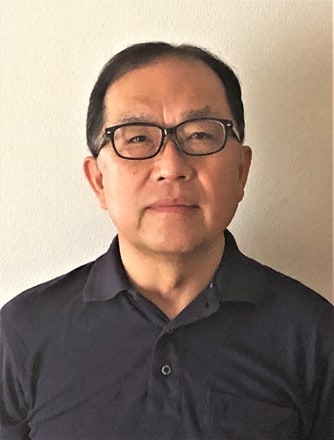
A research fellow at the Advanced Research Center for Human Sciences, Waseda University, Shigeru Kojima was born in Sanjo City, Niigata Prefecture. While a student at Sophia University, he went to study in Brazil and earned a Master's in Social History at the Graduate School, Federal University of Paraná. While traveling around Brazil by bus, he became a fervent admirer of the country and was inspired to engage in immigrant studies in Curitiba, the capital of the state of Paraná, where he lived for 10 years before returning to Japan. Among his positions in Japan, he worked at universities and helped establish the JICA Yokohama Japanese Overseas Migration Museum, where he currently works in the Project Management Division. His focus of research is the history of Japanese immigrants, the identity of the Nikkei, and changes in Nikkei communities in multicultural societies such as Brazil, the US and Canada. His main research themes include festivals, ethnic enclaves, foods, and translation.