
The Soy Sauce Situation in Hawaii
The Soy Sauce Situation in Hawaii ~The Origin and Present State of Japanese-Hawaiian Soy Sauce~
I am neither a professional researcher on Hawaii nor a food culture specialist, but I have been engaged in the study of immigrants. My focus of research is the process by which people transform from being simply Japanese to becoming Nikkeijin in the countries they have emigrated to.
The process of these changes is closely related to food culture. In fact, I feel that a parallel relationship exists between Japanese people becoming those of Japanese descent and Japanese food changing into food of Japanese descent. There are differences between Japanese people and Nikkeijin, and Japanese cuisine and food of Nikkeijin respectively.
When we talk about Japanese cuisine overseas, some dishes are prepared by Japanese chefs coming from Japan, and others are those passed down from the local Japanese immigrant ancestors. There are also Japanese dishes prepared by locals, regardless of racial or ethnic background.
With such a diversity of Japanese cuisine, I am delighted if I can convey the interesting aspects of it.
Process to Launch Research on Hawaii
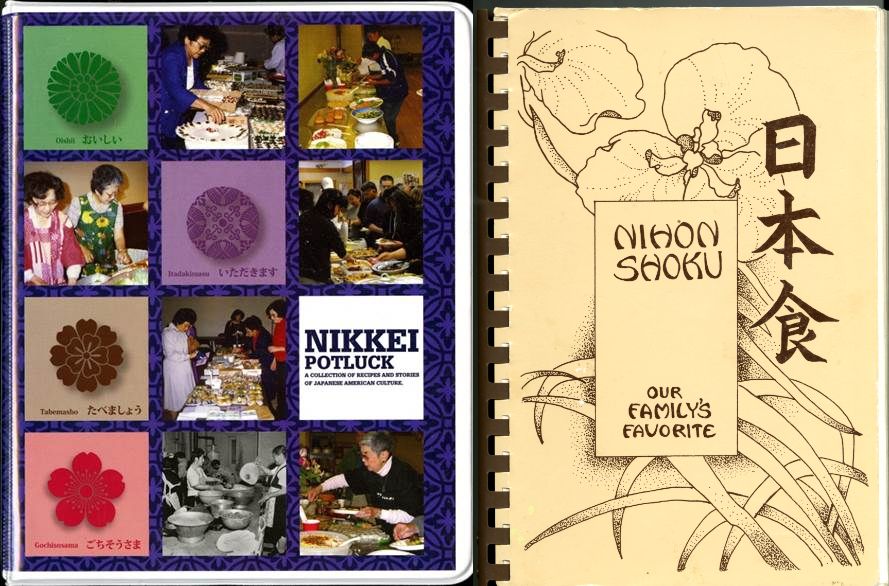
So far, I have given four lectures for the Food Culture Seminar. The first was The World of Yorozu-ya. Yorozuya refers to a general store where people of Japanese descent overseas import and sell Japanese foods and other merchandise (Photo 1). For the second lecture, Transitions of Japanese Cuisine, I talked about how Japanese immigrants prepared Japanese dishes when they lacked the usual ingredients or materials, and how the contents of their diet transformed across the generations. The third lecture was titled Recipe Books and Nikkeijin which was based on recipe books and cookbooks I acquired that had been published in the Nikkei communities in the Americas (Photo 2). In line with the themes of previous lectures, the fourth was titled Made-in-Brazil Soy Sauce: The Birth and Potential of Japanese-Brazilian Soy Sauce. At least six to ten soy sauce companies of Japanese descent appear to remain in business in Brazil. I carried out research to record their history.
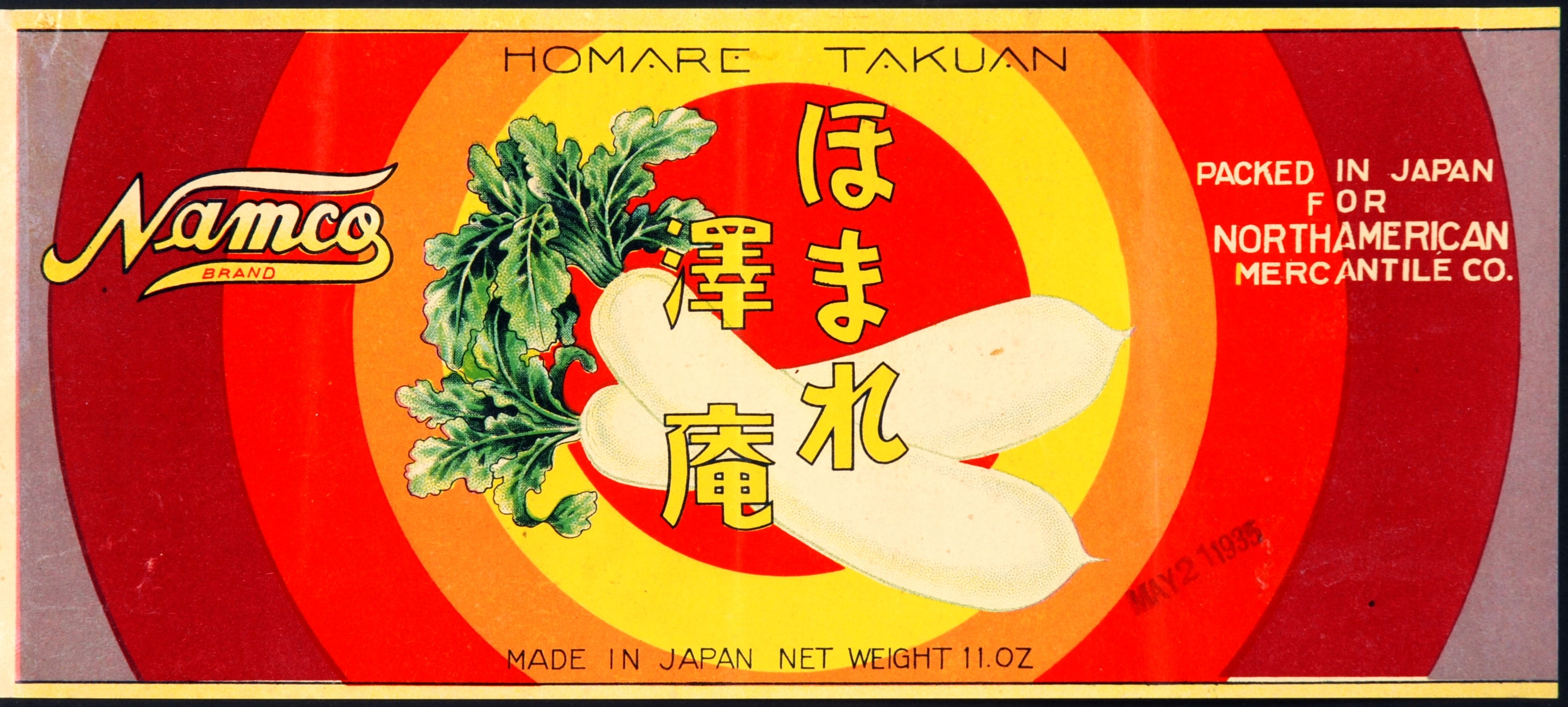
A label from a can sold at a Yorozu-ya in North America A variety of foods have been canned and imported for over 100 years.
Reverse Imported Soy Sauce
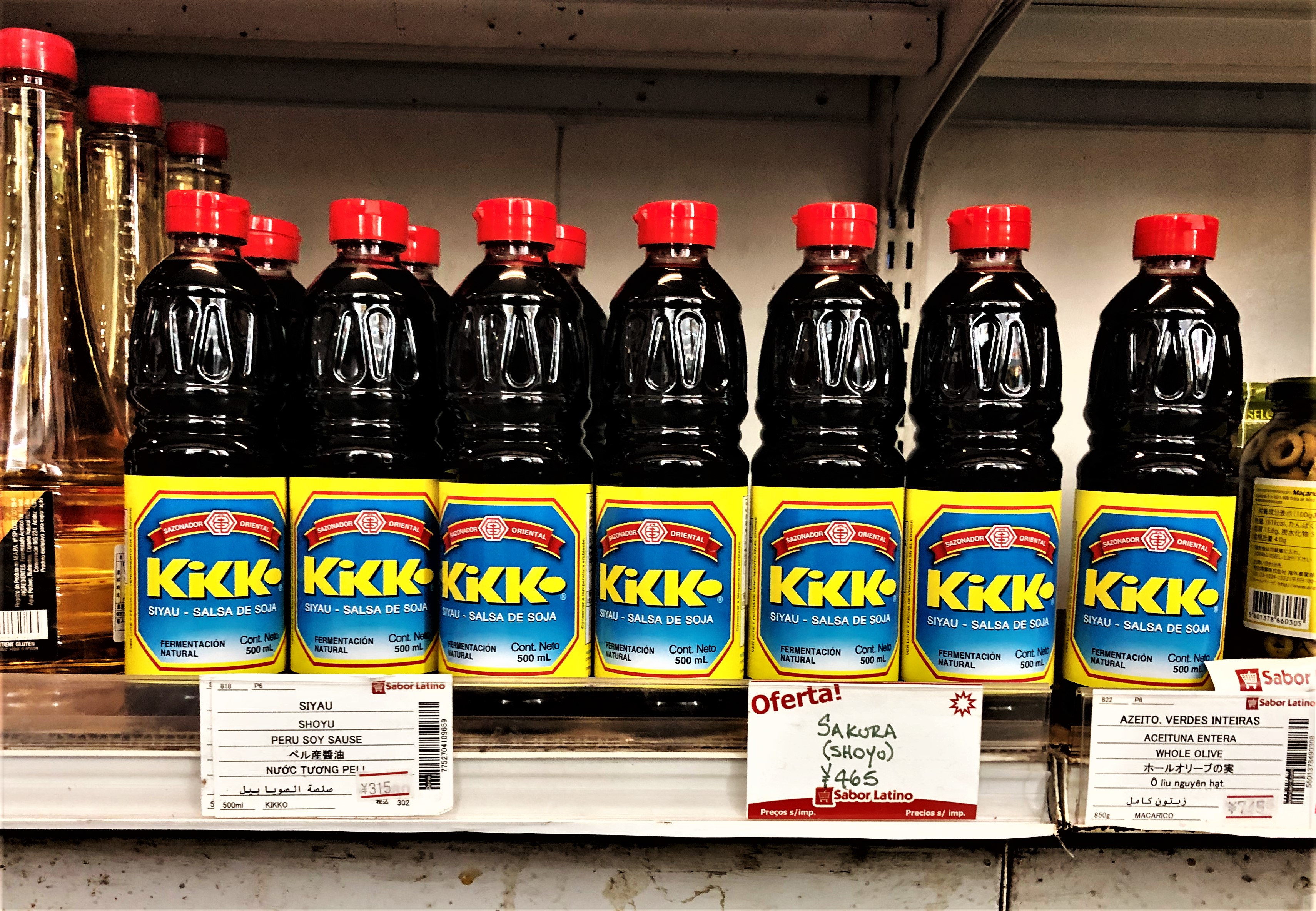
A great many Latin Americans, including Japanese Brazilians, are now in Japan working as dekasegi or migrant workers. They did not necessarily come for financial reasons. Many have come for study or intercultural experiences, and many have settled in as permanent residents. Some of these Japanese Brazilians say they still prefer the soy sauce they were familiar with at home to that sold in Japan, although they use the latter because they live in Japan. This is understandable, since a dietary lifestyle is something people get used to. The same thing can be said about Peruvians. Soy sauce made by Nikkeijin in Peru is sent to Japan and sold to Peruvians living in Japan (Photo 3).
As explained above, I have been carrying out research with the intent of revealing history. In line with this, I turned my attention to Hawaii, one of the earliest destinations of Japanese emigrants. My research is not yet finalized, but I would like to relay the interim results regarding Nikkei soy sauce in Hawaii. First, let us briefly review JapaneseBrazilian soy sauce in Brazil.
Japanese-Brazilian Soy Sauce in Brazil
Going over what I wrote about Japanese-Brazilian soy sauce in Brazil in my previous report, an interesting aspect came to light when compared to the case of Hawaii. There are six major Japanese-Brazilian soy sauce companies in Brazil, namely Sakura Shoyu, Hinomoto Shoyu, Maruiti Shoyu, Mitsuwa Shoyu, Tozan Shoyu, and MN Shoyu. For all these companies, the founder’s name, where the founder was from, the year when the founder emigrated to Brazil, and the year of foundation are identified in Table 1. Interviews with the secondgeneration (Nisei) owners revealed that they used corn instead of wheat, which was difficult to procure, and that, with no distribution network in place, expanding sales outlets was also a challenge. The second-generation owners are those who are now active in Brazil, and they actually saw, heard, and remembered what the firstgeneration (Issei) people did and the hardships they went through. Following these research experiences in Brazil, I thought I could similarly uncover the history of JapaneseHawaiian soy sauce in Hawaii. However, the situation was more difficult than anticipated.
| Manufacturer | Founder | Founder’s hometown | Year founder moved to Brazil | Year of foundation | Manufacturing knowledge, etc. |
|---|---|---|---|---|---|
| Sakura Shoyu | Suekichi Nakaya | Matsuyama City, Ehime Prefecture | 1932 | 1949 | Learned from others. |
| Hinomoto Shoyu | Kenichi Fukuhara | Orio Town, Onga District (present-day Yahatanishi Ward, Kitakyushu City), Fukuoka Prefecture | 1913 | 1957 | Learned from others. |
| Maruiti Shoyu | Seiichi Ueda | Takamijima Village, Nakatado District (present-day Tadotsu Town), Kagawa Prefecture | 1926 | 1930 | After learning brewing techniques in Shodoshima Island, Kagawa Prefecture, he returned to Brazil. |
| Mitsuwa Shoyu | Yuichi Oki | Matto Town, Ishikawa District (presentday Hakusan City), Ishikawa Prefecture | 1933 | 1967 | Invited a Japanese person who was experienced in soy sauce brewing. |
| Indústria Agrícola Tozan Ltda. | Mitsuru Sano | Graduated from Tokyo University of Agriculture. | After the war | 1966 | Brewing engineer |
| MN Shoyu | Norihito Matsuda | Maebashi City, Gunma Prefecture | 1960 | 2020 | Production and sale of organic soy sauce |
Research on Japanese-Hawaiian Soy Sauce in Hawaii at Supermarkets
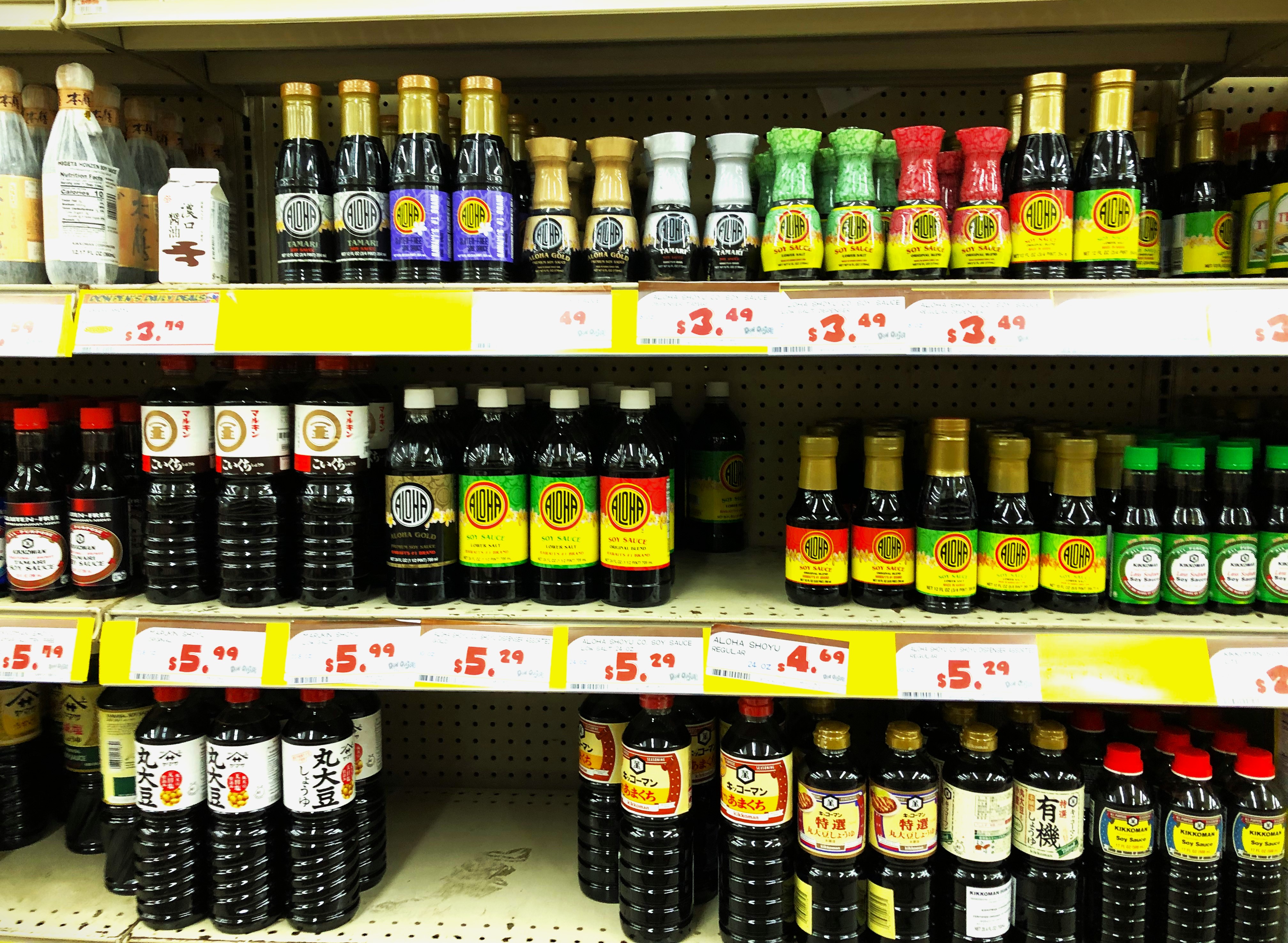
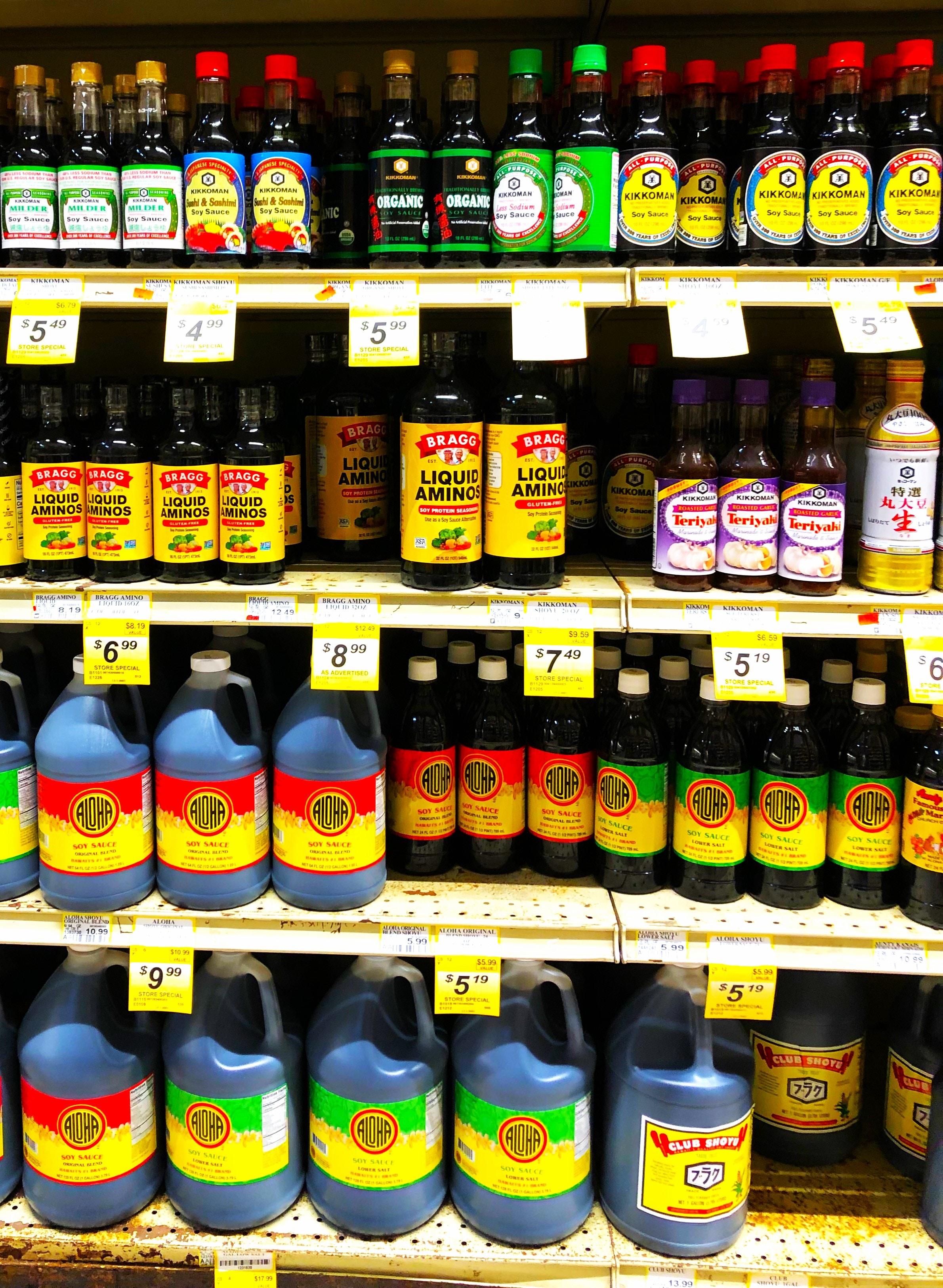
First, I looked to see what kinds of merchandise are sold at supermarkets and grocery stores in Hawaii. At Walmart outlets in Honolulu on Oahu Island, Kikkoman and other soy sauces from Japan were sold, but Aloha Shoyu was overwhelmingly dominant. It is packaged in a variety of sizes, ranging from small packets for takeout to large bottles of 1.89 liters (Photos 4–6). At the more upscale stores of Foodland (similar in grade to Japan’s Kinokuniya), in addition to Aloha Shoyu, Kikkoman, Yamasa, Fundokin, Marukin, and Higeta soy sauces were being sold (Photo 7), and all are imported. The KTA supermarket, whose headquarters are in Hilo, Hawaii Island, sells many bottles of Club Shoyu and Aloha Shoyu, and carries large bottles (Photo 8). Club Shoyu could not be found in Honolulu, but was sold only in Hawaii Island, indicative that the soy sauces offered differ by location in Hawaii.
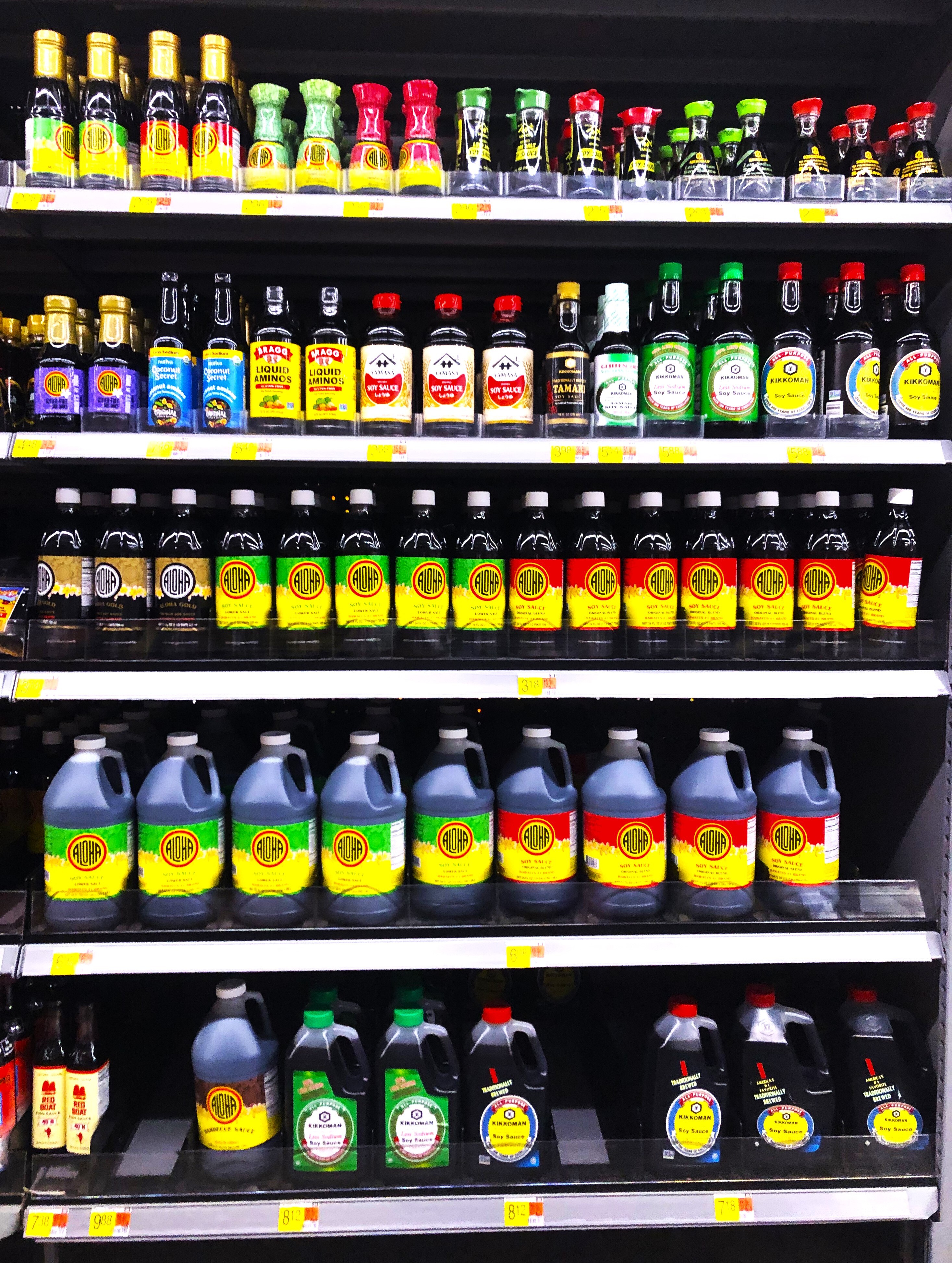
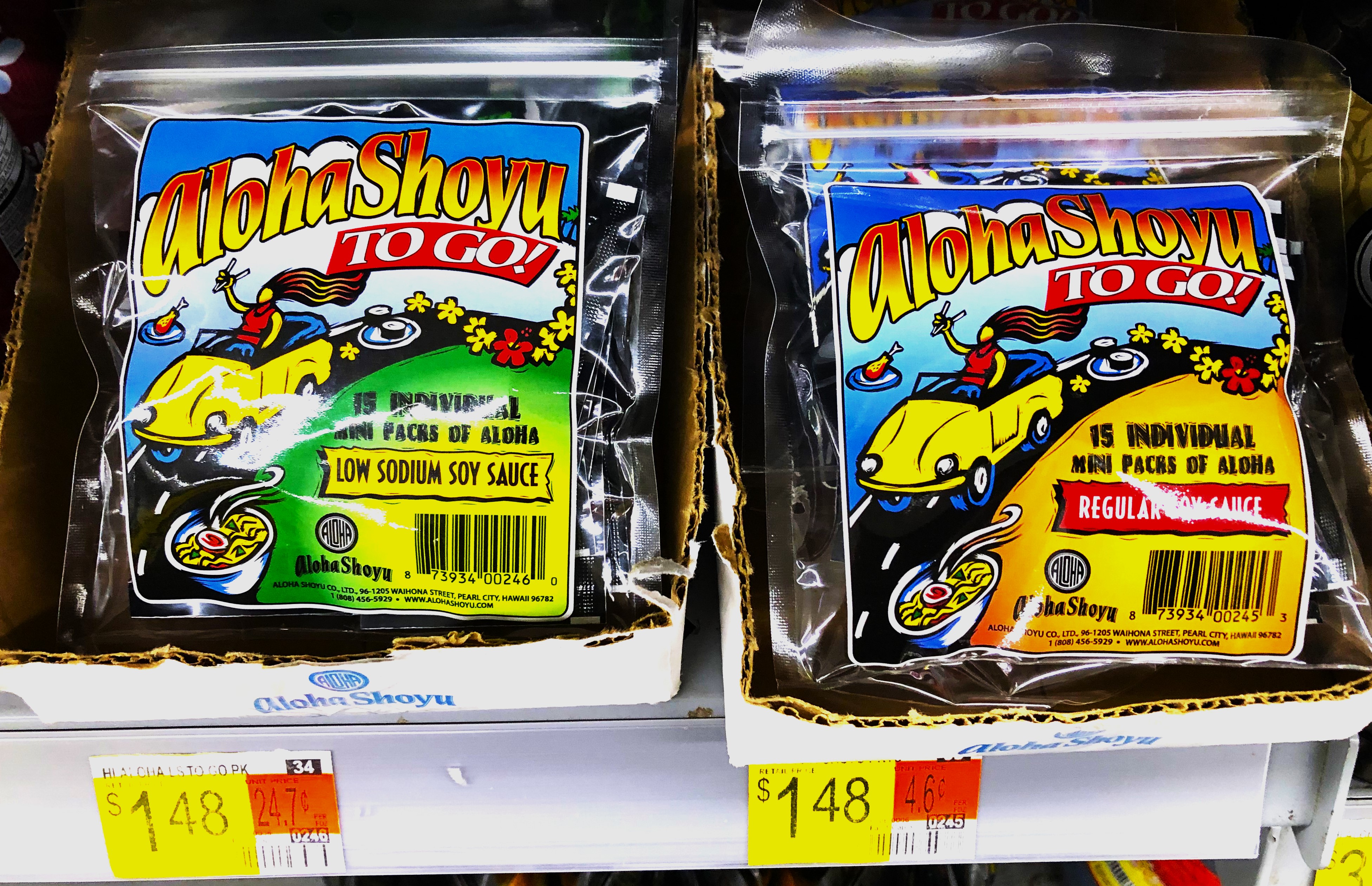 Photo 5 Small packets for takeout
0.20 fl oz = 5.915 ml
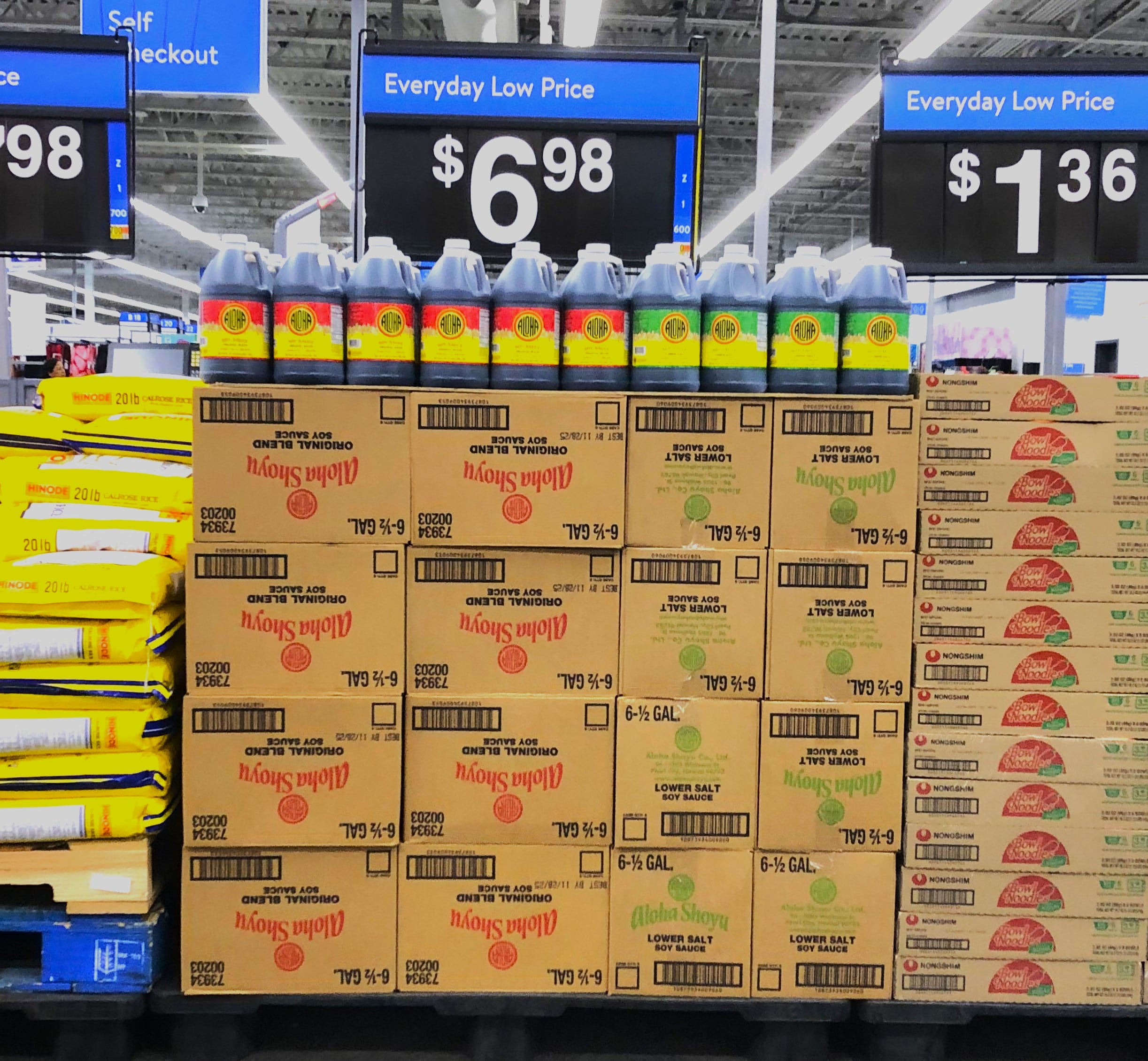
1/2 gallon = 1.89 liters
History of Soy Sauce Imports from Japan
To determine when soy sauce was first imported from Japan, I used the search function of the digitalized Japanese-language newspaper collection (Hoji Shinbun Digital Collection, Hoover Institution Library & Archives at Stanford University), and confirmed some documents. The Hawaii Mainichi and the NIPPU JIJI (renamed Hawaii Times on Nov. 2, 1942) had articles that described the number of imported soy sauce barrels between 1910 and 1934 (Table 2). Of these years, 1925 showed the greatest number, with 91,000 barrels imported. However, the quantity dropped significantly in the following year. The reason for this is unknown, but one cause could be the 1924 ban on Japanese immigrants.
Table 2 Records of soy sauce imports into Hawaii
1910 74,170barrels 1911 70,948barrels
1912 65,063barrels 1913 71,612barrels
1914 77,488barrels 1915 85,807barrels
1916 90,959barrels 1917 86,557barrels
1918 64,535barrels 1919 61,722barrels
1920 60,592barrels 1921 76,711barrels
1922 74,655barrels 1923 57,315barrels
Source: Hawaii Mainichi, Nov. 28, 1924
1924 83,785barrels JPY501,790
1925 91,433barrels JPY566,634 ※1,481,215L
1926 13,892barrels JPY445,872
1933 90,602barrels JPY412,304 ※1,467,752L
1934 86,042barrels 385,645L
Source: Hawaiian Japanese Annual & Directory 1934
*Each barrel contained 16.2 liters, or 9 sho 74,170 barrels = 1,202,554 liters (1910)
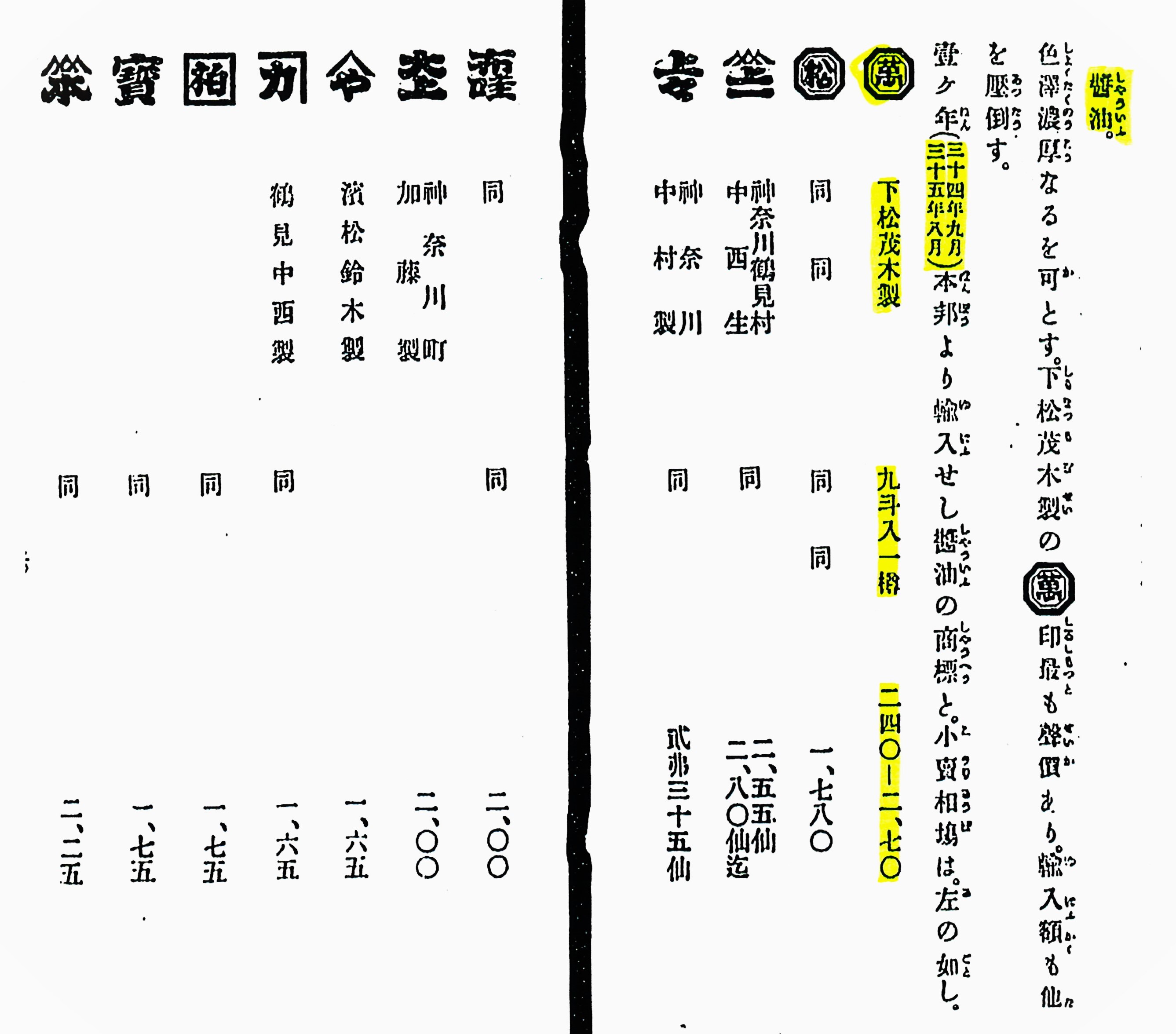
September 1901 to August 1902, 9 sho (16.2 liters) sold at US$2.40 to 2.70 Source: Hawaii Today, Akira Mitsunaga, 1904
The Hawaiian Japanese Annual & Directory of 1934 states that over 90,000 barrels, roughly 1,460,000 liters of soy sauce, were imported, and that the cost when exported from Japan was JPY412,304. When converted to 2022 commodity prices, it would equal JPY372,310,000. When this figure is calculated based on the Japanese population of 139,631 in Hawaii in 1930, each Japanese resident spent the equivalent of JPY2,666 in 2022 prices. With a 35% tariff included, that figure would be JPY3,599, roughly JPY300 per person per month. Hawaii Today published an article on soy sauce in 1904 (Photo 9) that says, ‘The one made by Mogi with the Kikkoman-trademark has a rich luster and color and is best reputed. The import figures are by far the largest. The soy sauce brands and retail prices imported from Japan for the period of one year are as given on the left’ (P160). This probably refers to the Kikkoman soy sauce of today. It also states that ‘a 9-sho barrel is US$2.40 to 2.70’ and ‘no trade taxes are set for soy sauce.’ It further notes, ‘It is used only by Japanese living in Hawaii, and not by people from other countries’ (PP158 & 159). We can see that there were no taxes set for soy sauce in 1904, and that only Japanese people consumed it.
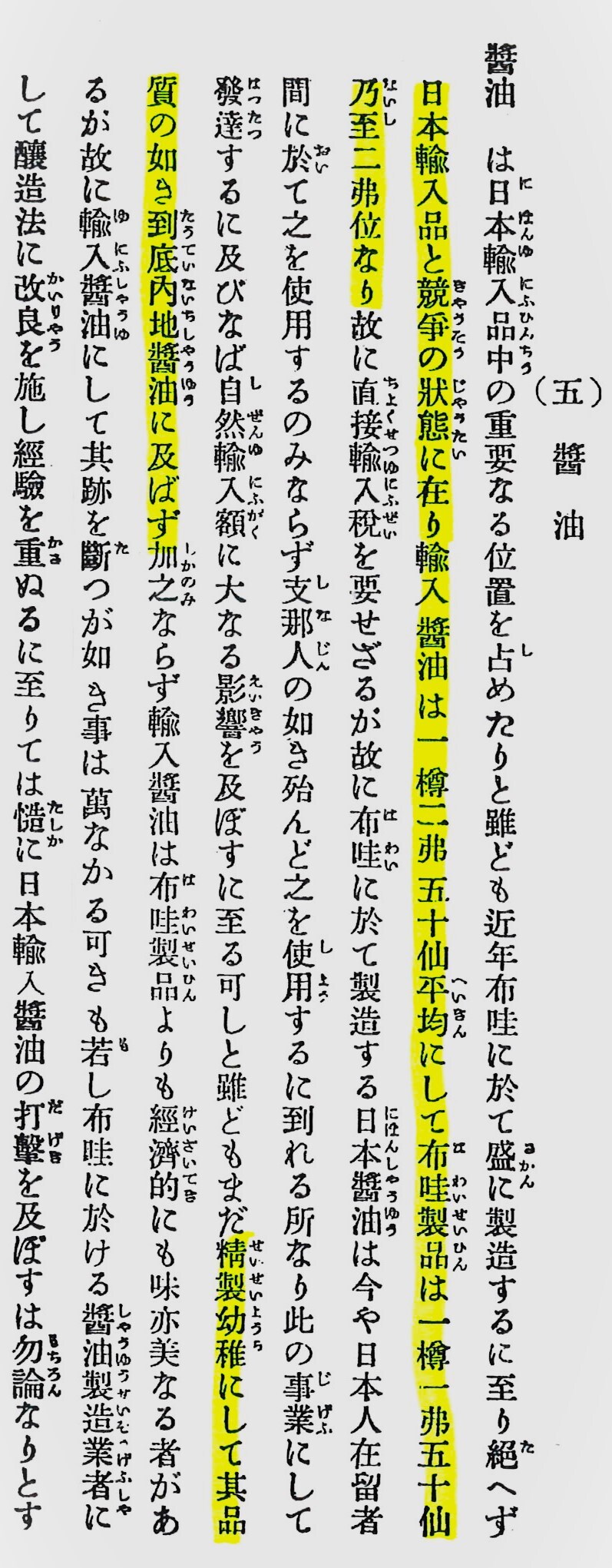
Further, Development of the Japanese in Hawaii, published in 1915 (Photo 10), notes, ‘As soy sauce has been actively produced in Hawaii in recent years, it is competing constantly with that imported from Japan. The imported soy sauce is US$2.50 a barrel on average, whereas that made in Hawaii is around US$1.50 or 2.00 a barrel.’ It further notes, ‘Hawaiian-produced soy sauce is characterized by immature refining and its quality does not come close to that made in Japan’ (P238). Japaneseproduced soy sauce was 20% to 40% more expensive than the Hawaiian-produced soy sauce. The occupational directory of Japanese residing in Hawaii listed 18 soy sauce sellers in Honolulu and 7 soy sauce breweries on the island of Hawaii (P557 and P561). Although it is not clear how they differentiated between soy sauce sellers and soy sauce breweries, there were 25 soy sauce businesses in all of Hawaii. Based on the census of the American population mentioned earlier, 25 soy sauce businesses for 79,675 Japanese-Hawaiians means one per 3,187 persons. Given that one household has five members, that translates to roughly one soy sauce business per 600 households.
The Origins of Soy Sauce Production in Hawaii
Takao Nihei previously studied the origins of soy sauce brewing in Hawaii (Table 3). He was a brewing engineer who served as a technical official in the Brewing Laboratory of the National Tax Agency, part of the Tax Bureau under the Finance Ministry of Japan, and who later became the vice president of Honolulu Sake Brewing & Ice Co. In 1978, he published a paper in the Journal of the Brewing Society of Japan. According to Nihei’s research, most of the early soy sauce manufacturers in Hawaii started their business during the period from the 1890s to the 1910s in Honolulu. These include some companies that are known but whose founders and soy sauce brands are unknown. In 1978, four companies, King Shoyu, Aloha Shoyu, Diamond Shoyu, and Club Shoyu, remained. Of these, the year of foundation and the founder are known only for Club Shoyu. Two of the four companies produced hydrolyzed vegetable protein (HVP) soy sauce. Takao Nihei published a variety of papers, including some on soy sauce. In one paper, he wrote, ‘BARBECUE SHOYU, which contains sugar and spices such as garlic, onion, and ginger in soy sauce, was loved by diverse ethnic groups early on in Hawaii. It is an invention of the Japanese Americans in Hawaii, although it is unknown exactly when in the prewar era it began.’ He also wrote, ‘Furthermore, Hawaiian-style TERIYAKI SAUCE in which fermented seasonings are added to soy sauce has attained popularity.’ According to Nihei’s reports, it was Japanese Americans in Hawaii who started making teriyaki. However, divergent opinions abound regarding this topic. Elsewhere, Nihei discussed ‘Japanese Americans in Hawaii and their palate.’ He stated, ‘For health reasons, as well as because of the differences in dietary habits, a strong salty taste is not favored in Hawaii…. Even for soy sauce and miso, Japanese seasonings that traditionally contain a lot of salt, the sodium content was dramatically lowered from the prewar level. Low-sodium soy sauce with a salt content of around 5% was launched from early on, and the salt content in miso is also around 5%.’ Saltiness is not much liked in Brazil either, and many seem to feel that Japanese soy sauce is too salty.
Table 3 The beginning of soy sauce production in Hawaii
| Company name | Month & Year of Foundation | Founder | Brand | Location | Status |
|---|---|---|---|---|---|
| Unknown | June, 1891 | Haruya Shimada | Unknown | Unknown Honolulu, Hawaii |
No longer in business |
| Yamajo Shoyu Jozosho | 1905 | Nobuyuki Yamakami | KENPU | Unknown Honolulu, Hawai |
No longer in business |
| Hawaii Shoyu Kabushiki Kaisha | 1906 | Nobuyuki Yamakami Kumataro Tashiro |
N. King St., Honolulu, Hawaii | No longer in business | |
| America Shoyu Jozo Kabushiki Kaisha | Aug., 1912 | Danzaburo Yonekura | Banyan St. Honolulu, Hawaii | No longer in business | |
| America Hawaii Shoyu Kabushiki Kaisha | Around 1924 | MARUTAKA SHOYU, MARUA SHIROMISO | BANYAN ST.HONOLULU,HAWAII | The two companies above merged. Miso brewing is their current business. | |
| Ikeda Shoyu Brewery | Tatsunosuke Ikeda | MARUICHI SHOYU, IKEDA SHOYU | HILO,HAWAII | Recently ceased doing business | |
| Marusho Shoyu Seizosho | Kiichi Miyagi | MARUSHO SHOYU | 618 COOKE ST.HONOLULU,HAWAII | No longer in business. The brand was succeeded by Honolulu Sake Brewing & Ice Co | |
| Fukushima Shoyu Jozosho | Yoshio Kano | FUKUSHIMA SHOYU | 618 CORAL ST.HONOLULU,HAWAII | No longer in business | |
| King Shoyu Co., Ltd | Hisayoshi Murata | KING SHOYU | 1215 KONA ST.HONOLULU,HAWAII | HVP soy sauce Currently in business |
|
| Aloha Shoyu Co., Ltd. | ALOHA SHOYU | 807-E.WAIAKAMILO RD.HONOLULU,HAWAII | HVP soy sauce Currently in business |
||
| Honolulu Sake Brewing & Ice Co. | DIAMOND SHOYU | 2150 BOOTH RD.HONOLULU,HAWAII | Currently in business | ||
| Fuji Sake Brewing Co., Ltd. | FUJI SHOYU | 539 COOKE ST.HONOLULU,HAWAII | No longer in business | ||
| Nichibei Shuzo Kabushiki Kaisha | KOKUSUI SHOYU, PANDA SHOYU | WAIAKEA HILO,HAWAII | No longer in business | ||
| Brewery Industries, Ltd. | 1947 | Teruo Togashi | CLUB SHOYU, MITSUBA SHOYU | 45 OMAO ST,HILO,HAWAII | Currently in business |
Source: Journal of the Brewing Society of Japan, July 1978 P548
Takao Nihei, Honolulu Sake Brewing & Ice Co.
Soy Sauce in Hawaii as Seen in Digital Archives
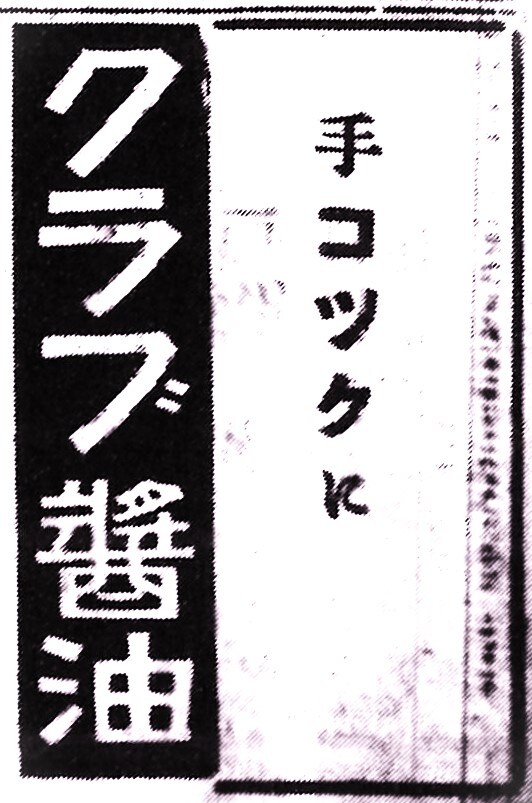
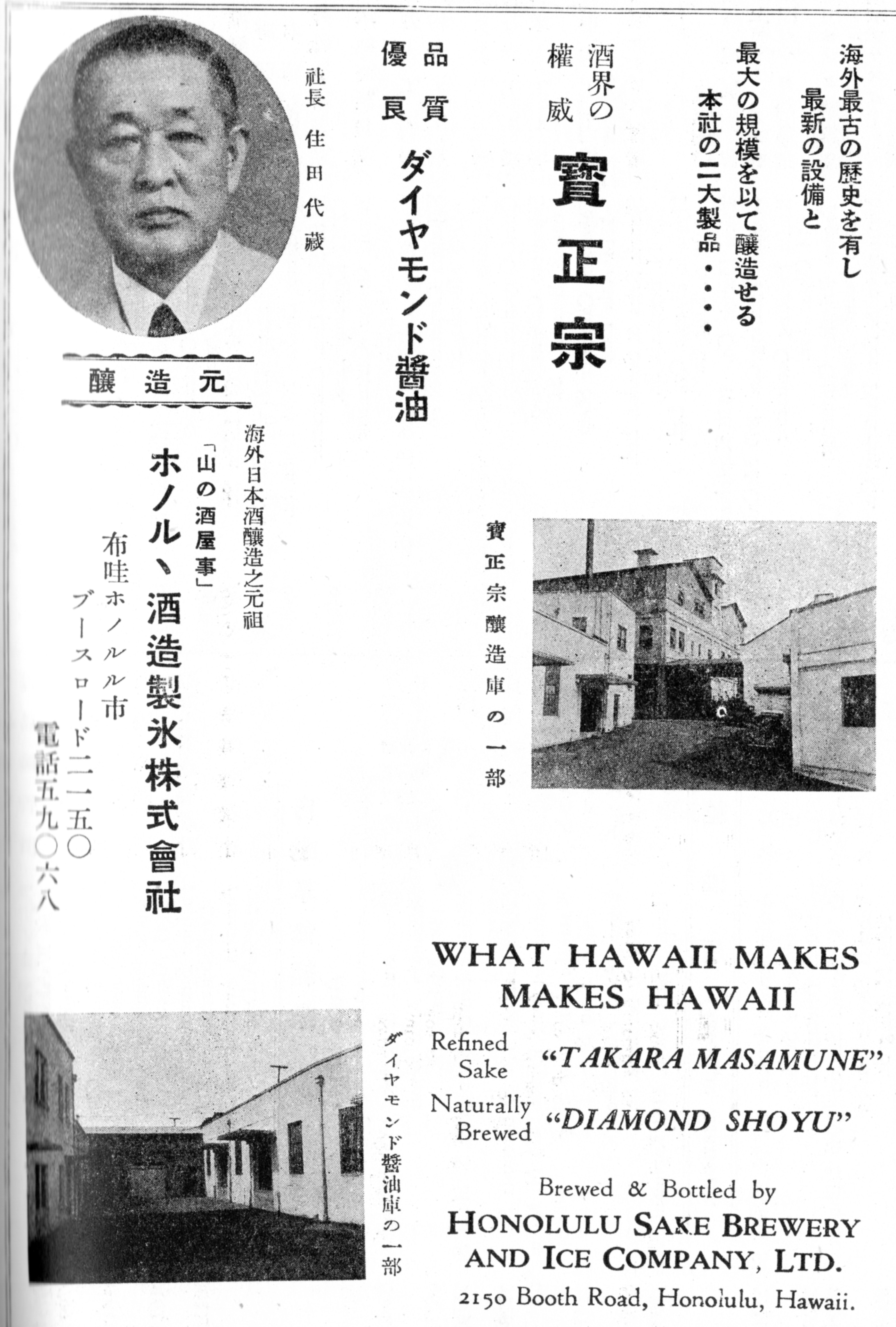
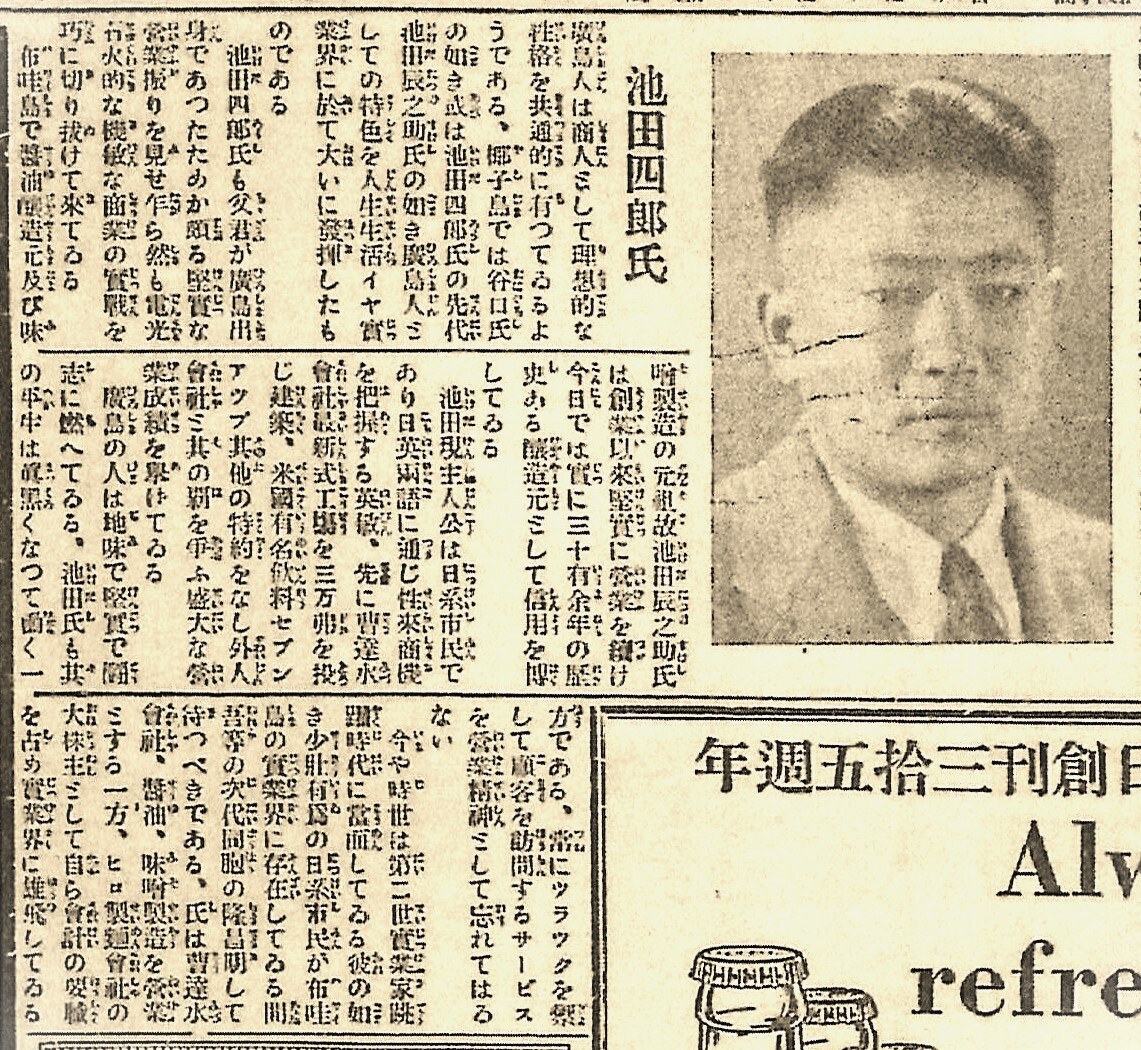
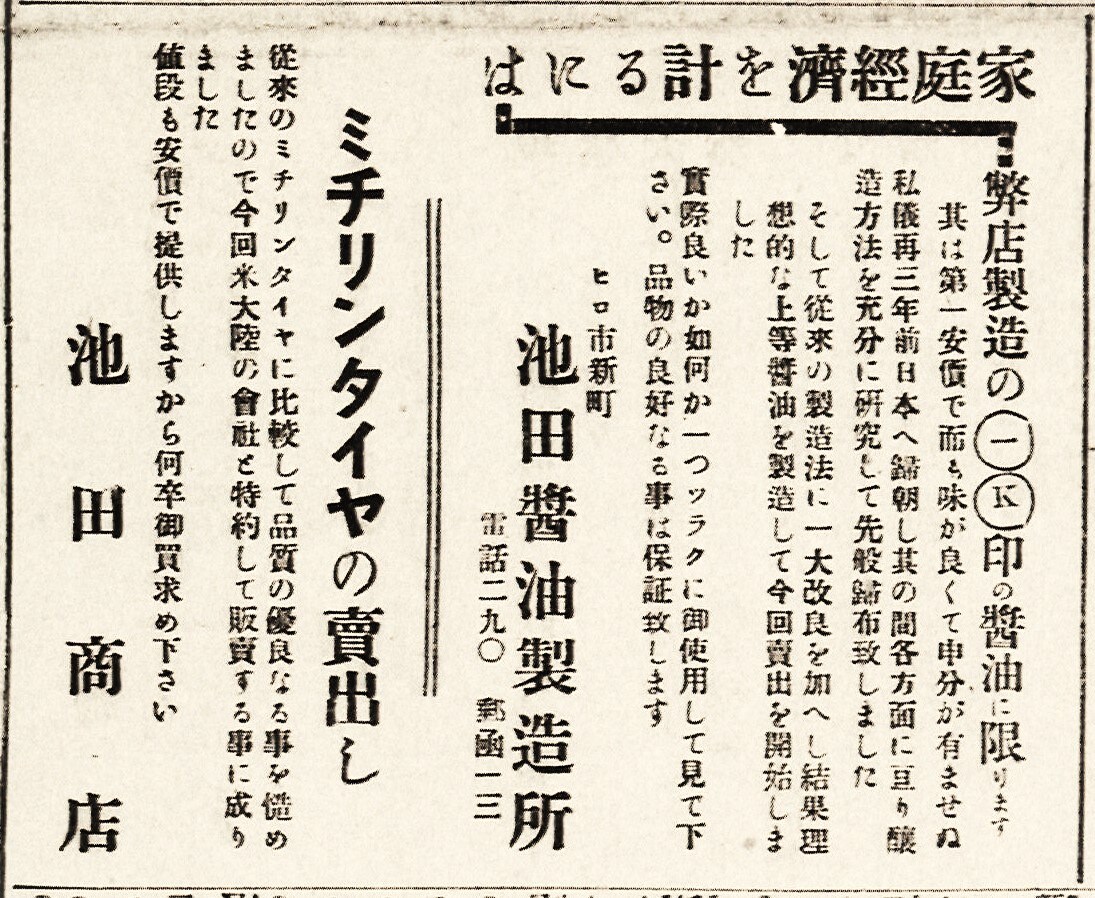
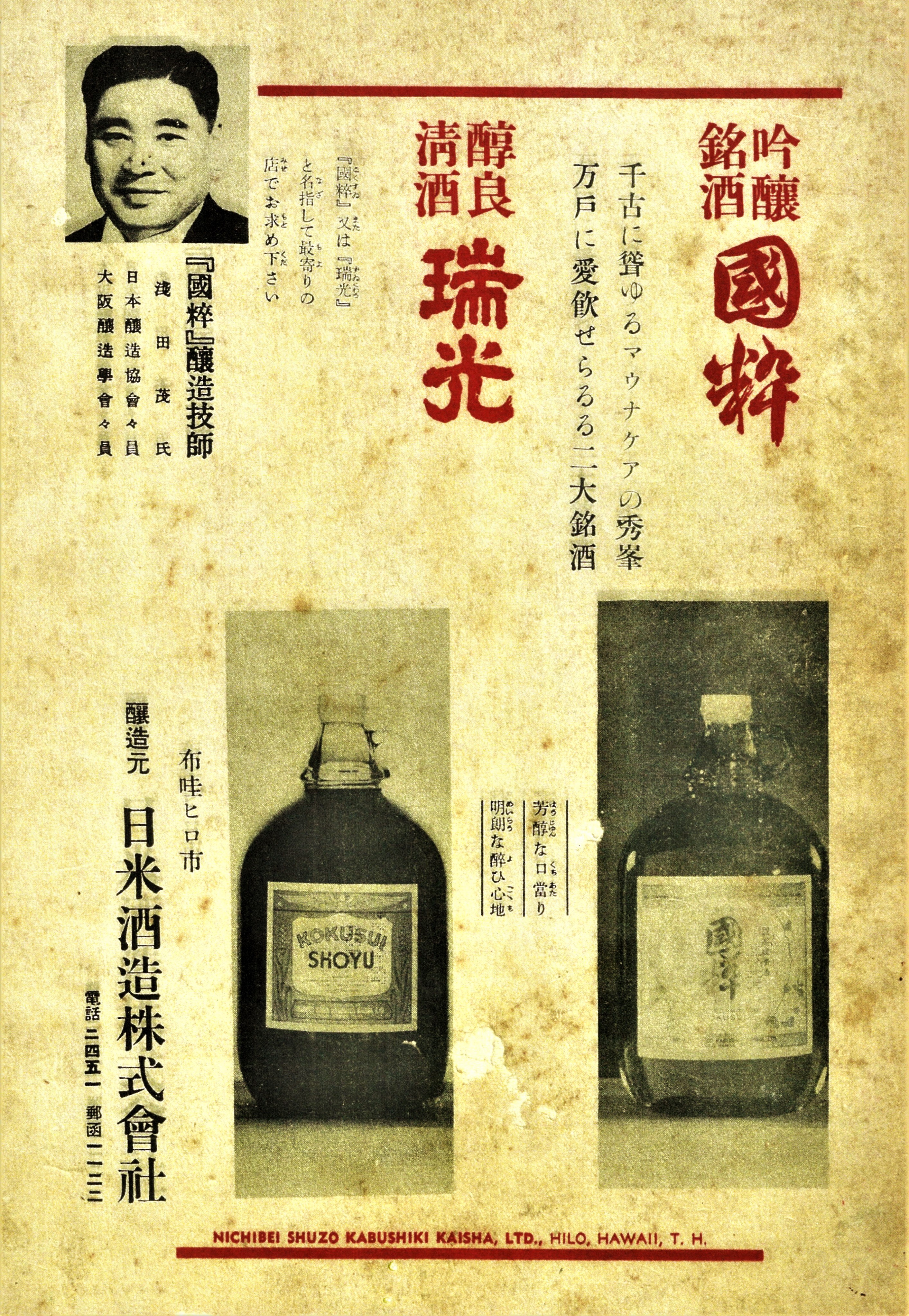
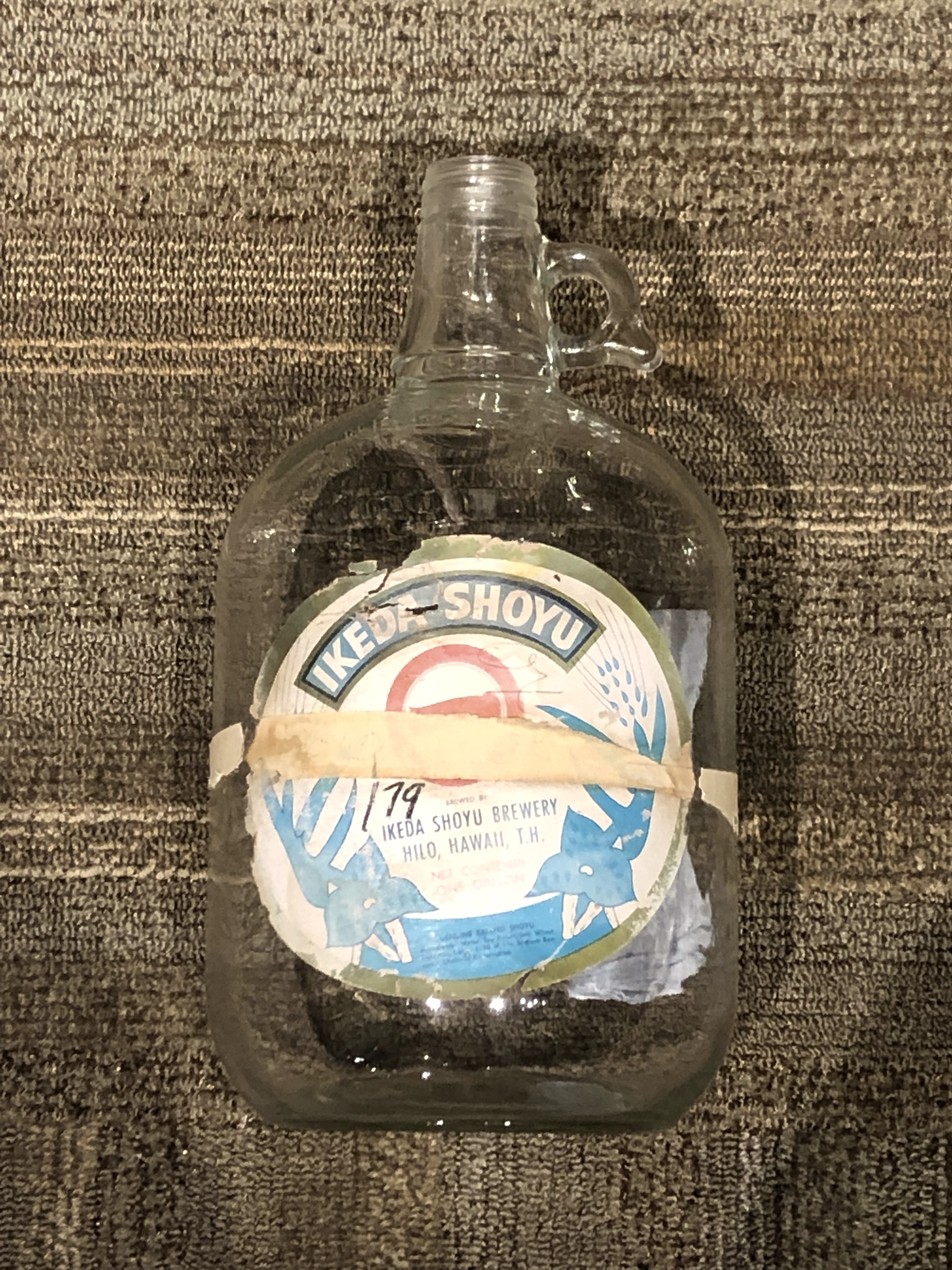
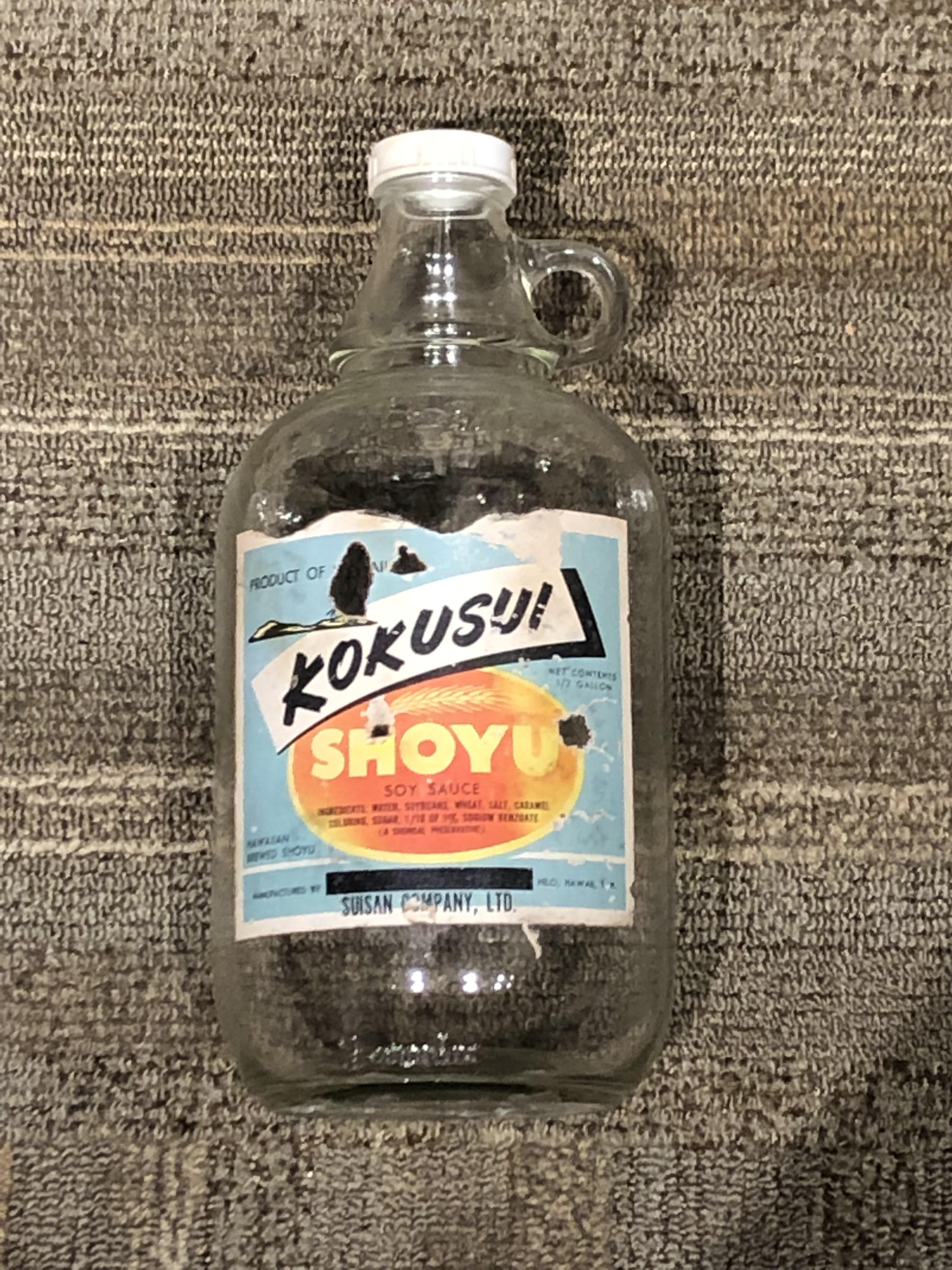
Several advertisements for King Shoyu (Photo 11), Aloha Shoyu, Diamond Shoyu, and Club Shoyu in the late 1940s were found (shown below) by searching the previously mentioned digital archives of Japanese-language newspapers. The advertisement for Aloha Shoyu placed in the Hawaii Times on December 7, 1946 (Photo 12) names six Japanese Americans who were presumably the founders of the company. The word ‘te-kokku’ (literally, handcooked) on the Club Shoyu advertisement (Photo 13) would be intended to mean ‘home cooking.’ Diamond Shoyu (Photo 14) was originally a sake brewing company that began brewing soy sauce as a consequence of prohibition laws in the US. Takara Masamune is a well-known sake in Hawaii. Companies that originally began manufacturing sake before manufacturing soy sauce were also found in Brazil. Research also revealed advertisements for Ikeda Shoyu (Photos 15 and 16). A Hawaii Mainichi article in 1941 stated, ‘Ikeda Shoyu was the pioneer in soy sauce brewing and miso manufacturing on the island of Hawaii… today the company is a brewery with thirty-some years of history.’ This leads us to assume the company was founded most probably in the 1910s. An advertisement for Kokusui Shoyu was found on the back cover of a publication called the Hawaii Island Guidebook, published in 1954 (Photo 17). This is yet another company that was originally a sake brewery that later began to manufacture soy sauce. At the Hawaii Japanese Center in Hilo on Hawaii Island, there remain glass bottles of Ikeda Shoyu and Kokusui Shoyu (Photos 18 and 19). From these items, we can see that soy sauce was still sold in glass bottles in the 1950s.
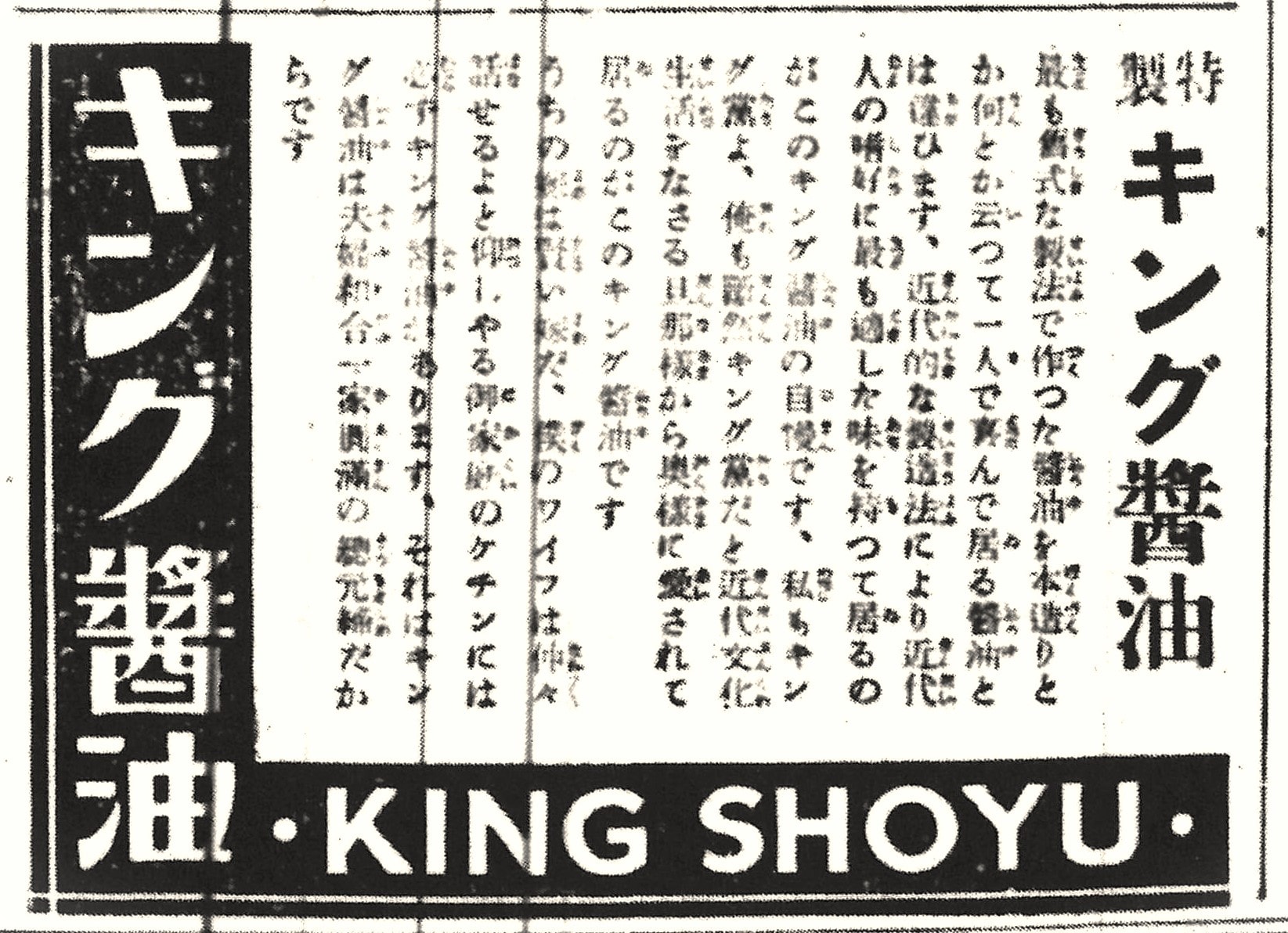
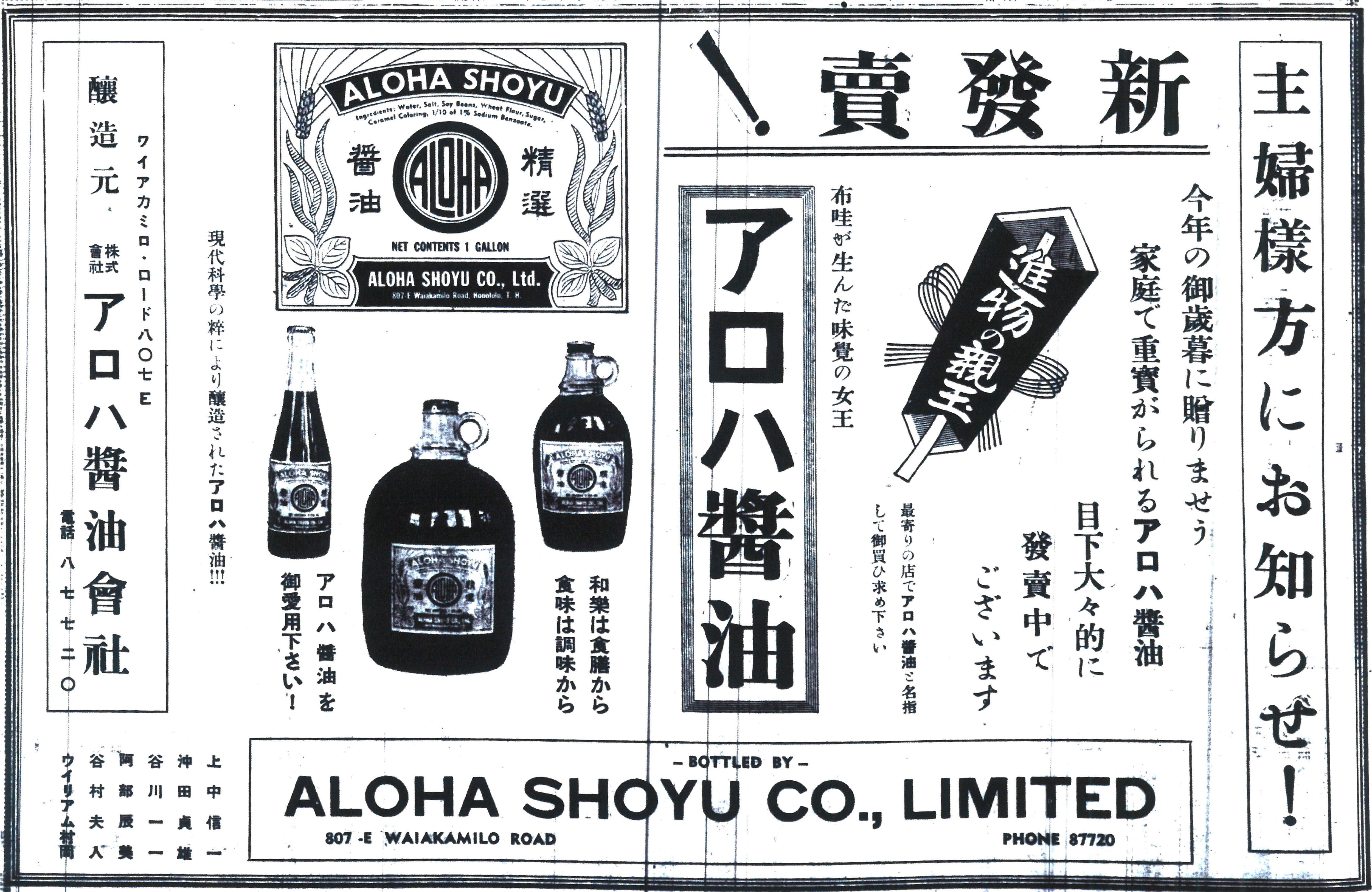 Photo 12 Aloha Shoyu Hawaii Times, Dec. 7, 1946
Soy Sauce Dispensers at Restaurants
During a field study in 2023, soy sauce bottles or dispensers with brand names on them were not seen on the tables of any restaurant. Instead, most restaurants had store-bought soy sauce dispensers that had been filled with sauce from the original container (Photo 20). One of the restaurants visited had a large 5-gallon commercialuse container of Yamasa soy sauce in the kitchen (Photo 21). In restaurants in Brazil, soy sauce on restaurant tables is still in bottles as sold at supermarkets. In restaurants in Hawaii, soy sauce bottles with brand names on them are not seen, and we could not determine the soy sauce brand without asking the staff.
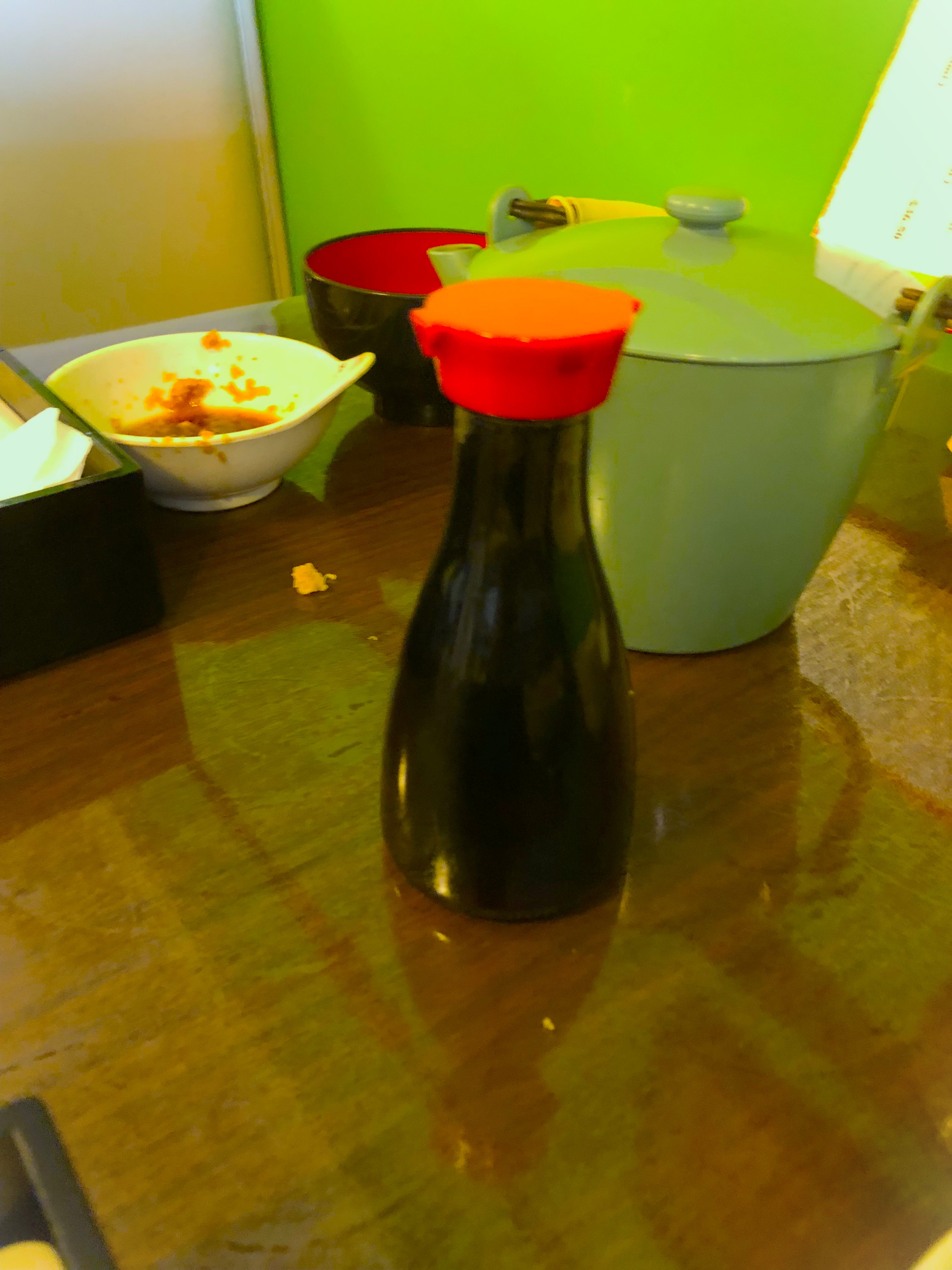
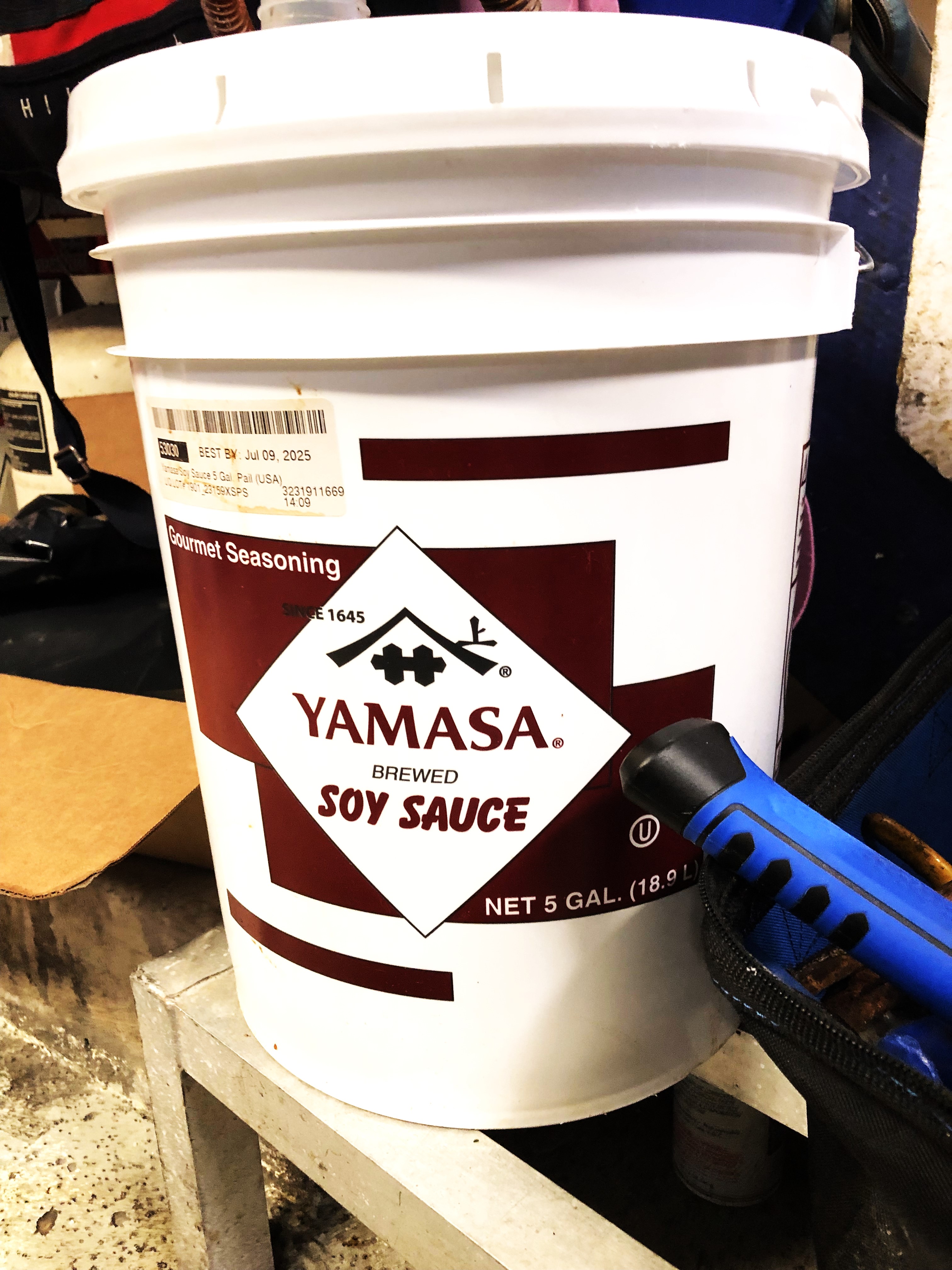
Photo 21 Five-gallon soy sauce container for commercial use
Japanese Americans and Soy Sauce in Hawaii
I asked Japanese Americans about soy sauce brands. A second-generation Japanese American woman in her 80s living on the Island of Hawaii testified, “Every night, my father had some drink at supper and ate sashimi. The soy sauce was Kikkoman. He did not use any other brand… I remember Ikeda Shoyu. Mr. Ikeda was from Hiroshima and his son was my classmate.” A third-generation Japanese American (Sansei) male resident of the Island of Hawaii replied, “Kikkoman is strong, while Club Shoyu is mild and sweet… I remember Diamond Shoyu and Club Shoyu.” I came to realize an intriguing fact through the interviews of Japanese-descended residents of the islands of Hawaii and Oahu, where I conducted research.
About the Brands of Nikkei Soy Sauce Produced in Hawaii
From the research reports of Takao Nihei and records of Japanese language newspapers, we can see that there were around 20 Nikkei soy sauce brands in Hawaii. Yet, when asked, almost no locals of Nikkeijin knew of brands other than Aloha Shoyu, except in the previously mentioned cases. Virtually none of the third-generation Japanese Americans replied that they had heard of any of them. Soy sauce was essential for first-generation immigrants from Japan. For their grandchildren, the third generation, however, it is just one of the many seasonings they use, and they are not especially interested in knowing the brands. Yet, there were some exceptions. Elderly secondgeneration residents and members of Buddhist temples in Hilo on the island of Hawaii did remember Ikeda Shoyu. Interestingly, however, there were no JapaneseAmerican residents on the island of Oahu who knew of Club Shoyu or Ikeda Shoyu. From another perspective, it may be said that each island in Hawaii was somewhat of an independent economic zone.
Today in Hawaii, Kikkoman and Yamasa soy sauce from Japan are readily obtainable, and Aloha Shoyu is wellknown. As these soy sauces are available at supermarkets, there seems to be a certain number of people who keep both Japanese-made and Hawaiian-made soy sauces to choose from, depending on the food being consumed. Comments collected include, “I use Yamasa soy sauce for sushi and sashimi, and Aloha Shoyu for chicken and stewed dishes,” “I use Aloha Shoyu for Hawaiian dishes and Japanese soy sauce for Japanese dishes,” and “Kikkoman is the saltiest.”
Diversity of Soy Sauce
Development of the Japanese in Hawaii, published in 1915, states, ‘Japanese soy sauce produced in Hawaii has grown to be used not only by Japanese residents but by most Chinese residents as well.’ It notes that Hawaii has immigrants from various parts of the world and that Chinese immigrants also use soy sauce produced by Japanese immigrants.
In his papers in 1959 and 1978, Nihei raised the issue of standards of brewed soy sauce and soy sauce made with chemically processed hydrolyzed vegetable protein (HVP). However, it is reported that the issue was ignored because, in those days, no one had the authority to determine soy sauce standards, and consumers did not have much knowledge of soy sauce. Among consumers, those who are health-conscious consider product quality first, while others prioritize price over product quality. As long as such diverse demands remain in the market, diverse varieties of soy sauce will continue to coexist.
Characteristics of Hawaii
Compared with Brazil, a characteristic feature of Hawaii is the high ratio of Nikkeijin population (Table 4). Japanese Americans in Hawaii made up roughly 40% of the entire population of the state of Hawaii before the war and up until the 1950s after WWII. This group may be referred to as a majority among minorities, and is why Japanese culture remains strong in Hawaii. In the case of Brazil, the Nikkeijin population comprises less than 1% of the entire national population. Notwithstanding, Brazil has maintained Japanese culture, perhaps because, except during WWII, immigrants from Japan have constantly entered the country.
Table 4 Nikkeijin population in Hawaii and its percentage of the entire population of the state
1894 20,000 20.0%
1900 61,111 39.7%
1910 79,675 41.5%
1920 109,274 42.7%
1930 139,631 37.9%
1940 157,905 37.3%
1950 184,598 36.9%
1960 203,455 32.2%
1970 217,669 28.3%
2010 312,292 22.9%
(Asian:57.4%)
The second characteristic feature is geographical distance from Japan. It takes a little over 10 days by sea to get to Hawaii, while it takes roughly 50 days to get to Brazil. In terms of costs, importing to Hawaii was relatively easy. Meanwhile, the reason Ikeda Shoyu, produced in Hilo, was not widely known might have been because of the independent economic zone each island has maintained. There were sake breweries on the islands of Oahu, Hawaii, and Maui, and presumably each island would have had its own soy sauce and food culture. It is said that people of different cultural backgrounds come to live in Hawaii, and there is an atmosphere of embracing each other’s cultures. There are many Japanese tourists, as well, and so there are businesses that cater to visitors from Japan and restaurants where you can have the same food as in Japan. These would have a big impact. The third characteristic refers to what I mentioned earlier. That is, third-generation Japanese Americans know very little about the first generation, with history not having been preserved. When asked, the third generation has only very vague memories about the first generation. In Brazil, second-generation Nikkei are still active and remember how their parents lived. This means it is still possible that the lives of the first generation can be put in records, as they remain in the second generation’s memories. On the other hand, in Hawaii, it is already the age of the third and later generations, with few memories of the first generation and no records of them having been kept. Hawaii has a longer history of Japanese immigrants than Brazil, but few records remain. It looks like Brazil may end up with more records describing the first generation, despite their shorter history.
Shigeru Kojima was born in Sanjo City, Niigata Prefecture. While a student at Sophia University, he went to study in Brazil, where he earned a master’s degree in social history at the Graduate School, Federal University of Paraná. While traveling around Brazil by bus, he became a fervent admirer of the country and was inspired to engage in immigrant studies in Curitiba, the capital of Paraná state, where he lived for 10 years before returning to Japan. Among his positions in Japan, he has worked at universities and helped establish the JICA Yokohama Japanese Overseas Migration Museum, where he currently works in the Project Management Division. His focus of research is the history of Japanese immigrants, the identity of Nikkeijin and changes in Nikkei communities in multicultural societies such as Brazil, the US, and Canada. His main research themes include festivals, ethnic enclaves, foods, and translation.