
Activity report of the Kikkoman Institute for International Food Culture
-Themed collection exhibitions “History of advertising of Kikkoman”
Themed collection exhibitions “History of advertising of Kikkoman”
Kikkoman Institute for International Food Culture has been organizing themed collection exhibitions since 2024 to display exhibits selected according to different themes from the institute’s huge collections gathered and maintained for years. These exhibitions display carefully selected collections usually not open to the public that fit each theme. Based on the historical background and the social environment surrounding businesses, the exhibitions present the history and significance of the exhibits. This, we hope, will communicate the visions of business activities of the times to people today.
Table 1 shows the themed collection exhibitions held as of March 2026.
This article gives an overview of “History of advertising of Kikkoman—1920s to 1960s, a period of turbulence” and “History of advertising of Kikkoman II—Pure and Natural, 1968 to 1984.”
| Type of exhibition | Period | Theme |
|---|---|---|
| Themed | July 8 to September 20, 2024 | Soy sauce brewing then and now—from Meiji to Showa, evolution of tools |
| Themed collection | March 3 to May 30, 2025 | History of advertising of Kikkoman—1920s to 1960s, a period of turbulence |
| Themed collection | July 29 to October 3, 2025 | History of advertising of Kikkoman II—Pure and Natural, 1968 to 1984 |
| Themed collection | January 13 to April 24, 2026 | Kikkoman and world expositions—19th to 21st centuries |
Themed collection exhibition, “History of advertising of Kikkoman —1920s to 1960s, a period of turbulence”
This exhibition features advertising during a period from the establishment of Noda Shoyu Co. Ltd. (present Kikkoman Corporation) in 1917 to 1960s. The exhibits are divided into six periods according to themes focused by the ads. Among those periods, four periods are introduced below.
①Brand communication period
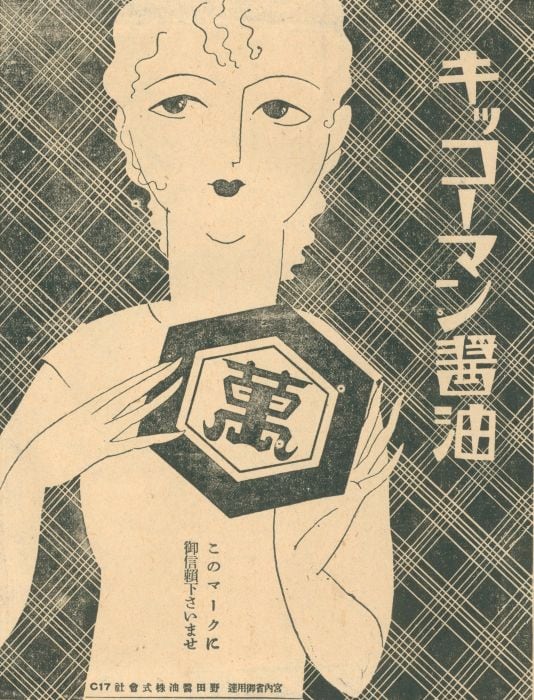
Ad of 1933. Noda Shoyu had 211 trademarks when established. Among them, the company chose Kikkoman, highly recognized at home and abroad as its brand, and expanded sales channels across the country. The ads of those days were aimed at promoting the Kikkoman brand. What is characteristic is that the hexagon logo is highlighted.
②Post-war period
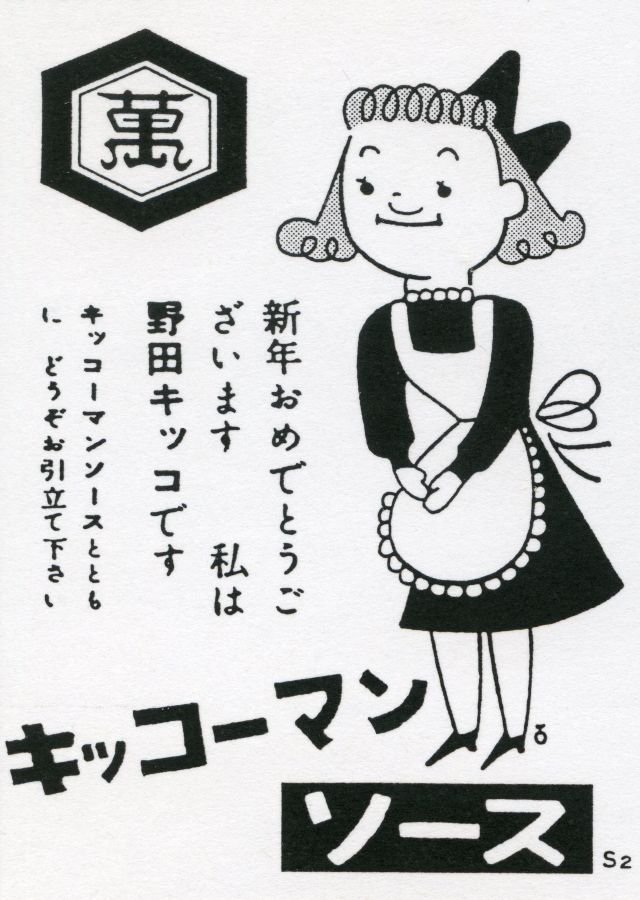
The ads of 1950. Due to the wartime regulations and the rationing that continued even after the war, no ads were made for 10 years until soy sauce sales were liberalized again in October 1950. The impact of the long blank period was serious. According to a consumer survey in 1949, about 63% of women aged between 10 and 29 didn’t know of Kikkoman brand, indicating a drastic decline in the awareness. To overcome the situation, the brand character Noda Kikko was created. In January 1950, before the free marketing of soy sauce was resumed, the character was placed in an ad of Worcestershire sauce to attract young generations and boost brand recognition. As a result, the character was widely known as Kikko-chan and she played an important role in Kikkoman advertisement till the 1970s.
③Period of focusing on quality and culinary
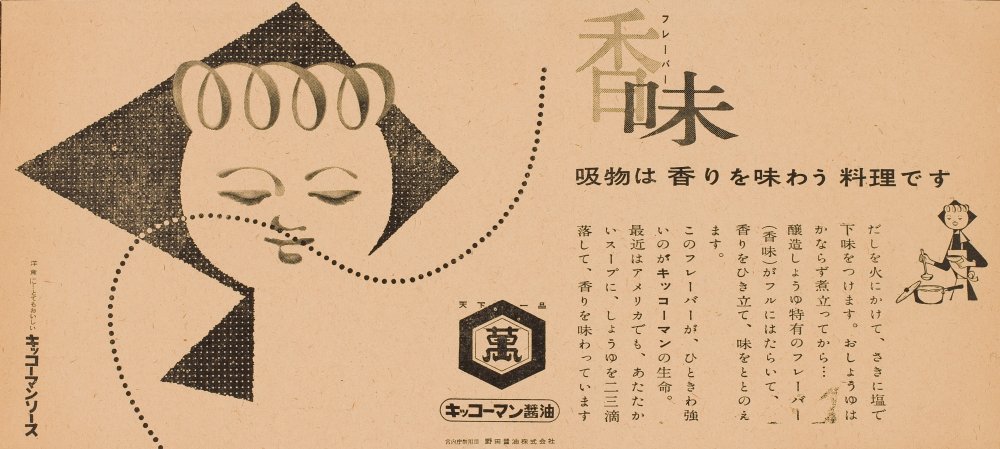
The ad of 1958. Komi (Aroma and Taste) is a word expressing the features of brewed soy sauce only Kikkoman could offer. As brand recognition increased, the ads began to bring the quality of Kikkoman soy sauce to the fore and came to emphasize the combination of home cooking and Kikkoman.
④Period of focusing on Western cuisine
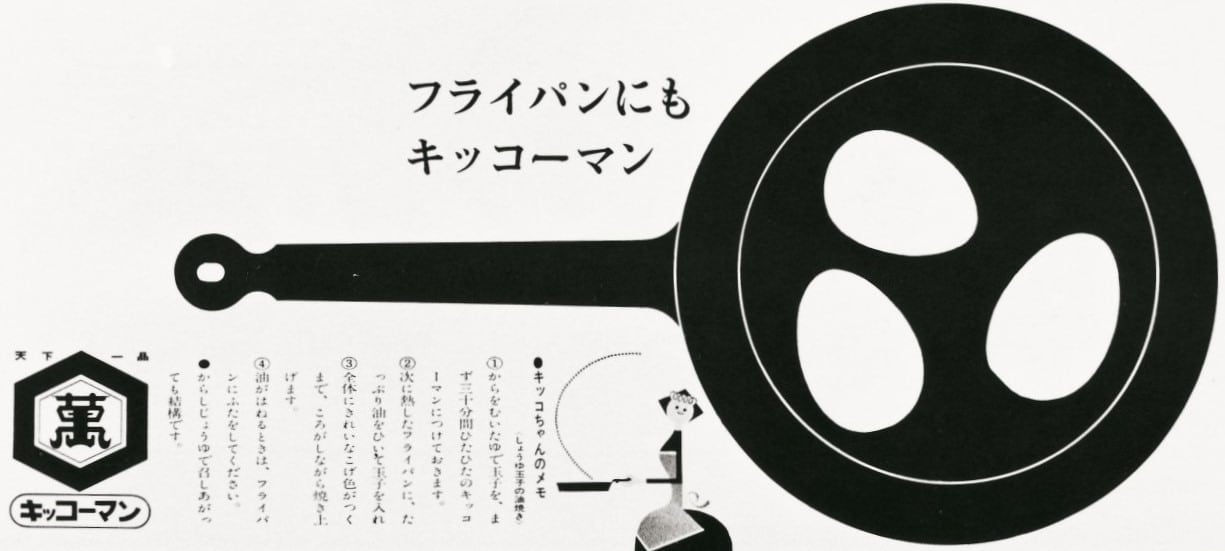
Ad of 1962. In the 1960s, the Japanese diet was rapidly westernized. With confidence gained in the full-fledged expansion into the US in the 1950s, the company used the slogan “Kikkoman even for frying-pan cooking” to show that soy sauce would go well with not only Japanese cuisine but also Western dishes and emphasize that the use of soy sauce was not limited to Japanese cuisine.
Themed collection exhibition, “History of advertising of Kikkoman II —Pure and Natural, 1968 to 1984”
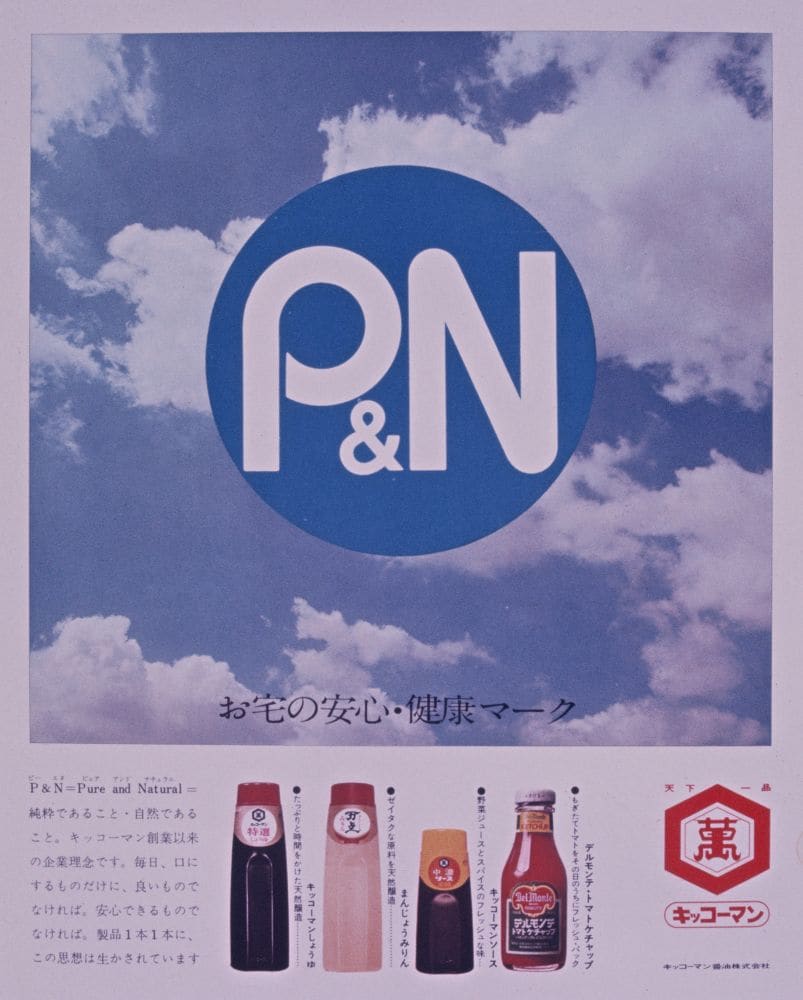
This exhibition featured adverts from the late 1960s to the mid-1980s. In the 1960s, pollution and various other problems related to the safety of food and medicines occurred one after another and concerns mounted about food safety. Under these circumstances, Kikkoman declared “Pure and Natural (P&N)” in the new year newspaper ad in 1969 to state its commitment to delivering pure and natural products. The advertisements of this period were divided into nine series according to the themes. This article discusses three of those series.
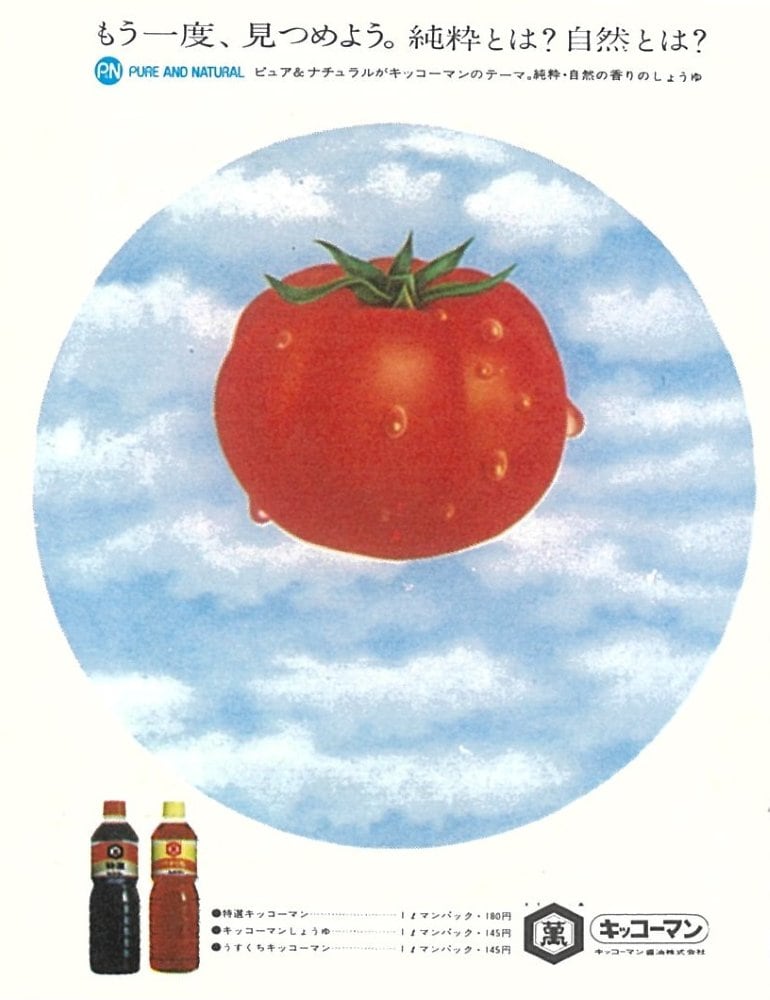
①Pure and Natural (P&N) declaration ad series
The ads of 1970 (left) and 1971 (right). The most important initiative in the product development in line with the P&N declaration was returning to honjozo (authentic brewing) about all the soy sauce as well as making them preservative-free P (Pure) soy sauce. The P&N series ads are designed with bold layout of food illustrations to emphasize enjoying food of the season.
②Dialogue with consumers series
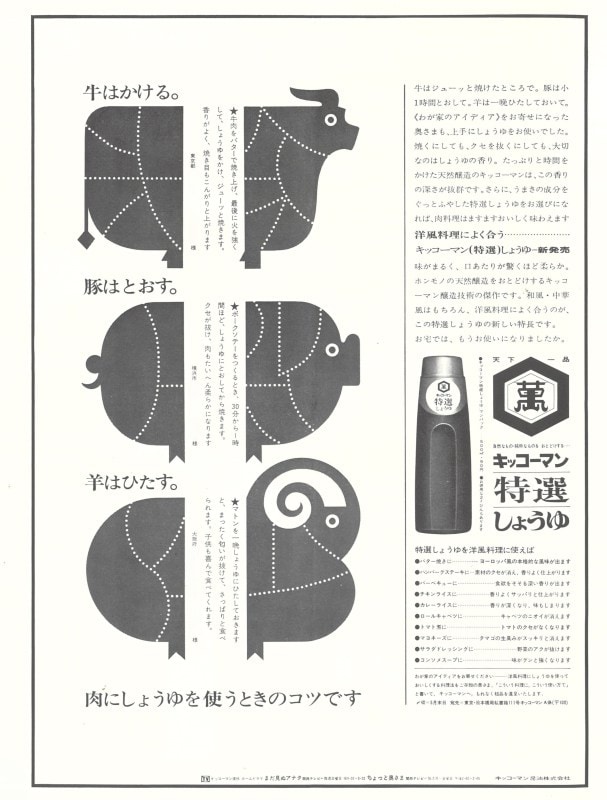
Newspaper ad of 1969. The company invited recipes using soy sauce from consumers and introduced some of the family recipes on ads. This changed ads from one-way transmission from manufacturers to a place for exchange of practical daily life information by allowing consumers participation.
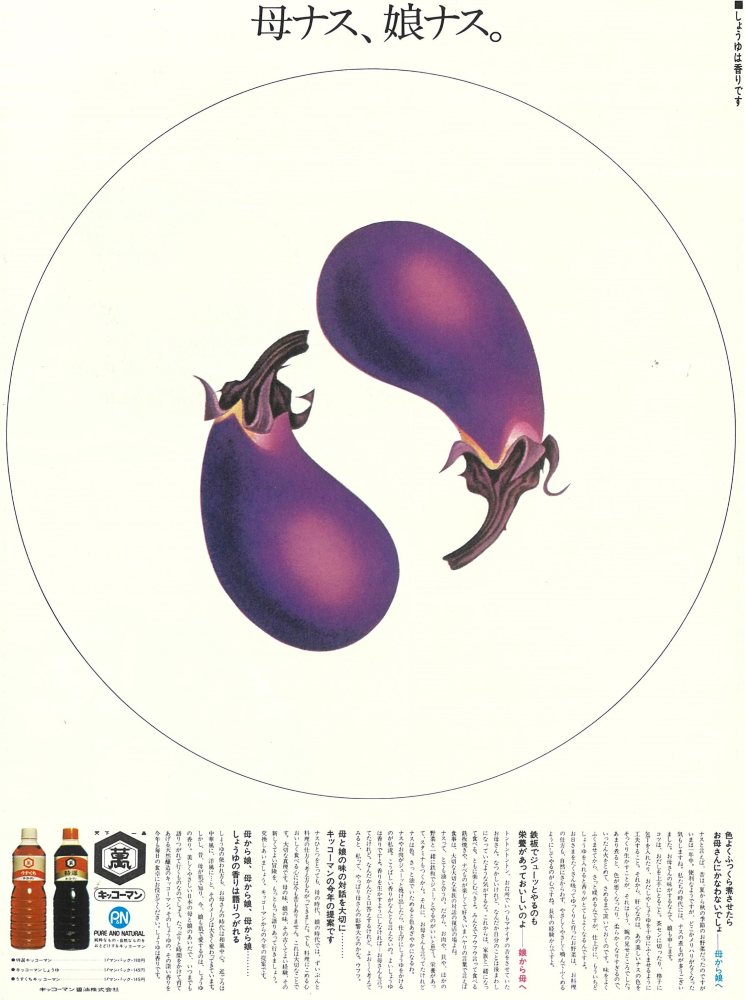
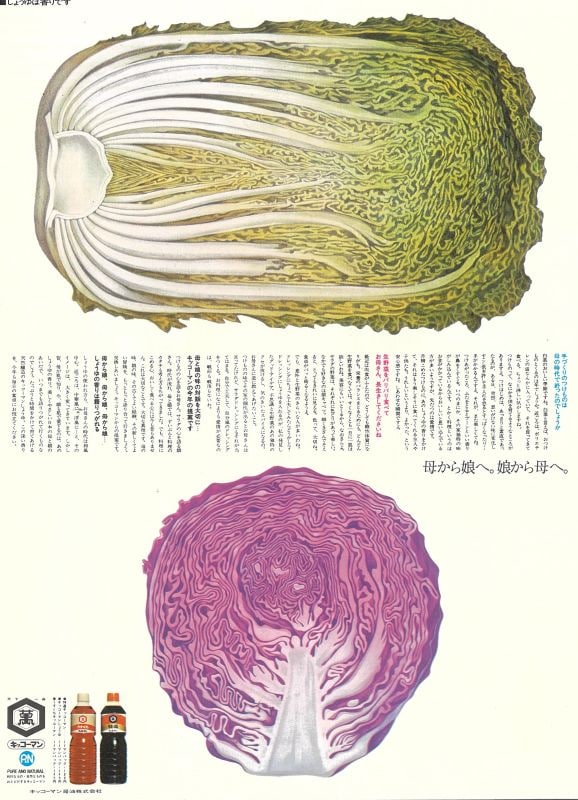
③Mother-daughter taste dialogue series
The ads of 1972. The dialogue with consumers evolved into mother-daughter dialogue. Through the dialogue between mothers of two different generations, the ad expressed changes over time reflected by cooking methods and family structures. In this series, a consumer participation campaign was also mounted. Recipe ideas from consumers reached about 90,000.
These two themed exhibitions demonstrate that Kikkoman has quickly perceived changes in the times and launched flexible and diverse advertising campaigns. It was significant in researching food culture and sharing the findings to look back on the evolution of our advertisement from those aimed at improving brand recognition, to those focusing on quality, then culinary, and to ads consumers could relate to.