
Japanese Cooking Workshop Held for Winners of the 32nd “Concours Kikkoman”
November 5, 2026
Since 1994, Kikkoman Trading Europe GmbH (KTE), the Kikkoman Group's sales and marketing company in Europe, has hosted the annual "Concours Kikkoman," a cooking contest using Kikkoman Soy Sauce for young chefs across France. This year, a Japanese cooking workshop for the winners of the 32nd Concours Kikkoman was held in Tokyo from September 29 to 30.
From a pool of approximately 80 applicants, eight were selected through application screening, and two final winners were chosen through a strict culinary evaluation. Between September and October 2026, the winners visited Tokyo, Chiba, and Kyoto as part of their prize tour to experience Japanese food culture.
The main events of the tour included a Japanese cooking workshop and a visit to the Kikkoman Soy Sauce Museum and Noda Plant hosted by Kikkoman.
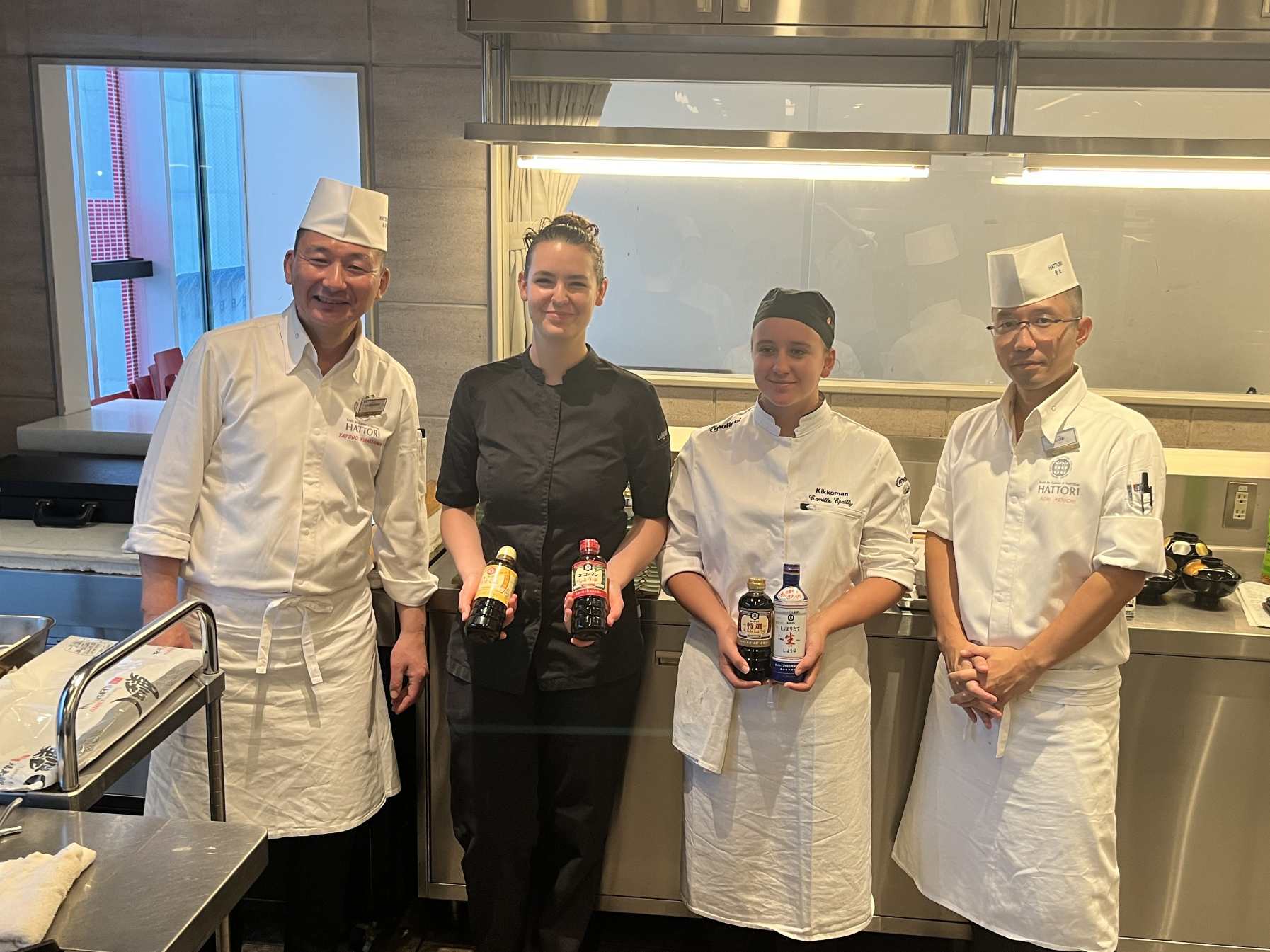
The Japanese cooking workshop was held over two days in collaboration with Hattori Nutrition College, a prominent culinary school located in Shibuya, Tokyo.
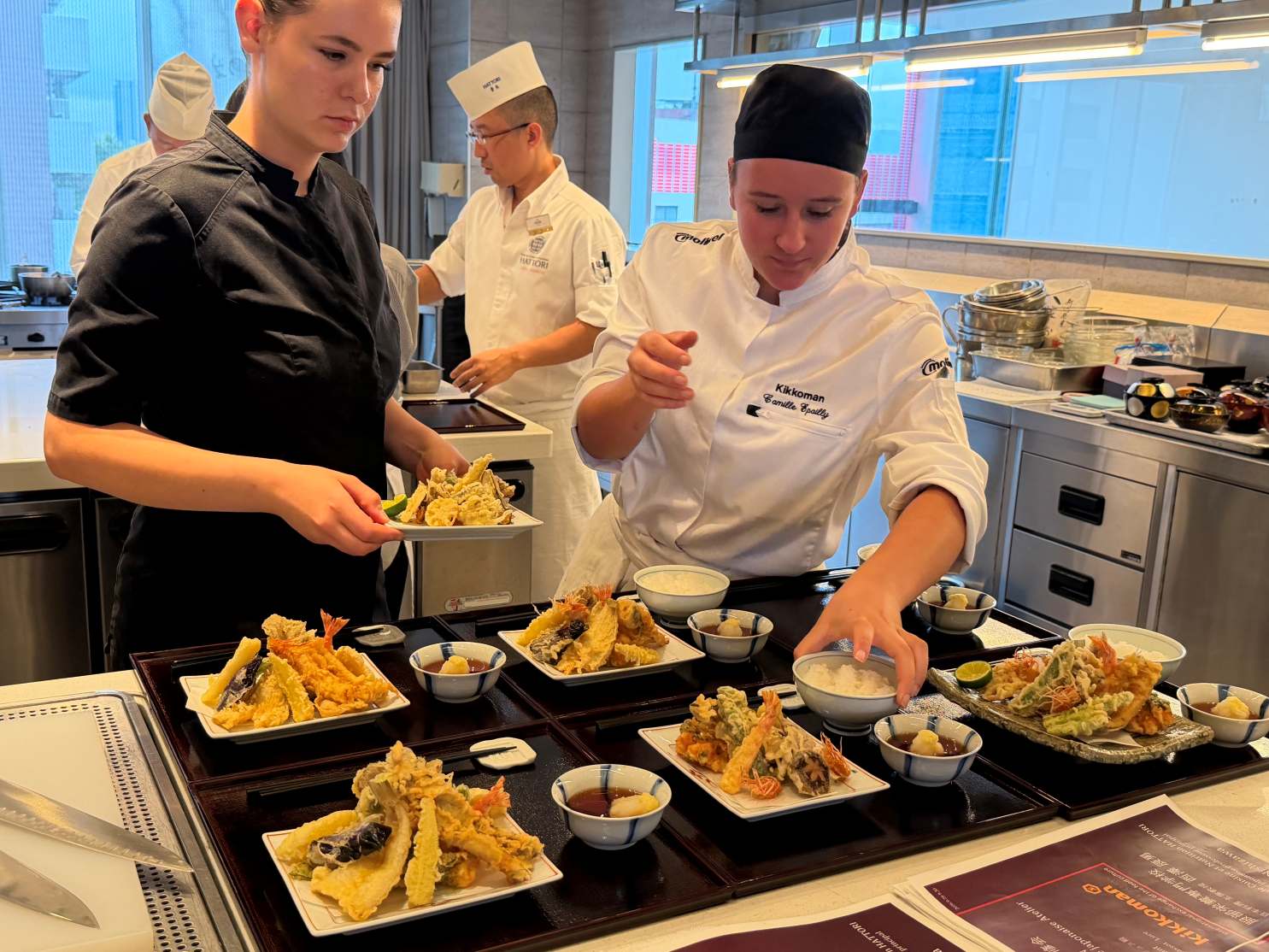
On the first day, the participants learned about various types of Japanese knives, sharpening techniques, and vegetable cutting methods before taking part in a hands-on cooking session for tempura, a representative dish of Japanese cuisine. Using ingredients such as shrimp, squid, Japanese whiting, conger eel, maitake mushrooms, kabocha squash, eggplant, and asparagus, the young chefs prepared tempura while deepening their understanding of proper deep-frying techniques and temperature control for different ingredients.
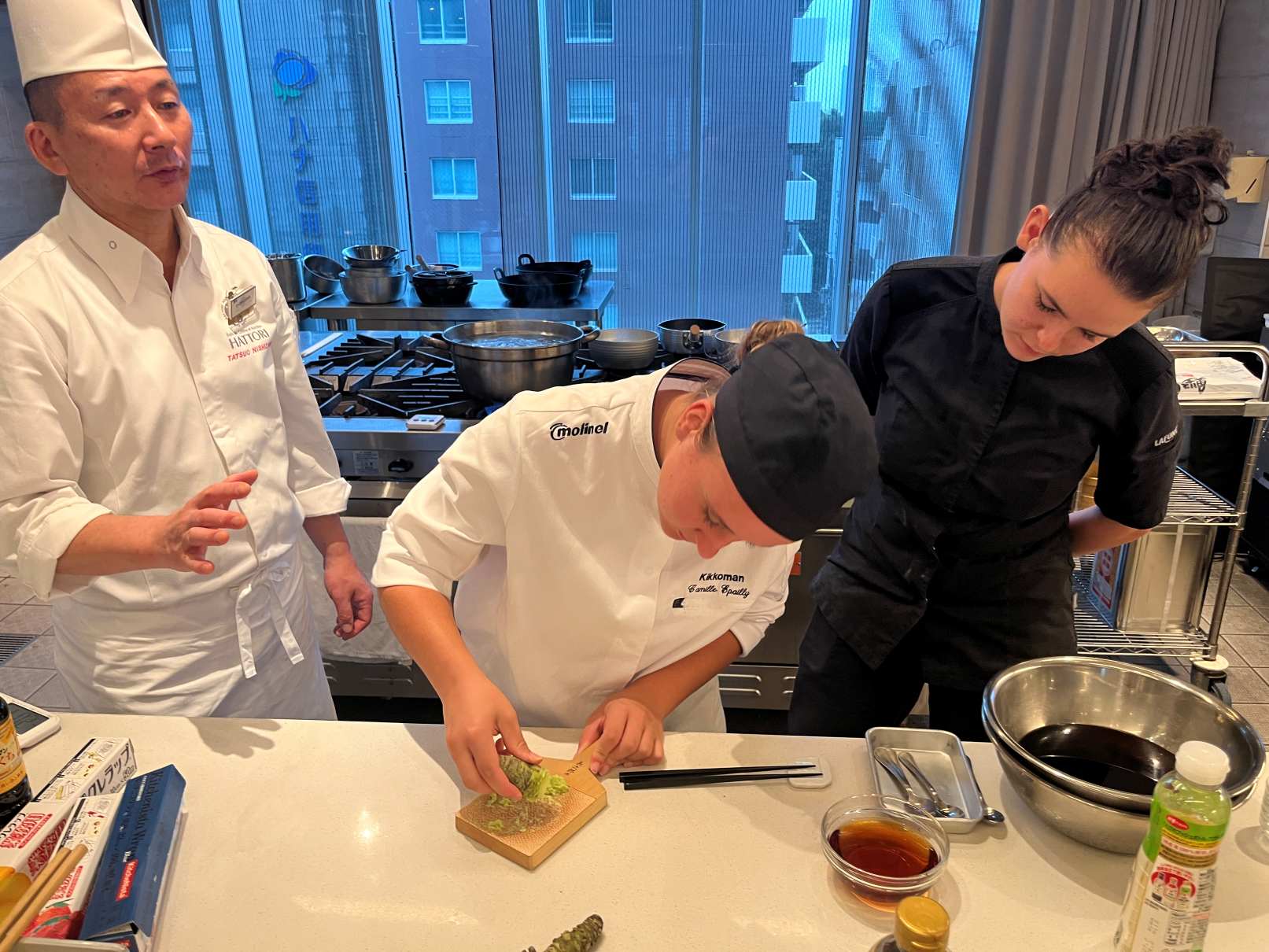
In the afternoon, the workshop focused on dashi, the foundation of flavor in Japanese cuisine. Participants learned how to prepare both ichiban (first) dashi and niban (second) dashi using kombu (kelp) and katsuobushi (dried bonito flakes). By tasting each broth, they compared differences in flavor and aroma, and also experienced making soba dipping sauce using dashi they had prepared themselves. In addition, they grated fresh hon-wasabi and learned authentic ways to enjoy soba. The participants also challenged themselves to experience the uniquely Japanese custom of slurping noodles while eating soba, enjoying the experience while developing a deeper appreciation of Japanese food culture. They also gained hands-on experience preparing clear soup and miso soup, two staples of Japanese cuisine.
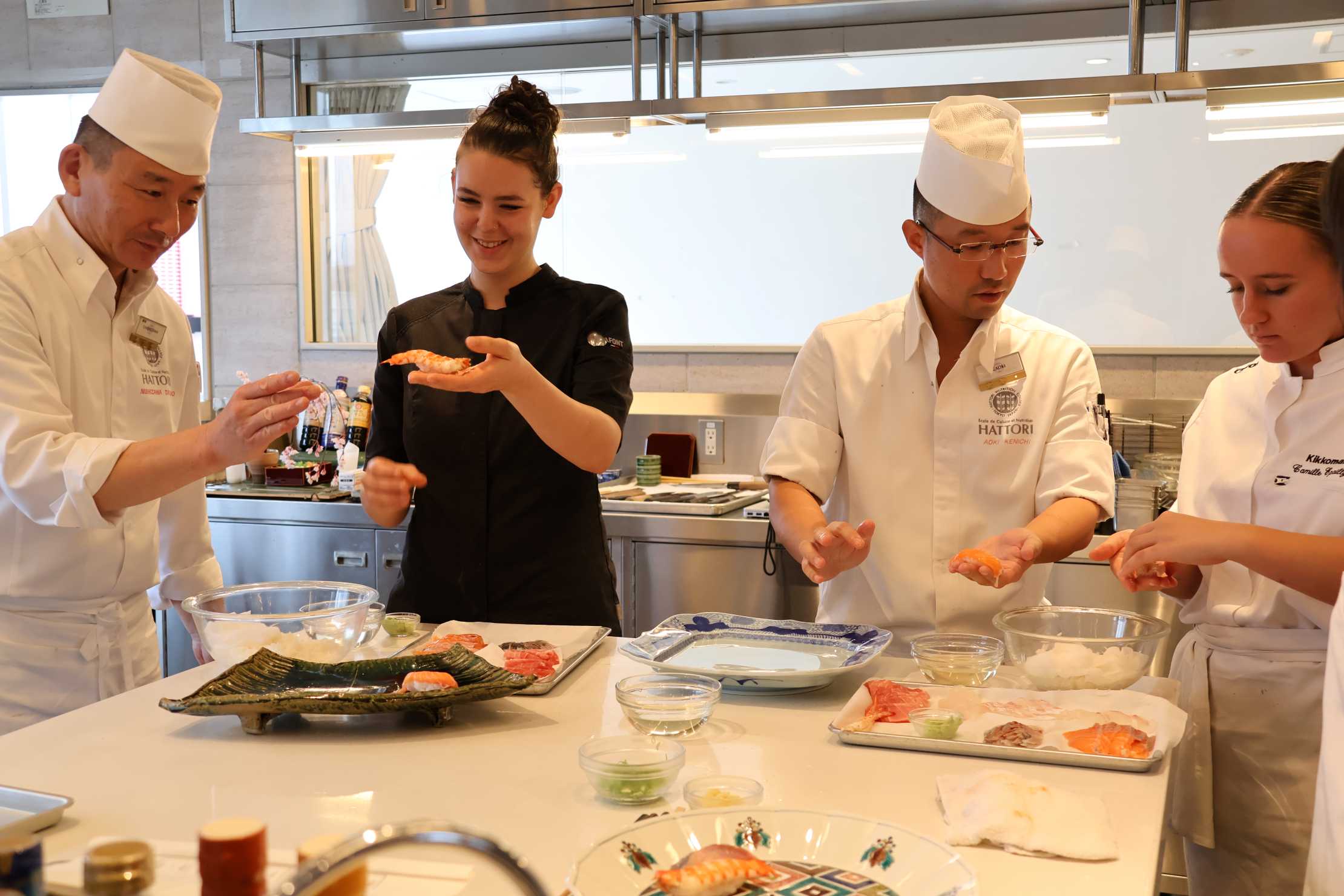
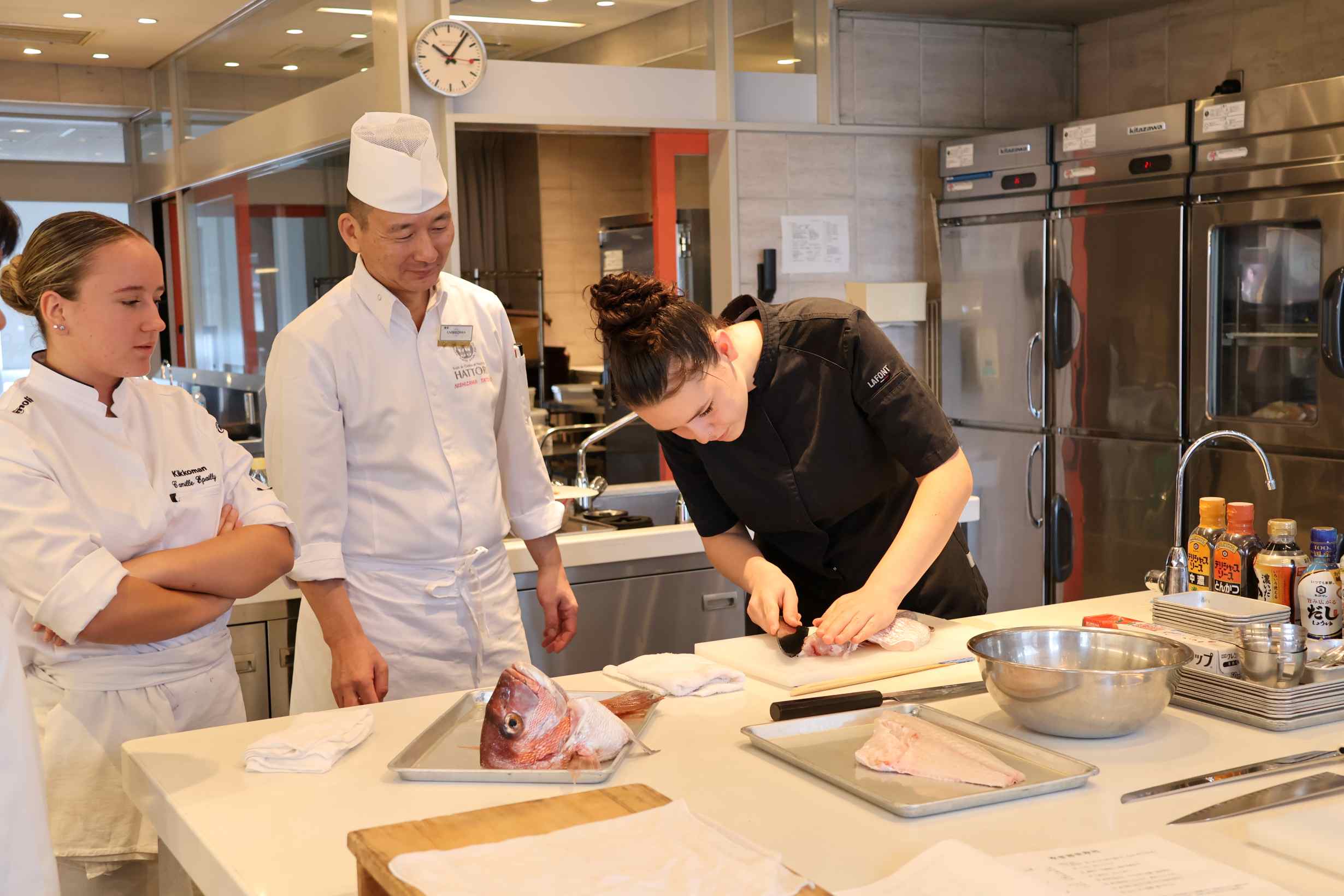
On the second day, the chefs learned how to prepare fish for otsukuri (sashimi) and challenged themselves with nigiri sushi (hand-pressed sushi) and fukiyose sushi (decorative sushi featuring a variety of seasonal ingredients). Thereafter they studied seasonings, tsuyu and tare, used in dishes such as oyakodon, katsudon, and sukiyaki, gaining firsthand experience with the wide variety of flavor-building techniques found in Japanese cuisine. Finally, the participants put their newly acquired knowledge and skills into practice by preparing katsudon and sukiyaki.
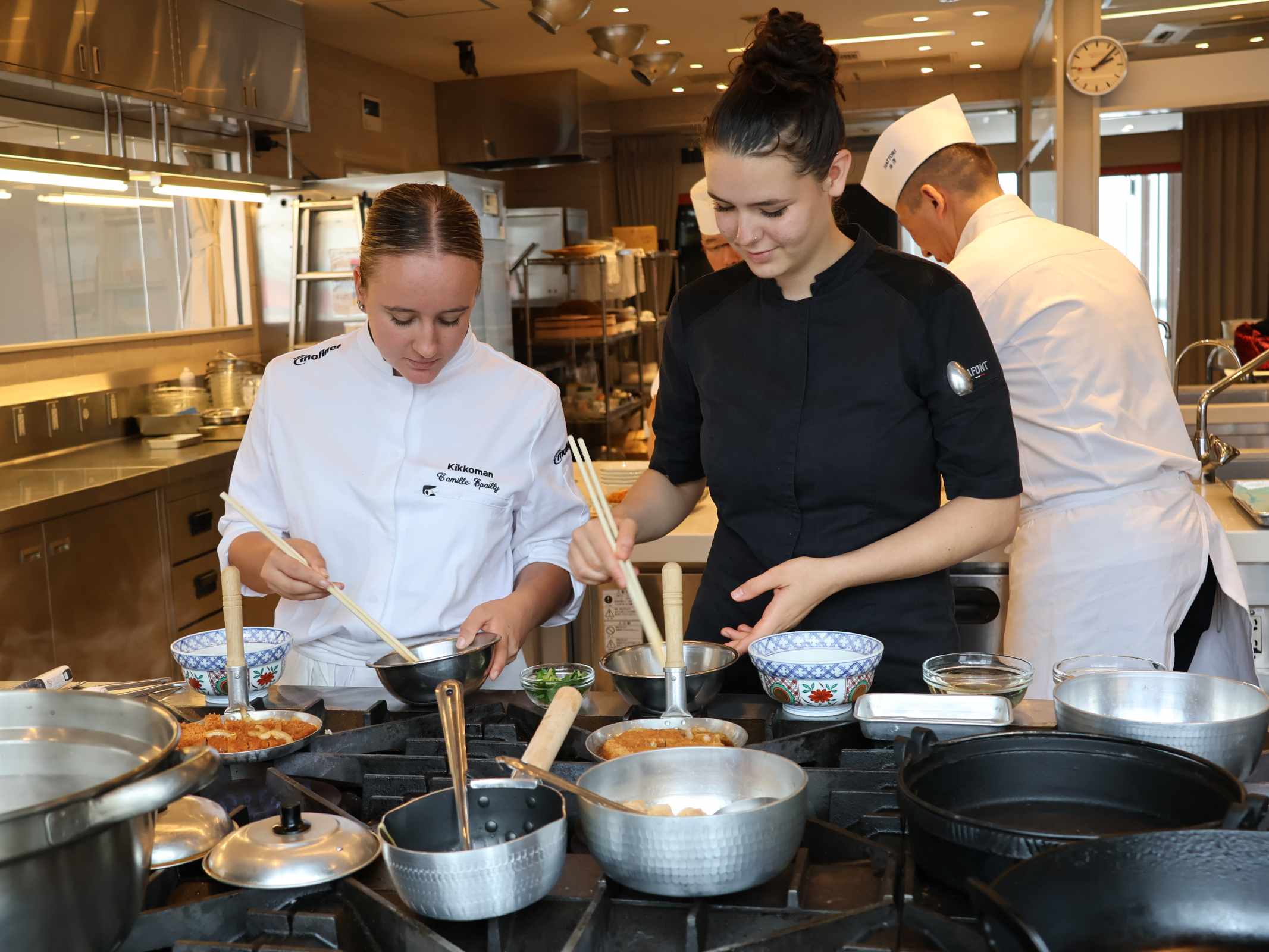
Reflecting on the workshop, one participant commented, "We feel fortunate to have had the opportunity to learn new cooking techniques." Speaking about the tempura training, another participant said, "We learned that when frying vegetables, the ideal oil temperature is one at which the battered ingredient briefly sinks to the bottom before quickly rising to the surface, whereas fish should rise without touching the bottom." The participant remarked that the experience gave them a deeper appreciation for the refined techniques that are unique to Japanese cuisine.
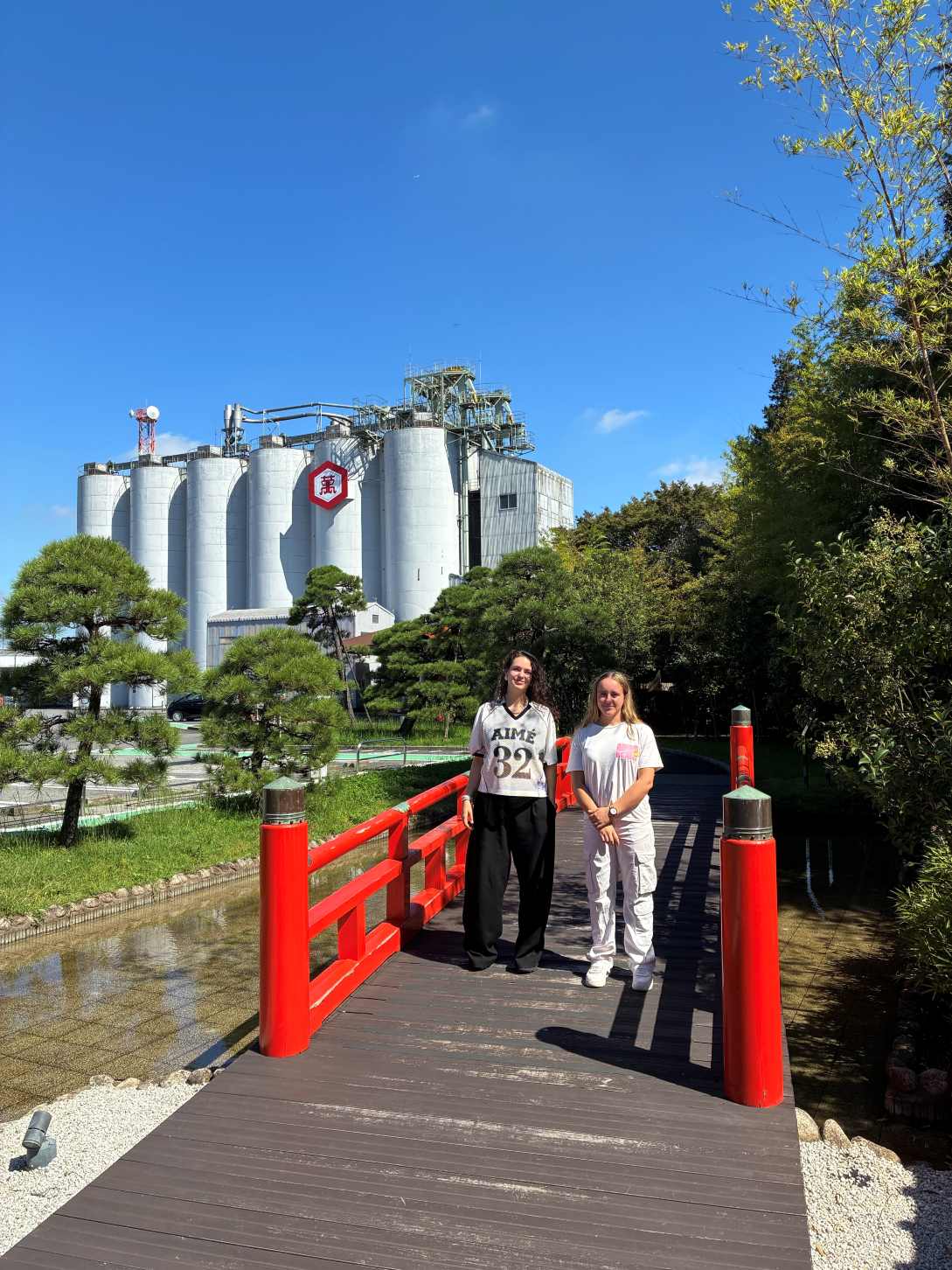
The day after the Japanese cooking workshop, the participants visited the Kikkoman Noda Plant. Through a tour of the Kikkoman Soy Sauce Museum, they learned about the soy sauce production process and the mechanisms of fermentation. They also deepened their understanding of the history of soy sauce and its role as a cornerstone of Japanese food culture, while experiencing firsthand Kikkoman's commitment to quality and the craftsmanship behind its production through the plant tour.
Kikkoman will continue to promote Japanese food and Japanese culinary culture and foster international exchange through initiatives such as the "Concours Kikkoman" and Japanese cooking workshops.
Through Kikkoman Soy Sauce, we will continue to promote the international exchange of food culture and support the development of young chefs who will shape the future of food. We hope that the training program in Japan will be a valuable experience that further broadens the horizons of these two promising young chefs.