
Power of Fermentation
~World-renowned fermented foods of Japan~
1.Introduction
Fermentation is a phenomenon in which organic compounds undergo changes caused by the actions of microorganisms. More commonly, it describes the microbial production of substances beneficial to humans as opposed to that of substances that are harmful to humans, which is called rot. So, whether something is called fermentation or rot depends on the human perspective. Foods that are characterized by unique f lavors or functions developed by fermentation are produced primarily by mold, yeast, or bacteria. Sake, shochu spirits, beer, wine, whisky, brandy, spirits, miso, soy sauce, vinegar, fish sauce, natto (fermented whole soybeans), pickles, shiokara (salted fish a nd its viscera), katsuobushi (dried bonito), yogurt, cheese, cultured butter, and bread are all fermented. Without these fermented foods, our daily diet would suffer.
Japan’s hot and humid summer is preceded by a damp rainy season, conditions that encourage the growth of mold. Taking the advantage of this uncomfortable climate, our ancestors developed a way to produce foods with mold called koji. The process of producing traditional fermented foods in Japan using koji is called brewing (Photo 1). Brewed foods in Japan include sake, shochu spirits, mirin (sweet rice wine), soy sauce, miso, and vinegar. Koji mold produces a variety of enzymes, such as protease and amylase, that decompose the ingredients used in a brewing process. The use of koji mold (Photo 2) is not limited to brewing in Japan but is broadly applied in such fields as the enzyme industry and pharmaceuticals. In October 2006, the Brewing Society of Japan designated koji mold as the national fungi, in consideration that “it will surely bring about a great impact in the 21st century to spread the technology and culture of koji fungi from Japan.” In December 2013, “Washoku: traditional dietary cultures of the Japanese” was added to UNESCO’s intangible cultural heritage list. Washoku, the traditional diet of the Japanese, who have the world’s longest average life expectancy, is widely considered to be beneficial to our health. People around the world have come to appreciate washoku in ever increasing numbers. This article looks deeper into the significance of Japan’s fermented foods in washoku, focusing on soy sauce, miso, natto, and mirin.
 Photo 1 Marudaizu (whole soybean) Soy Sauce Koji

2.The Roots of Soy Sauce and Miso Are in Hishio.
The roots of soy sauce and miso are said to be in hishio, a salty preservative ingredient (Table 1). Hishio preparation was introduced to Japan from China along with the arrival of Buddhism. It is widely considered that misho was derived from hishio, and then that miso was derived from misho. Originally a tabletop seasoning,miso eventually came to be used in miso soup, from which its use expanded. The liquid that accumulated in the miso barrels may have then been adopted as a liquid seasoning, soy sauce (tamari soy sauce), in the Muromachi Period (1336–1573). Another proposed theory of soy sauce origins dates back to the Kamakura Period (1185–1333), when a Zen monk named Kakushin returned from China and taught villagers in Yuasa in Kii Province how to make Kinzanji miso. The liquid that accumulated in this process, tamari, was seen as the beginning of soy sauce. However, tamari from Kinzanji miso and tamari soy sauce are not the same thing. Because of the nutrition it offered, miso was used for army provisions, and the first miso plant in Japan is said to have been Oensogura, established in 1601 by Date Masamune (1567–1636), warlord of the Sendai Domain. During the Edo Period (1603–1868) koikuchi (common) soy sauce was developed in the Kanto Region. With its pleasant aroma and flavor, it soon spread throughout the country. Usukuchi (lightcolored) soy sauce was created in Tatsuno in Hyogo Prefecture, saishikomi (refermented) soy sauce in Yanai in Yamaguchi Prefecture, and shiro (extra light-colored) soy sauce in Hekinan in Aichi Prefecture.
Table 1 The roots of soy sauce and miso are in hishio.
| Meat hishio, vegetable hishio, and fish hishio (fish sauce) |
| Hishio was made by the Hishio Institute (Asuka Period 592–710) |
| From misho to miso? |
| Zen monk, Kakushin, introduced Kinzanji miso (Kamakura Period) |
| Samurai meals comprised rice, soup and one pickled vegetable dish. (Kamakura Period) |
| Liquid accumulated during miso production became tamari soy sauce (Muromachi Period) |
| Date Masamune built Oensogura (1601) |
| Koikuchi soy sauce (Kanto), usukuchi soy sauce (Tatsuno), saishikomi soy sauce (Yanai), shiro soy sauce (Hekinan) (Edo Period) |
3.Soy Sauce
Soy sauce has a long history. However, changes in the Japanese diet and increased overseas production of soy sauce for export have seen domestic production continuously decline (Table 2). Soy sauce shipments have been decreasing since peaking in 1973 at 1,290,000 kl (kiloliters) and were down to 690,000 kl as of 2022. The number of breweries also decreased from 6,000 in 1955 to 1,055 in 2022. Soy sauces are classified by Japanese Agricultural Standards (JAS) as koikuchi, usukuchi, saishikomi, tamari, or shiro, with the respective production ratios in 2022 being 84.9% for koikuchi, 11.4% for usukuchi, 0.9% for saishikomi, 2.1% for tamari, and 0.7% for shiro. When soy sauce is mentioned without specifying the type, it is assumed to refer to koikuchi. Soy sauce is also categorized by production method: honjozo (the traditional brewing method) which does not use auxiliary materials such as hydrolyzed vegetable protein (HVP); kongo jozo (semi-fermented method) in which HVP is added to moromi mash for brewing; and kongo (mixed method) in which HVP is added to kiage (raw soy sauce). The production ratios of these methods in 2022 were 89.5% for honjozo, 0.4% for kongo jozo, and 10.1% for kongo. The type that is primarily sold nationwide is honjozo koikuchi soy sauce. Yet, soy sauce also has regional varieties, with that in Kyushu being sweet and with varieties made by the kongo method being preferred in some areas. The National Soy Sauce Competition is held annually, and Table 3 shows the soy sauces that received the Minister of Agriculture, Forestry and Fisheries (MAFF) Awards in the 50th Competition, held in 2023. As these are highly acclaimed soy sauces, they are well worth trying if one gets the chance.
| Year | Shipment (kl) | Number of Breweries |
|---|---|---|
| 1955 | 973,800 | 6,000(※) |
| 1973 | 1,294,155 | 3,300(※) |
| 1989 | 1,197,279 | 2,307 |
| 2000 | 1,061,475 | 1,611 |
| 2005 | 938,763 | 1,626 |
| 2010 | 848,926 | 1,447 |
| 2015 | 780,411 | 1,258 |
| 2020 | 702,423 | 1,108 |
| 2022 | 697,422 | 1,055 |
| MAFF Award | ||
|---|---|---|
| Yamagataya Shoten Co,. Ltd. | Yamabun Betsujo Koikuchi Shoyu | Fukushima Pref. Koikuchi |
| Higeta Shoyu Co., Ltd. | Tokusen Koikuchi Shoyu | Chiba Pref. Koikuchi |
| Yamamotoya Koujiten | Komiyama Shoyu Gensen | Nagano Pref. Koikuchi |
| Sato Brewery Co., Ltd. | Shippo Kokusan Tokkyu Shoyu | Aichi Pref. Koikuchi |
| Nitto Jyozo Co., Ltd. | Take | Aichi Pref. Shiro |
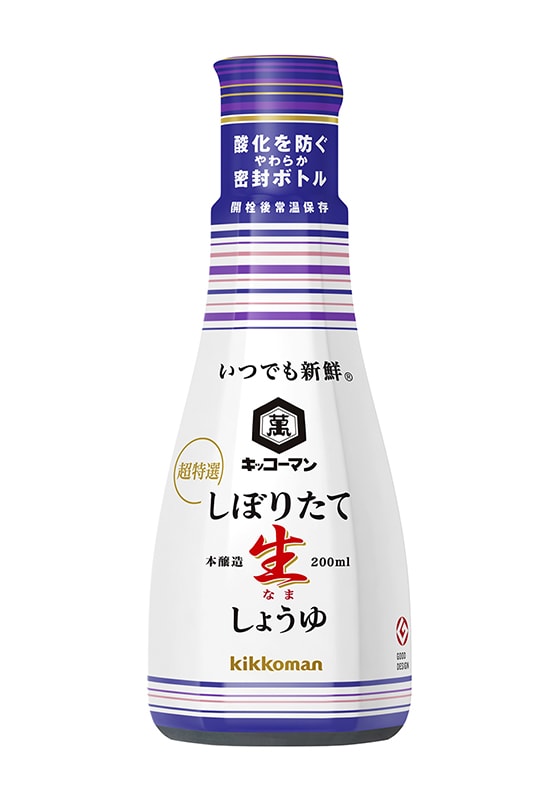
Soy sauce contains many functional components. For example, HEMF is a furanone produced by yeast that exhibits antineoplastic activity, nicotianamine is a special amino acid that suppresses blood pressure elevation, brown pigment (melanoidin) is an antioxidant, and shoyuflavone helps prevent osteoporosis. It has recently become known that soy sauce contains no allergens, as the allergens in wheat and soybeans are decomposed by the koji mold enzymes during the soy sauce brewing process. In addition, the polysaccharides found in soy sauce have an allergy suppressing effect and facilitate iron absorption. Although not directly related to soy sauce, it has been known that soy sauce lactic acid bacteria (Tetragenococcus halophilus) have an immunomodulating property and work to suppress allergies. The latest noteworthy research includes “Antihypertensive property of soy peptide-rich low-sodium soy sauce,”1 “Comparison between food cultures on the usefulness and effect of traditionally brewed soy sauce as sodium reducing material,”2 and “Development of soy saucelike seasoning using peas.”3 Soy sauce is normally brown. Upon contact with air, the color darkens and the quality deteriorates. Since airlocksealed soy sauce containers (Photo 3) were released, the preservation of soy sauce has been dramatically enhanced.
4.Miso
Many people make miso at home because, unlike soy sauce, miso is rather easy to make. Fermentation control is relatively easy and there is no pressing involved. Even today, many rural areas have shops that specialize in selling koji for miso making. Unlike soy sauce, miso was not regulated by the JAS until 2021, and many different types of miso are still commercially available. According to the JAS standards established in March 2022, miso is classified as rice miso, barley miso, soybean miso, or blended miso. Several other classifications are also used, such as taste-based classifications of sweet miso, semi-sweet miso, or strong miso; classification by color, such as white miso, light-colored miso, or red miso; and classification by production area, including Shinshu miso, Sendai miso, Echigo miso, and Sanuki miso. Another difference from soy sauce is that miso undergoes fermentation in a solid state with only a little moisture. As a result, decomposition by enzymes in koji mold is incomplete and results in miso containing more intermediate-decomposition products than soy sauce. Regarding the decomposition of protein, miso contains abundant peptides that are formed on the way to decomposition into amino acids. These peptides have many functions. The functional properties of miso include the suppression of high blood pressure, some protection from radiation, antineoplastic properties that prevent stomach cancer and breast cancer, the antimutagenicity effects of unsaturated fatty acid ester, and the antioxidative effects of saponin and brown pigment. Miso has an established image as function-rich, healthy food.
Shipments of miso, like soy sauce, have also decreased, falling from a peak of 579,000 tons in 1980 to just 369,000 tons in 2023 (Table 4). Although the decrease in miso consumption may be inevitable due to dietary changes, well-planned marketing could turn that around.
| Year | Shipment (t) |
|---|---|
| 1970 | 552,000※ |
| 1980 | 579,000※ |
| 1990 | 555,000※ |
| 2000 | 504,465 |
| 2005 | 471,312 |
| 2010 | 432,734 |
| 2015 | 413,818 |
| 2020 | 398,536 |
| 2023 | 369,538 |
5.Natto
Natto is made by fermenting steamed soybeans with Bacillus subtilis var. natto. It is highly nutritious, being rich in protein, amino acid, vitamins, and more. It is also known as a health food with many functional components, including nattokinase, which prevents thrombosis, and Vitamin K2, which prevents osteoporosis. The author of this article and others have discovered that koji mold produces dipeptidyl peptidase 4 (DPP4), which is a new aminopeptidase.4 If a large amount of DPP4 is produced due to obesity, incretin (a hormone) is decomposed and insulin secretion decreases, causing type 2 diabetes to develop. Research using koji mold-derived DPP4 is being conducted to explore DPP4 inhibitory peptides in foods associated with the prevention of human type 2 diabetes. Finding that natto presents high DPP4 inhibitory activity and has a half-maximal (50%) inhibitory concentration (IC50) that is relatively high in value for a food at 6.35–7.1 mg/ml, the author’s team has determined that DPP4 inhibitory peptides in natto are Lys-Leu and Leu-Arg5 (Fig. 1 and Table 5).
| Fractionation conditions | Shipment volume (t) |
| Column | HW-40S (1.5 cm I.D. × 150 cm) |
| Fraction | 2.5 ml/tube |
| Flow velocity | 0.5 ml/min |
| Solvent | Ultrapure water |

Table 5 DPP4 inhibitory peptides in nattoプチド
| Inhibitor | IC50 (μM) | Remarks | Content (μg/g) |
|---|---|---|---|
| Diprotin A | 6.83±0.53 | DPP4 inhibitory peptide | ‐ |
| Ile-Pro | 167.79±4.96 | Rice bran hydrolysate DPP4 inhibitor | ‐ |
| Lys-Leu | 21.62±1.41 | Fraction No. 51 inhibitor | 50 |
| Leu-Arg | 598.02±18.35 | Fraction No. 61 inhibitor | 85 |
Since natto is a readily available food, it would be easy to promote it as a dietary habit containing DPP4-inhibiting peptides. Its consumption can help prevent type 2 diabetes.
6.Mirin
Mirin is sweet sake with an alcohol content of around 14%, categorized under mixed alcoholic beverages in the Japanese Liquor Tax Act. Article 3, Item (xi) of the Act defines mirin as an “alcoholic beverage with an alcohol content of less than 15% and extracted components of not less than 40%, produced by adding shochu spirits or alcohol, and other ingredients designated by cabinet order (such as glucose, starch syrup) to rice and malted rice, and then strained.” This means that mirin is sweet sake produced by adding steamed glutinous rice and malted rice to shochu or alcohol, to saccharify rice starch by the enzymatic action of malted rice. The sweetness of mirin 10 FOOD CULTURE is similar to that of amazake produced by saccharifying malted rice.
It seems that mirin was initially a sweet sake for women and others who could not drink strong alcoholic beverages. It later came to be used in a basting sauce for grilled eel and a dipping sauce for soba (buckwheat noodles) in the late Edo Period. In this way its use as a seasoning was established. From the Meiji Era (1868– 1912) to WWII, mirin began to see use in ordinary households, but it was still a luxury item and mainly used by Japanese restaurants to add a secret flavoring to dishes. During the war, in 1943, the government restricted production of mirin as a luxury item. The production restriction continued until 1951. From 1956 to 1962, steep liquor tax cuts led to its gradual spread to ordinary households. Today, mirin is one of standard seasonings of Japanese cuisine.
As mirin was initially sweet sake made for drinking, until recently there was an alcoholic beverage called honnaoshi (a mixture of mirin and shochu). As mirin is mostly used as a condiment for cooking, honnaoshi was abolished by the revised Liquor Tax Act in 1989. However, for New Year celebrations, mirin is drunk even today as toso prepared by soaking tososan (a mixture of medicinal herbs) in it.
The mirin production process is shown in Fig. 2. Steamed glutinous rice and malted rice (non-glutinous rice) are mixed with shochu or other alcohol, and the mixture undergoes saccharification and maturation at 20 to 30 degrees Celsius for 40 to 60 days. After pressing, it is heated, followed by sedimentation and filtration. After several months of storage, it is heated again and is ready for the market. The primary component of mirin is sugar, with 80 to 90% of it being glucose. Other than glucose, mirin abounds with oligosaccharide. The next largest component is alcohol, accounting for roughly 14%, mostly ethyl alcohol.

Because it contains many components and is an alcohol beverage, mirin offers unique effects when cooking. The benefits of mirin include six notable effects. The first is the impartation of a refined sweetness. Although glucose is the primary component of its sugar content, mirin also contains seven or more varieties of oligosaccharide, etc., so that its sweetness differs from sugar. The sweetness of glucose is a third that of sugar, and the character of its sweetness is different from sugar. The second effect is the impartation of glaze. Foods dressed with mirin have a shiny appearance because of mirin’s abundance of glucose and the action of oligosaccharides. The third effect is maintaining firmness. The sugar content and alcohol act to maintain firmness and prevent foods from losing shape. The fourth is the depth and richness in taste and umami supplied by mirin. This effect is brought about by amino acids, peptides, and other ingredients that are complexly intertwined with sugars and other components. The fifth is the permeation effect. Alcohol quickly permeates food, and helps the sugar content, amino acids, salt, and other components to be absorbed into the food. The deodorizing effect is sixth. This effect is brought about by a physical deodorization action that accompanies the evaporation of alcohol, and by the chemical deodorizing action of α-dicarbonyl compounds and amines. For seafood paste products, mirin is used to eliminate the fishy smell.
The functionalities of mirin include the antioxidative properties of brown pigment and the suppression of blood pressure elevation made possible by peptides.
7.In Closing
Fermented foods have an established image as health foods because they contain many functional components brought about by the fermenting action of microorganisms. Among others, soy sauce, miso, mirin and natto should be given further attention as seasoning and foods that support the longevity of Japanese and Japan’s washoku. Although we cannot expect medicinal efficacy from fermented foods, as they are not medicines, the continuous intake of functional components from fermented food may still offer preventive effects against diseases.
Attention should be focused not only on the functionality of fermented foods, but on their contribution to the flavor of dishes and their cooking characteristics. At the very least, a tasty meal stimulates the brain and contributes to mental health.
2)Shimojo, R., Hatamoto, O., Sato, T., Imamura, M., Itohiya, Y., Hasegawa, K., Kremer, S., Leong, L.P., and Mojet, J. (2017). Journal of Soy Sauce Research and Technology , 43, 187
3)Nakahara, T., Shiga, K., Yamazaki, T., and Umezawa, H. (2020). Journal of Soy Sauce Research and Technology , 46, 79
4)Tachi, H., Ito, H., and Ichishima, E. (1992). Phytochem ., 31, 3707
5)Sato, K., Miyasaka, S., Tsuji, A., and Tachi, H. (2018). Food Chem ., 261, 51

■Research areas
Zymurgy and applied microbiology
■Educational background
Completed a master’s course at the department of Agricultural Chemistry, the Graduate School of Agriculture, Tokyo University of Agriculture, and holds a Ph.D. in agricultural chemistry
■Present positions
Professor emeritus at the Tokyo University of Agriculture, Director of the Japan Soy Sauce Technology Center, Director of Brewing Society of Japan, Vice Chairman of Mirin Kenkyukai, Vice President of the Japanese Society of Wellness & Preventive Medicine, and many more
■Awards
Brewing Society of Japan Technical Award 1997, the Japanese Society of Wellness & Preventive Medicine Dissertation Awards 2008, 2010 and 2012, Soy Sauce Technology Award 2009 and 2019, and Japan Soy Sauce Association Distinguished Service Award 2010