
What Is Halal?
What Is Halal? ~An approach to food diversity ~
1.Preface

I had an opportunity to discuss ‘What is halal? – An approach to food diversity –’ on December 2, 2023, in an open lecture hosted by the Kikkoman Institute for International Food Culture.
Roughly 3.5 billion years ago, living organisms emerged on earth. Those organisms have evolved to today’s human through various twists and turns. It is difficult to delineate the course of evolution. When I was working in the laboratory at Higeta Shoyu Co., Ltd., I grew microorganisms in large volumes and disinfected them. This experience made me think about life’s meaning. An old saying has it that Issun no Mushi-nimo Gobu no Tamashii (even the weakest and smallest of beings have their own souls). If this is so, we should recognize meaning in the existence of minute bacteria, fungi and filamentous fungi. In 2012, I visited Manshuin Temple in Sakyo-ku, Kyoto. At the back of the temple, quietly sits a mound of fungi.1 The purpose of the visit was to show gratitude to it by offering sake and a prayer.
2.What Is a Vegetarian?
Later, I wrote a book titled Daizu Henshin Monogatari (The Story of Soybeans and their Transformation)2) and explained what it means to be a vegetarian. India’s population is predominantly Hindu, who are mostly vegetarian. Although they generally don’t consume animal produce, there is still a wide variety of foods in their diet. Vegetarians are increasing in Western countries as well, for a number of reasons. Religious reasons are prominent, but an increasing number of people choose to be vegetarians for reasons of health, their impact on the global environment and more.
In Japan, “vegetarian” is often translated as saishoku shugisha (vegetable-consuming person). This may be misleading as it gives the impression that they eat only vegetables. It is also true that most people believe the word was derived from the word for vegetable. However, many vegetarians claim that the word came from the Latin word vegetus, meaning fresh or active, and does not mean simply a vegetable-consuming person.
Vegetarians are those who don’t consume animal produce. However, this distinction presents itself in several ways, some of the most common presented here:
1) Vegan (pure vegetarian)
Veganism strictly rejects the consumption or use of any animal product. Regarding foodstuffs, they do not consume dairy products, egg products, or insects, not to mention meat, fish, and shellfish. As for nonfood products, they do not use products derived from animals, such as leather, wool, and silk. Dietary veganism, in which only animal-derived food products are avoided, is categorized differently. Even with dietary veganism, the growth of children should be fine if soybeans with 100 amino acid scores are properly consumed.
2) Lacto-vegetarian
Of animal-derived produce, only dairy products such as milk and cheese are allowed for consumption. “Lacto” means dairy products.
3) Ovo-vegetarian
Of animal-derived foods, only egg products are allowed for consumption. “Ovo” means egg. When only dairy products and egg products are allowed, they are categorized as lacto-ovo vegetarians, and Western countries have many vegetarians of this type.
There are other types of vegetarians, such as those who permit consumption of some kinds of meat from among mammals, poultry and marine products, instead of avoiding animal produce altogether. Regarding vegetables, there is also a concept of avoiding damage to individual plants by harvesting root vegetables, etc. It can be said that a respect for all life is common to these concepts.
3.Human History and Emergence of Religions
In 2017, invited by a fellow engineer, I began working as an auditor for the NPO Japan Halal Association. Through my work there, I could not help but ponder what it means to be human and what God is. As a result, I came to understand the history of such thought, from Greek myths when many gods existed to monotheism, and I learned about the relationships between different religions. It became clear to me that human history began when the 4th Ice Age ended. A massive flood caused by thawing glaciers also took place at the start of human history. Thereafter, coinciding with the start of agriculture, the homosphere (or humansphere)3 as defined by Takafumi Matsui came about. Alvin Toffler called this the first wave in his book The Third Wave.4 Subsequently, we saw the industrial revolution and post-industrial society. If Toffler were still alive, he would call today’s ICT revolution, which threatens the existence of mankind, the fourth wave.
For periods preceding the development of societies and ancient states, Jean Jacques Rousseau’s Discourse on the Origin and Basis of Inequality Among Men5 provides some insight. Following this era, the five major world religions emerged, which were unfortunately at the center of many wars and conflicts. Especially regrettable are the conflicts between Christian sects, such as the numerous wars that have repeatedly taken place between Catholics and Protestants. This is explained by Samuel P. Huntington in his book Bunmei no Shototsu to 21 Seiki no Nippon (The Clash of Civilizations and Japan in the 21st Century).6
- Islam and Christianity The Christian Crusades are well known.
- Between Christian sects Catholics and Protestants Many wars have taken place.
- 1Hussite Wars (15th century)
- 2Kappel Wars (16th century)
- 3Schmalkaldic War (16th century)
- 4French Wars of Religion (16th century)
- 5Eighty Years' War (16th to 17th centuries)
- 6Thirty Years' War (17th century)
4.Increasing Muslim Population
According to the Pew Research Center, a U.S. research agency, there were 1.6 billion Muslims and 2.17 billion Christians in the world in 2010, which they predict will grow to 2.76 billion Muslims and 2.92 billion Christians by 2050, showing Muslim parity with the Christian population. In line with this, the Muslim market is expanding (Figs. 1 and 2).
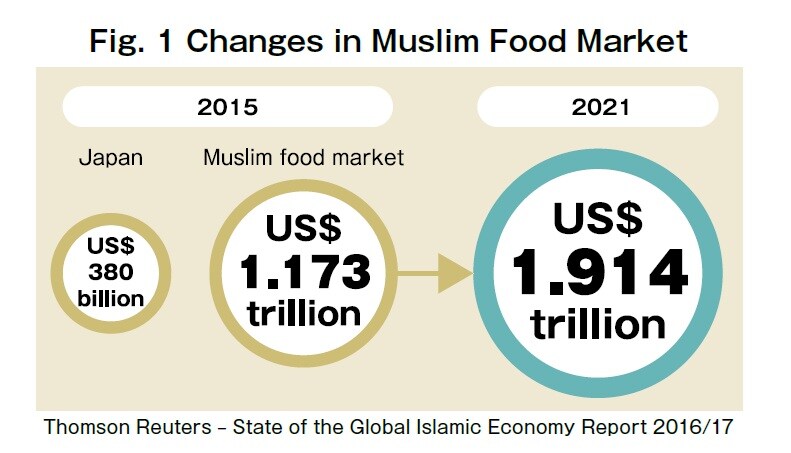 Fig. 1 Changes in Muslim Food Market
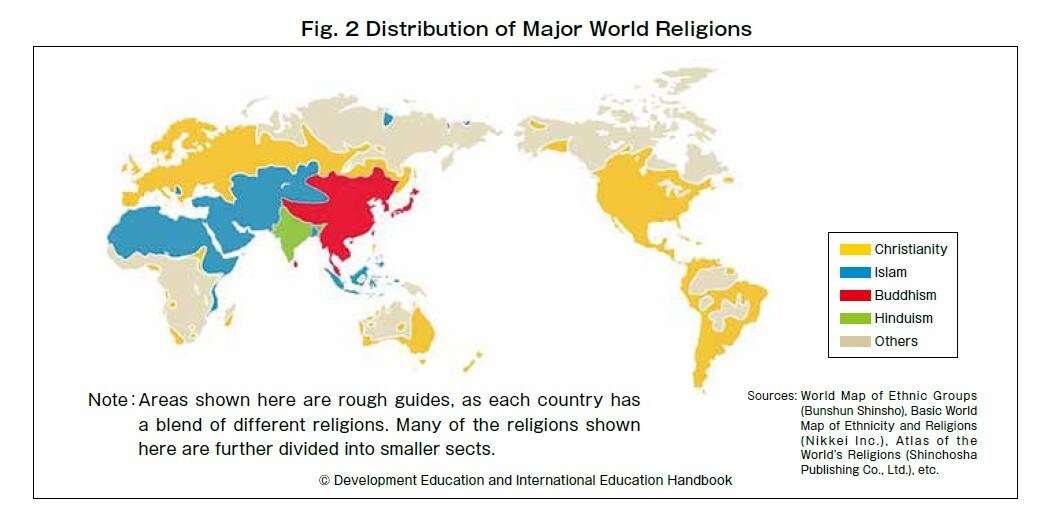
Judaism’s kosher and Islam’s halal, which originates in kosher, governs behaviors as well as diet. The big taboo for both is pork. How pork became taboo is thoroughly explained in Good to Eat: Riddles of Food and Culture by Marvin Harris.7
Ten thousand years ago in the Middle East, pigs were commonly raised as livestock. Then, due to deforestation and increased population, pasture areas expanded and desertification progressed. In this environment, raising pigs became difficult, as they eat grains, much like humans. Ruminant animals presented no problems as they eat grass. This is summarized in my article titled “Shoku to Shukyo o Kangaeru (Consideration of Food and Religion)”8 in the information magazine JAS to Shokuhin Hyoji (JAS and Food Labeling).
Yet another religious war broke out in the Middle East in 2023. Of course, it cannot be called either kosher or halal. As I noted in my aforementioned lecture, war is the creation of a demon who tries to hamper God’s deeds. All five major religions require a demon to make sense of their world-view. I earnestly pray for a cease-fire at the soonest possible date.
| Judaism | Christianity | Islam | Buddhism | Hinduism | |
|---|---|---|---|---|---|
| Establishment | 6th to 5th century B.C. | 1st century | 7th century | 5th century B.C. | Late B.C. to early A.D. |
| Founder | Moses (13th century B.C.) |
Jesus | Muhammad | Gautama Siddhartha | Unknown |
| God | Yahweh, the One and Only God | The Father, The Son, The Holy Spirit (Trinity) | Allah, the One and Only God | None | Polytheism (Shiva, Vishnu, etc.) |
| Devil | Azazel, etc. | Satan, etc. | Shaytan, etc. | Mara | Aghasura, etc. |
| Religious scripture | Old Testament | Old Testament / New Testament | Quran (Koran) | Buddhist scriptures (many) | Veda and many others |
| Doctrine and distinctive features | Chosen people ideology, Messianism, legalism, Saturday as Sabbath | Jesus as the Savior, God’s absolute love and neighborly love, Sunday as Sabbath | Absolute devotion to God, strict prohibition of idol worship, six articles of faith and five pillars of Islam, day of rest is Friday | Denial of caste system, Nirvana achieved through practice of Noble Eightfold Path (spiritual training) | Affirmation of caste system, training aiming at Nirvana from samsara (cycle of reincarnation) |
| Category | Halal (Islam) | Kosher (Judaism) |
|---|---|---|
| Meats | Cloven-hoofed ruminant animals are acceptable, except for donkeys and mules. | Same as halal, but donkeys and mules are acceptable. |
| Fowl | Permitted except for specific 24 species including raptores, ostriches and crows. Peckers are not permitted. | Same as halal, but peckers are acceptable. |
| Fish and shellfish | Permitted in principle. In case of culture, if the feed contains Najis (uncleanness by Islamic teaching), it is not permitted. | Only those with scales and fins are permitted. |
| Dairy produce, egg | No restrictions | No restrictions |
| Alcohol, ethanol | Not permitted. Disinfecting with ethanol is permitted. | No restrictions |
| Slaughtering method | Slaughtering must be conducted as quickly as possible with animals suffering as little as possible. During the procedure, a prayer ‘in the name of God’ must be recited (halal slaughter). | Same as halal. |
| Food combinations | No restrictions | Meat and dairy products must not be cooked at the same time. |
5.Acquisition of Halal Certification
Halal certification requires a lot of effort. First, a list of raw materials (items: name, names of products used, names of suppliers, expiration dates of certificates, etc.) must be made. Then, written standards for each individual raw material (collective indication: name, names of raw materials, lower layer raw materials, processing aids, content, best-before date, storage method, seller, etc.) must be prepared. In addition, as with non-allergenic food, the sources of each raw material must be traced and confirmed. Ideally, such raw materials would have already been granted a valid and unexpired Halal certification. For raw materials without a halal certification, the following must be confirmed in writing by the manufacturer
1) No animal-derived materials are used as raw materials;
2) No liquors are used;
3) If microbially derived, culture medium must be halal (no animal-derived materials are used).
Consideration must be given to packaging as well. A list of packaging materials must be prepared. For each material, written standards (items: name, material quality, capacity, whether animalderived materials are used, etc.) must be obtained. The point here is that plastics in packaging should be free of animalderived materials. (Refer to Fig. 3.)
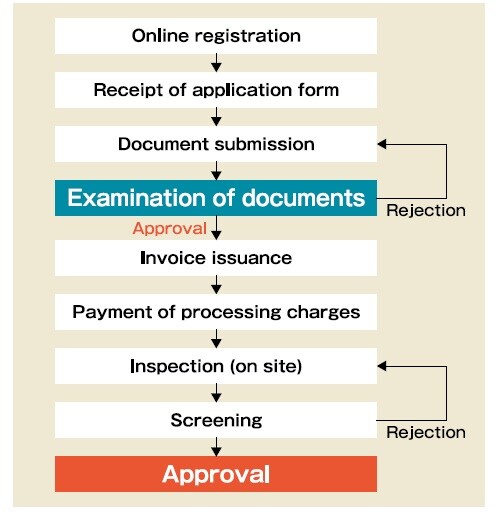
Regarding the manufacturing site, consideration must be given to HACCP, and halal policy, the halal committee, internal audits, management reviews, risk management, and traceability must be established. In addition to halal related documents, a certified copy of company registration and other relevant documents must be included for submission. An example of the flow chart for certification is shown in Fig. 4. In general, the expenses run near one million yen, although this depends on the certification organization and the number of products to be certified.
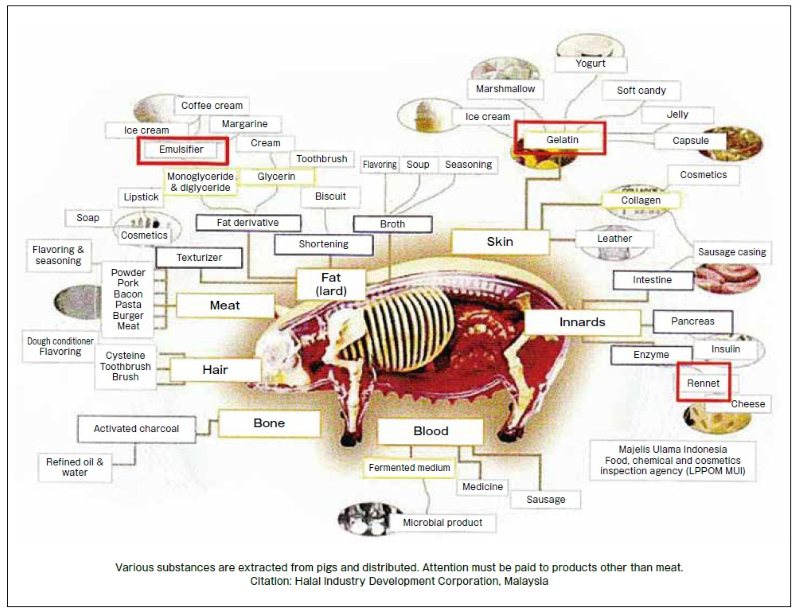 Fig. 3 Products derived from pigs
2)Yokoyama, T. (2021). Daizu Henshin Monogatari (The Story of Soybeans and their Transformation), e-book, Kosetsusha, Inc. (in Japanese)
3)Matsui, T. (2000). Ichiman-nen-me no Ningen-ken (Homosphere in the 10,000th year), WAC inc. (in Japanese)
4)Toffler, A. (1982). Dai San no Nami (The Third Wave), Chuko Bunko (in Japanese)
5)Rousseau, J.J. (2008). Ningen Fubyodo Kigen-ron (Discourse on the Origin and Basis of Inequality Among Men), Kobunsha Bunko (in Japanese)
6)Huntington, S. (2000). Bunmei no Shototsu to 21 Seiki no Nippon (The Clash of Civilizations and Japan in the 21st Century), Shueisha Shinsho (in Japanese)
7)Harris, M. (1988). Shoku to Bunka no Nazo (Good to Eat: Riddles of Food and Culture), Iwanami Shoten (in Japanese)
8)Yokoyama, T. (Sep. 2021). Shoku to Shukyo o Kangaeru (Consideration of Food and Religion), JAS and Food Labeling (in Japanese)
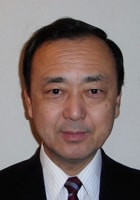
Director of Yokoyama Office of Engineers and former head of the Quality Assurance Section at Higeta Shoyu Co., Ltd., he is actively engaged as a consultant in new product development, labeling, HACCP, and employee education for food manufacturers and farms at home and abroad. He has profound knowledge in the field of food safety and security, and risk management, and has delivered many lectures on extensions of best-before dates, accelerated testing, risk communication, and other topics.