
Biwa
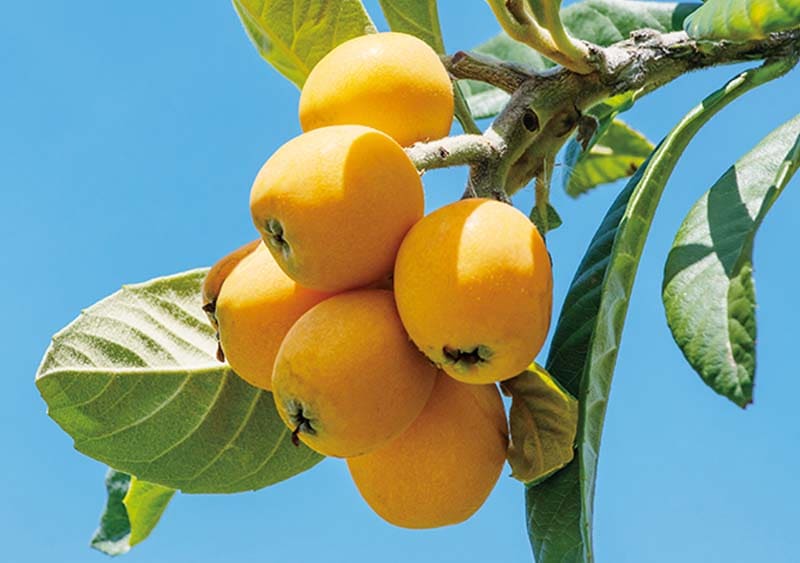
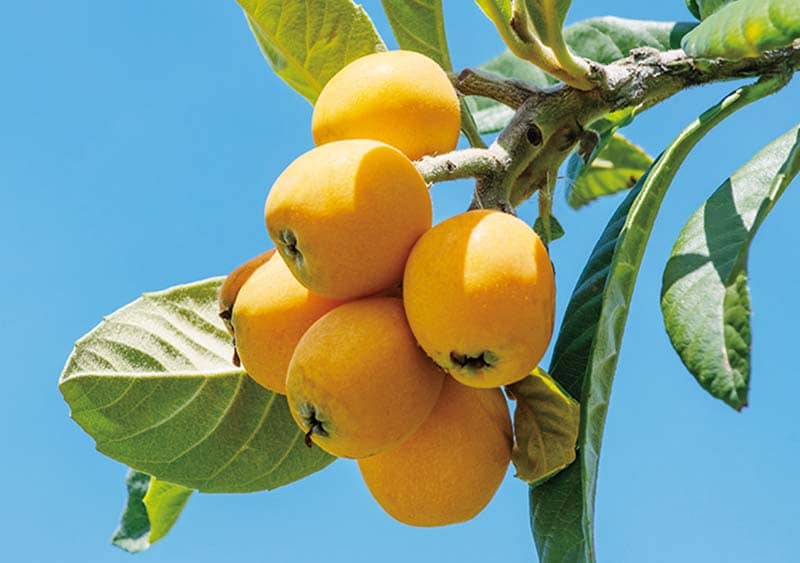
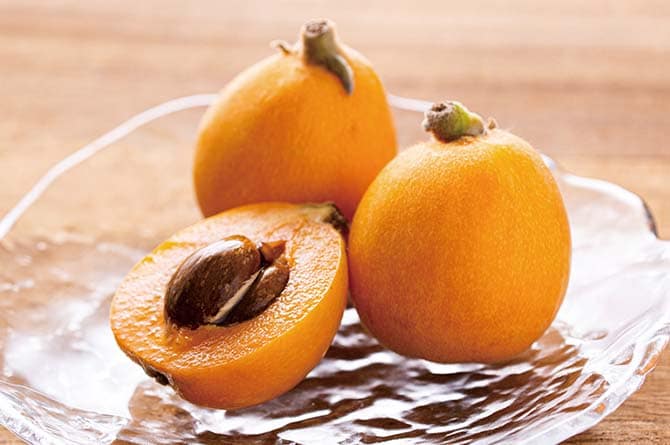
Loquat fruit is called biwa in Japanese. The oval-shaped golden biwa is a juicy sweet-tasting stone fruit complemented by a delicate yet refreshing tartness. The biwa is mentioned in eighth-century Japanese records, but today’s most widely cultivated biwa variety, the Mogi, likely originated from seeds brought from China to Nagasaki Prefecture in the 1830s.
Loquat trees blossom in winter and the fruit matures from May to June. Nagasaki and Chiba prefectures, with their warm climates and relatively dry summers, produce high quality loquats: the Nagasaki Mogi is prized for its elegant aroma and mild acidity, while Chiba’s juicy Boshu biwa is larger in size.
Rich in dietary fiber and nutrients such as beta-carotene and potassium, loquats are delicate and require labor-intensive cultivation; this extra care classifies them as a premium fruit which is often used in formal Japanese gift-giving. As such, biwa have been presented as a seasonal gift to the Imperial Household for over a century.
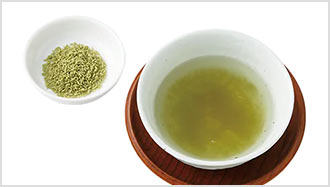
The fruit can be enjoyed peeled and eaten fresh, served in a refreshing jelly, or prepared as jam. Japanese biwa-cha tea, made of loquat leaves, contains potent antioxidants, and has long been considered beneficial in supporting overall health.