
Pottery and Porcelain
This year’s Feature series explores Japanese tableware, beginning with the history of pottery and porcelain, and how they enrich the culinary experience.
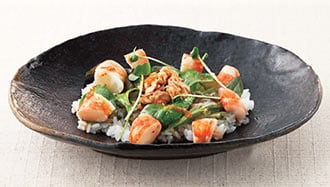
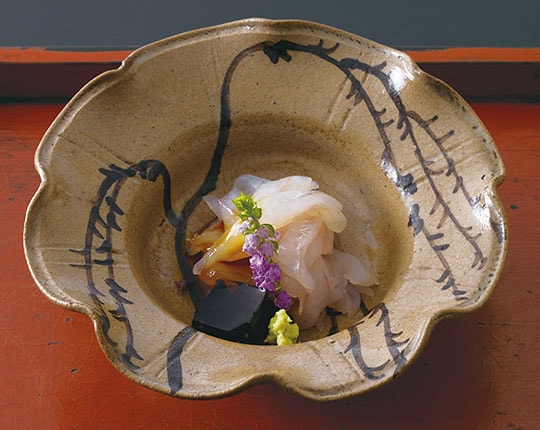
A defining feature of the relationship between Japanese food and the tableware it is served on is their complementary nature. While the food itself is the main focus of a meal, in contemporary Japanese culinary culture, the vessels used to serve that food are regarded as more than mere receptacles: they play a remarkable supporting role in elevating our food experience, in much the same way that we humans wear clothing to enhance our appearance. In other words, not only the food, but the vessel itself becomes an object of appreciation by the diner.
Pottery history
The history of Japanese pottery extends back some ten thousand years. Following on the prehistoric earthenware eras of the Jomon (ca. 13,000-400 BCE), Yayoi (ca. 400 BCE- 300 CE) and Kofun (ca. 200-600 CE) periods, people began to produce pottery called Sue ware around the fifth century. Fired at temperatures of 1,100℃ or more, this was a hard, unglazed gray stoneware used to make jars and sake flasks. During the eighth century, China-influenced glazed pottery and three-color wares (sansai) began to be fired in Japan.
The influence of China’s advance pottery production technology remained significant even into the ninth century. Imported Chinese wares were held in the highest regard by court nobility, as well as by influential temples and shrines. The next-best alternative, supplied to the aristocracy and places of worship, was shirashi—pottery with a grayish-white base complemented by greenish-yellow ash glaze. Shirashi was produced in what is present-day Aichi Prefecture by the Sanage kilns, which had carried on the traditions of Sue ware.
Kiln centers
In the twelfth century, following the epoch-making transition from rule by the court aristocracy to government under the warrior elite, six major kiln centers referred to as the Six Ancient Kilns of Japan—Tokoname, Seto, Tamba, Shigaraki, Echizen and Bizen—began to fire large numbers of jars and mortars that were distributed throughout the country and utilized by common people. Among these kilns, only Seto produced glazed ware and catered to the aristocracy and to temples. During the medieval era, from the late twelfth to sixteenth centuries, high-fired, unglazed stoneware (yakishime) became the predominant type of pottery. These six kiln sites were not the sole producers, however; there existed over eighty small-scale kilns operating around the country supplying local needs.
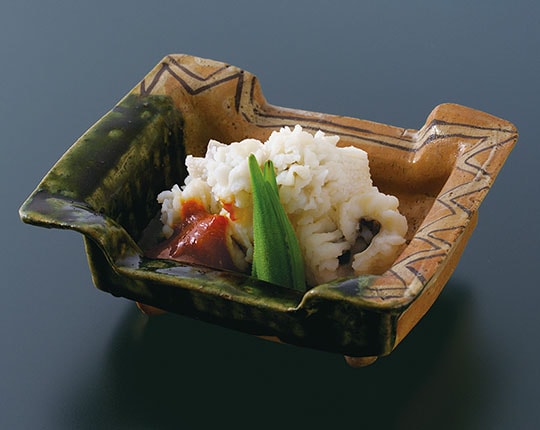
New types of pottery emerged during the turbulent period of warlord rivalries in the sixteenth century, during which the art of the tea ceremony flourished. Momoyama tea wares, which include Kiseto, Shino and Oribe wares, were in high demand during the Momoyama period (1568-1615). Works from other kilns in western Japan, including Iga, Bizen and Karatsu, were also coveted by tea connoisseurs. Following Japan’s Korean invasion campaigns in the 1590s, prominent kilns sprang up in Japan’s southern island of Kyushu which produced Korean-influenced ware and tea pottery Momoyama pottery pieces center around tea utensils and household tableware and they are, with their idiosyncratic shapes, glazes and decorations, considered the finest wares produced in the history of Japanese pottery and porcelain.
Porcelain
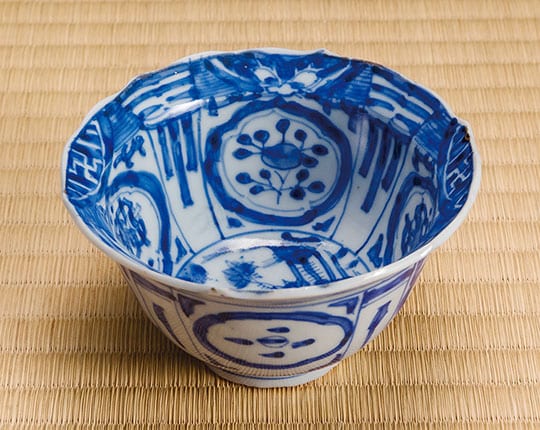
Japan’s first porcelain ceramics, Imari and Nabeshima wares, appeared in northern Kyushu during the seventeenth century. Around that same time, pottery began to be made in the old capital of Kyoto as well. Developments in Kyoto ware eventually led to the production of colorful food vessels, exemplified by the works of master artisans Nonomura Ninsei (ca. 17th C) and Ogata Kenzan (1663-1743).
During the nineteenth century, pottery-making began to flourish as never before. Lords of domains around the country developed their own wares (oniwa-yaki), and rural areas established kilns that fired vessels for their communities. These developments led to the widespread use of pottery for tableware that gradually replaced lacquerware, which had previously accounted for most tableware. As Japan’s food culture matured, diverse variations emerged that have been passed down to contemporary times.
Serving appreciation
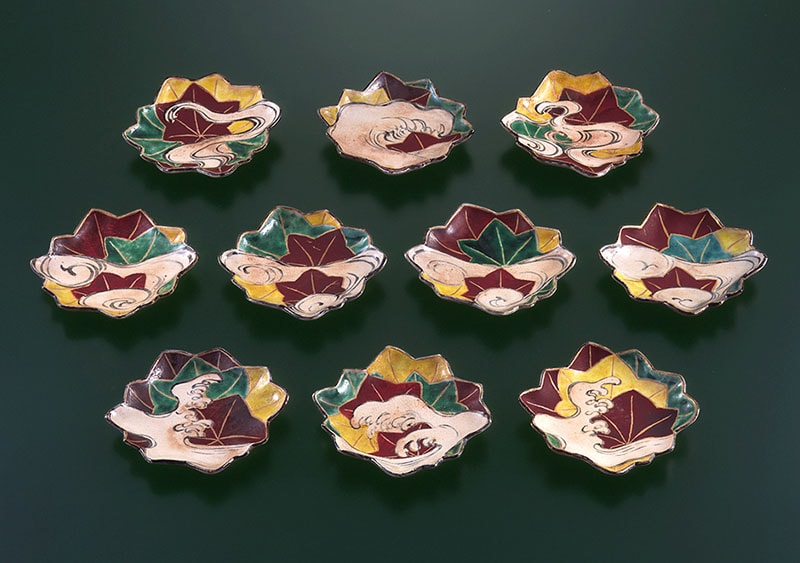
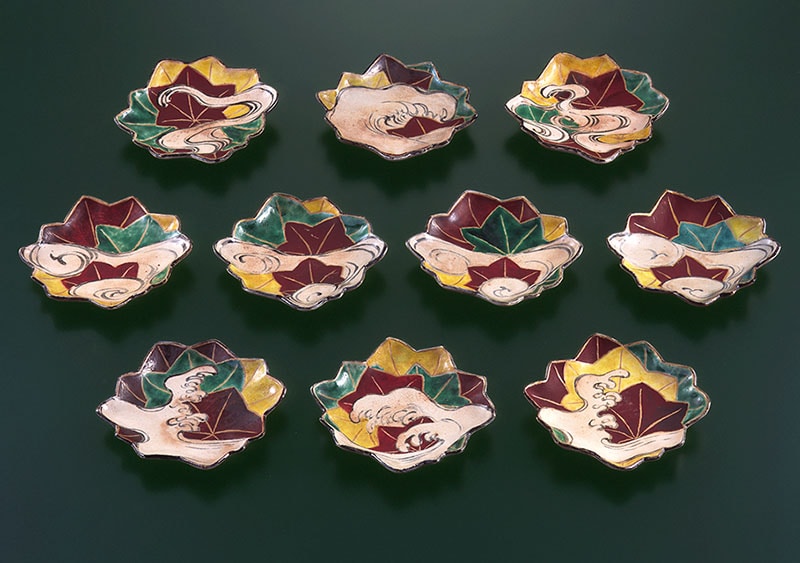
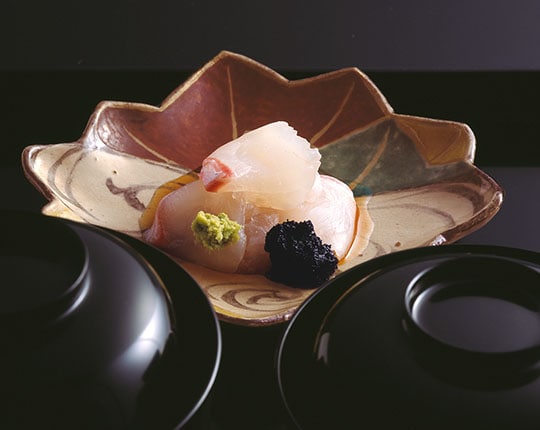
The relationship between Japanese cuisine and its vessels attained its present state by building on pottery and porcelain traditions cultivated over centuries. The result is an inseparable union, wherein diners enjoy food while admiring the ware it is served upon. Perhaps a significant example of this relationship can be experienced through the works of the master craftsman Ogata Kenzan. One of his most acclaimed works is a set of ten overglaze enamel mukozuke dishes—small shallow dishes often used to serve traditional Japanese kaiseki cuisine. This set, titled “Kenzan Mukozuke with Tatsutagawa Design,” features motifs of the Tatsuta River, and is discussed in Hocho Yowa,1 a collection of essays by prominentwashoku chef Kaichi Tsuji (1907-1988). Chef Tsuji was the second-generation proprietor of the restaurant Tsujitome, and was known for his kaiseki cuisine served at tea gatherings.
In one of these essays, Tsuji escribes his reaction when asked to use Kenzan’s celebrated Tatsutagawa set at a late-autumn tea gathering. The chef, overwhelmed by thei decorative beauty, is oncerned that the dishes are too ornamental for serving food, and struggles to decide what to serve on them. Yet on the day of the gathering, after arranging the food on the dishes, he perceives an exquisite harmony between them. This humbling experience allows the chef to recognize the true greatness of Kenzan’s artistry, one which is rooted not only in brushstrokes, but in a deep understanding of the Japanese wabi-sabi aesthetic. Tsuji describes the affinity between the food and the mukozuke dishes: it seems as if the curvature of the dishes matches and welcomes the shape of folded sea bream sashimi garnished with chrysanthemum and rock tripe, while the black of the rock tripe unifies the composition. One can appreciate Tsuji’s wonder as Kenzan’s dishes reveal an impressive capacity to embrace the food that is served.
Many of Kenzan’s pieces incorporate classical literary themes, perhaps reflecting the upbringing and lineage of the Ogata family and the culture of Kyoto. This thematic imagery is expressed in his Tatsutagawa mukozuke: their maple leaf and flowing-water motif, seemingly a straightforward evocation of autumn, conceals refined sensibility and cultivation. If they should notice that the design represents the Tatsuta River, famed for its autumn maples, and recall even a single piece of classical poetry related to that site, the tea gathering will almost certainly be enlivened by spirited conversation. Such is the nature of Kenzan’s work: endlessly profound, revealing greater depths the more one learns about it.
1“Kitchen knife anecdotes,” Tokyo: Nikkei Inc., 1974.
Akiyoshi Hatanaka, born in 1959, specializes in pottery, porcelain and tea utensils. Formerly head curator at MIHO MUSEUM in Shiga Prefecture from 2017 until 2025, he currently serves as a specially appointed curator to the museum. In addition to curating special exhibitions of Ogata Kenzan, he established the museum’s collaborative school program over two decades ago, which continues to provide students with opportunities to experience authentic works of art today.