
Gumi Candy
Gumi are popular worldwide
Gummy chewy candy originated in Germany in the 1920s, and was first introduced to Japan in the 1980s, where it was marketed as gumi. Although gummy candy has long had a tasty reputation in this country, only in the past decade has the domestic gumi market exploded: current sales of gumi now surpass chewing gum, and it is one of the fastest growing categories among snacks in Japan. Furthermore, as Japanese confectioners craft products that tempt not only youngsters but adults, this broad appeal—supported by a strong cultural reputation for quality, presentation and innovation—has made Japan’s gumi wildly popular worldwide.
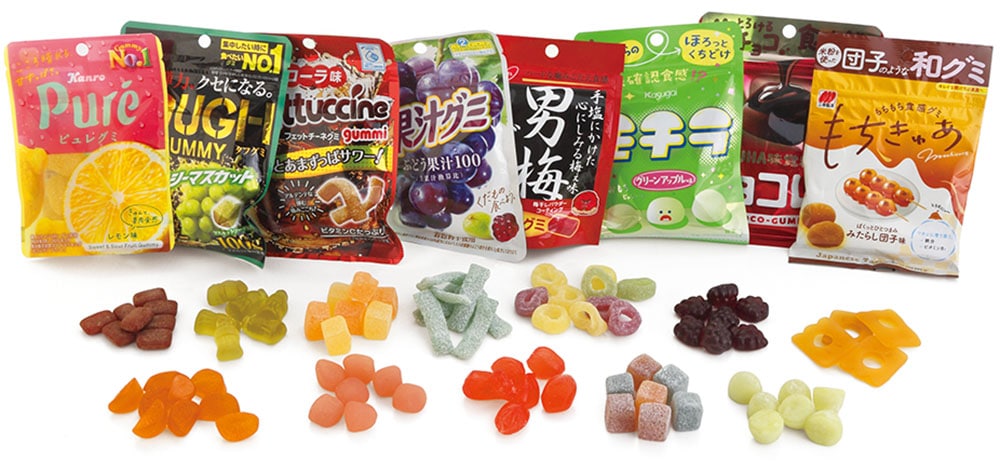
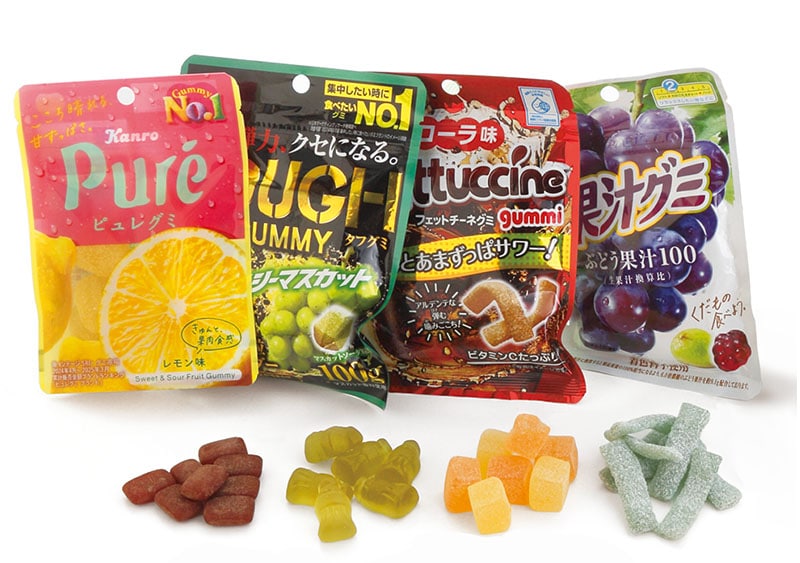
Gummies fundamentally consist of fruit or other flavorings added to gelatin and sugars, but Japanese candy manufacturers continually experiment and expand on this simple concept to produce novel gumi flavors, shapes and textures. There are apparently no limits to the possibilities: there are juicy,natural-tasting gumi that resemble real fruit, visually and taste-wise, while others are fusions of bitter and sweet, like matcha-chocolate. Gumi inspired by wagashi traditional Japanese confectionery include mitarashi dango (rice dumplings with sweet soy sauce glaze), and there are seasonal offerings like autumn muscat grape and spring sakura infusions.
Gumi shapes can be surprising, ranging from basic round or square to long and flat, like noodles, and character-shaped gummies win over anime and manga fans—some even glow in the dark. Texture-wise, most gumi are elastic, chewy and soft, but now-popular “hard-type”gummies offer up a mouthfeel of firm plus chewy in a single bite. One can enjoy gumi with powder coatings that introduce a crunch followed by chewy filling; others may prefer a crisp chocolate-coated gummy—and for any gumi-lovers who might be health-conscious, gumi supplemented with vitamins, proteins or collagen present nutritious options.
Social media clearly plays a large role in burgeoning gumi demand by highlighting aspects like quirky off-beat flavors, choice ingredients and cute limited-edition series—often backed by videos.
that feature gummy-chewing sounds. Given their robust social media presence, fresh realistic flavors, clever shapes and unexpected textures, it’s unsurprising that gumi are sought-after souvenirs by overseas visitors. The offbeat appeal of Japanese gumi offers those from other cultures a memorable way to connect with the taste and spirit of Japan.