
Peach
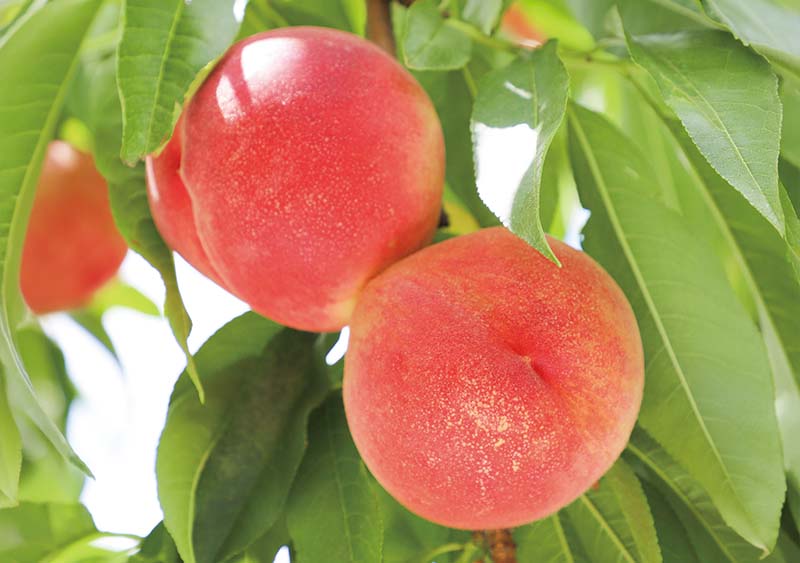
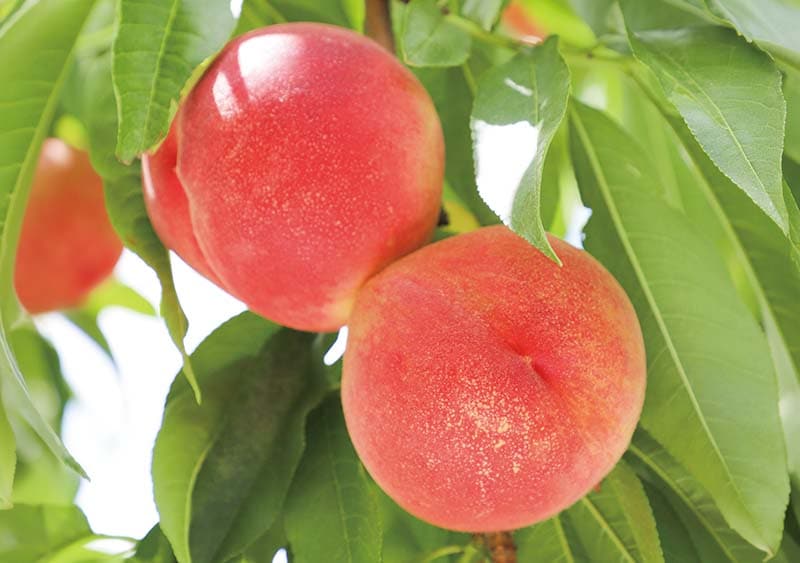
Peaches, called momo in Japan, were likely introduced from China around the third or fourth century. Traditionally valued for medicinal and ornamental purposes, significant cultivar development from the Meiji period (1868-1912) onward has resulted in today’s sweet, juicy varieties. Half of Japan’s domestic production comes from Yamanashi and Fukushima prefectures, where abundant sunlight and fluctuating day-night temperatures generate their rich fragrance and velvety texture.
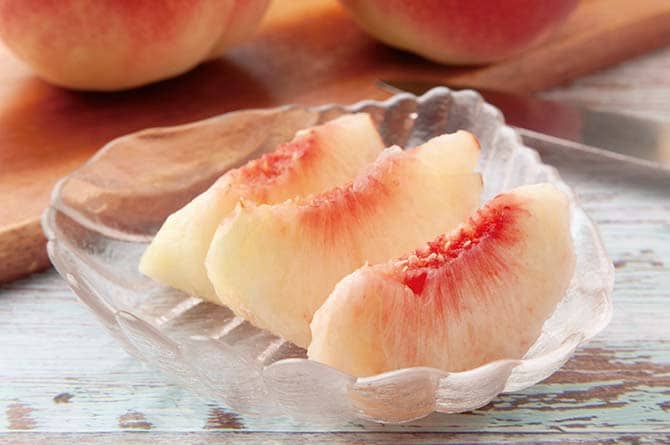
The vast majority of peaches grown in Japan are white peaches, and major varieties include Yamanashi’s Hakuho and Fukushima’s Akatsuki. The premium Shimizu Hakuto from Okayama Prefecture is also famous and is referred to as the “queen of peaches.” Japanese momo are often grown using the bagging technique, where each fruit is hand-covered with a paper bag as protection against rain, insects and sunburn. As a result, their flavor is particularly succulent and their attractive appearance is preserved. They are enjoyed peeled and eaten fresh.
Peaches are regarded in many Asian cultures as symbols of longevity and protection. In the Japanese folktale Momotaro, a boy born from a giant peach defeats wicked ogres, while during the Doll Festival (Hinamatsuri), it is customary to display peach blossoms to symbolize health and well-being.