
Shochu
Exploring the versatility of shochu
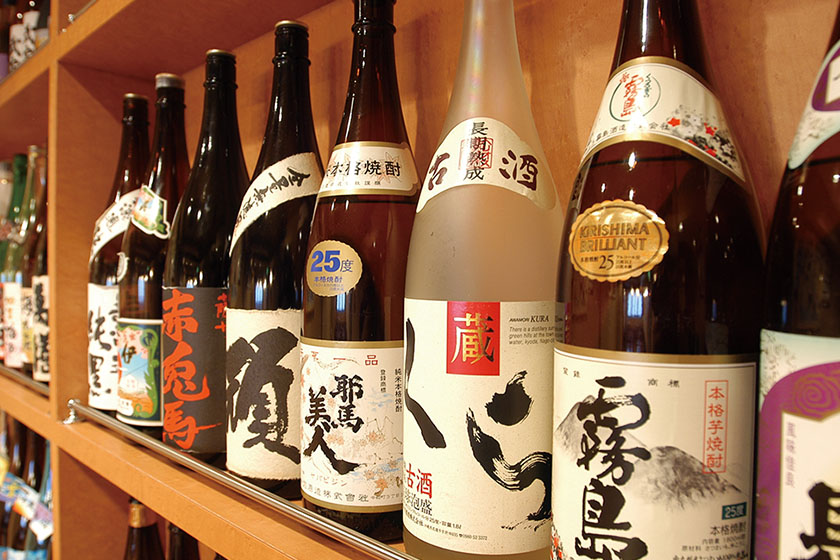
Shochu is a distilled spirit indigenous to Japan. While there are modern distillation methods used to mass-produce shochu, the focus here is on traditional honkaku “authentic” shochu, deeply rooted in the Kyushu area.
Honkaku shochu involves the single-distillation of specific regional agricultural products to make distinctive types of shochu, each of which reflects its origins. A single base ingredient—barley or potatoes, for example—is fermented with koji mold then single-distilled. With a relatively low alcohol content, the flavor, aroma and character of shochu thus vary significantly, depending on base ingredient, and each type has its enthusiasts.
Most honkaku shochu is region-based, the best-known of which is the rich, aromatic imo shochu made from sweet potatoes. Kagoshima Prefecture, a leading sweet potato producer, is home to the greatest number of shochu distilleries in the country. Smooth and fragrant mugi shochu made from barley is famously produced in Oita Prefecture. Kumamoto Prefecture is known for its slightly sweet kome shochu, made from rice. While these three honkaku shochu types predominate the market, there are others made from various local products from different regions. They include kokuto shochu, made from unrefined cane sugar, produced only in the Amami Islands of Kagoshima Prefecture, as well as “niche” shochu varieties made using buckwheat, chestnuts, shiso (perilla) or sesame seeds.
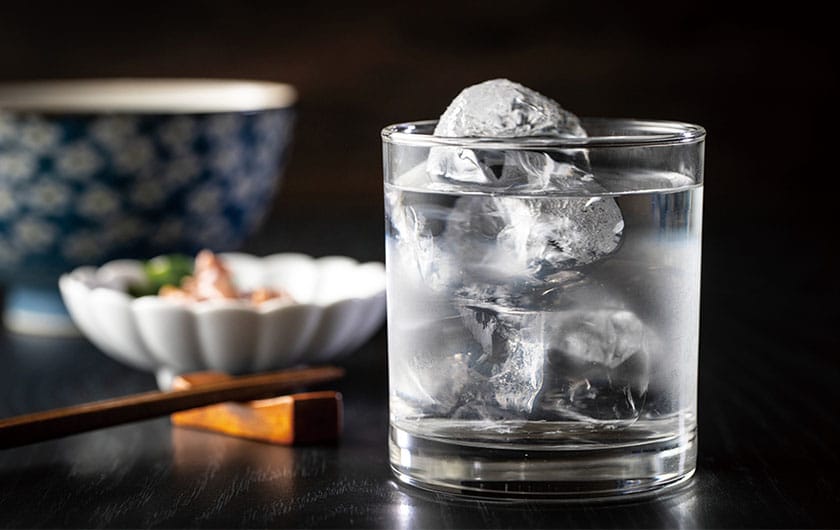
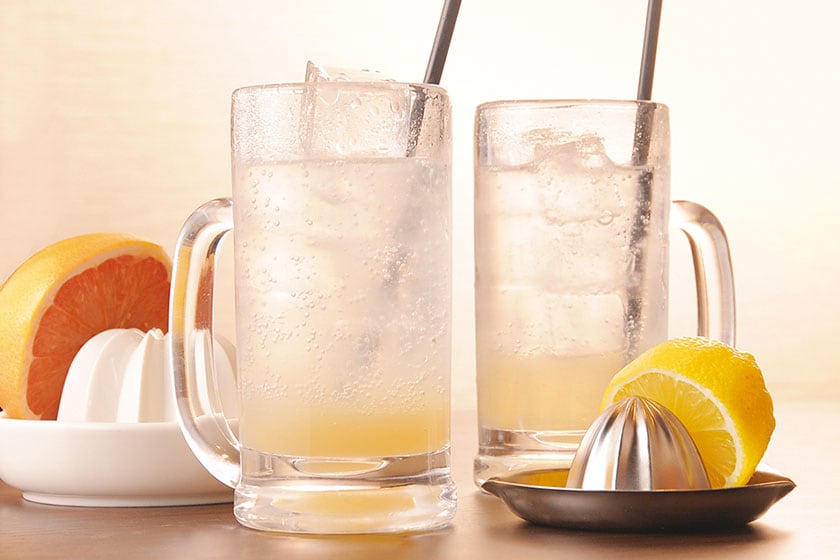
Regardless of its base ingredient, however, shochu is always clear and colorless, and drinkers are able to appreciate its essential taste. Shochu can be served neat, “on the rocks,” with water or soda, or mixed with hot water to bring out its aroma. Shochu-based cocktails are ever more trendy, as its mild taste accommodates an array of mixers and flavors. Most common is the chuhai, which is shochu mixed with soda and fruit juice or sweet liqueur, while more stylish cocktails may feature offbeat ingredients, like green tea and herbs. Its versatility pairs well not only with Japanese foods, but with all types of cuisines.
Emerging artisanal distillers are exploring this versatility by creating novel, small-batch craft shochu. Barrel-aged shochu is among these innovations, a process that lends it a gentle amber tinge while developing a rich aroma and flavor reminiscent of whiskey. Meanwhile, aromatic varieties of shochu that carry a hint of fruit are now marketed, sparking interest among younger demographics. As contemporary distillers honor and improvise on the traditions of shochu, they elicit a fresh appreciation of its original spirit.