
Quick Tsukemono
Our Japanese tsukemono pickle overview concludes with delicious short-prep options.
Many tsukemono pickles require multiple steps and lengthy preparation, but others can be enjoyed after very brief pickling times. These tsukemono include lightly pickled asa-zuke, shiokoji-zuke pickled in salted rice malt, and gari sweet pickled ginger, usually served with sushi.
Asa-zuke
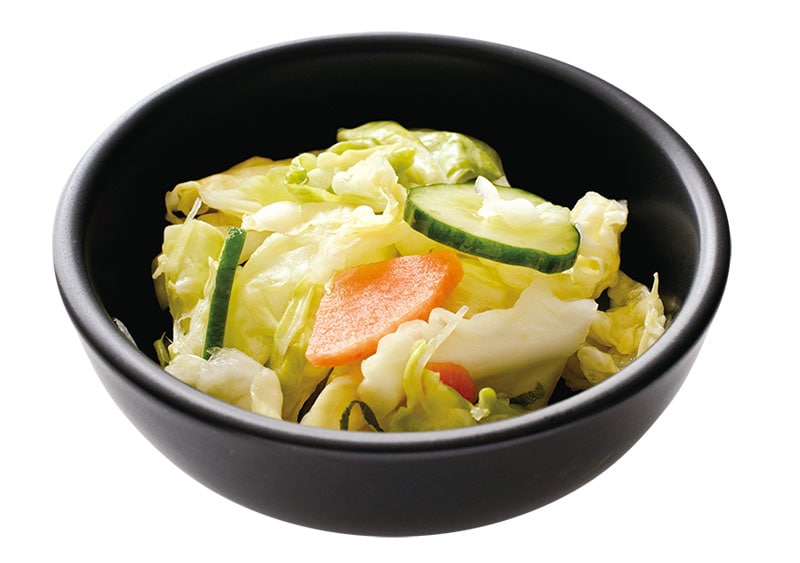
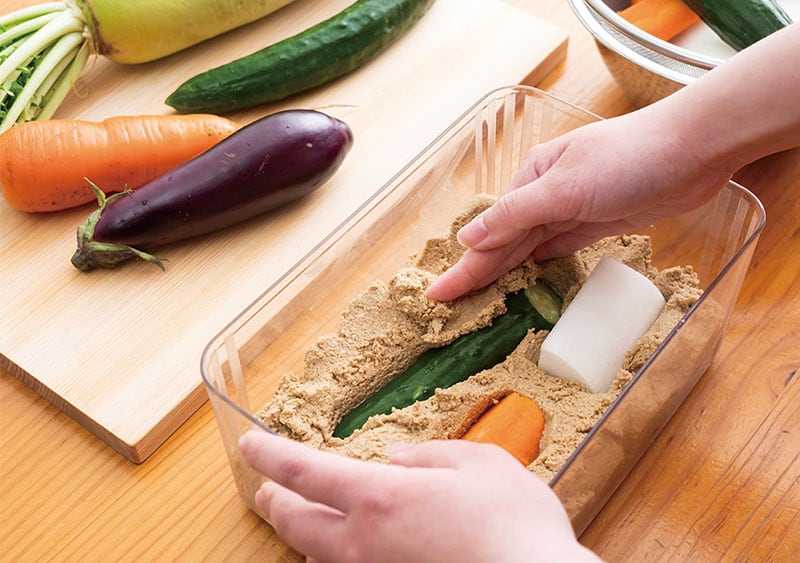
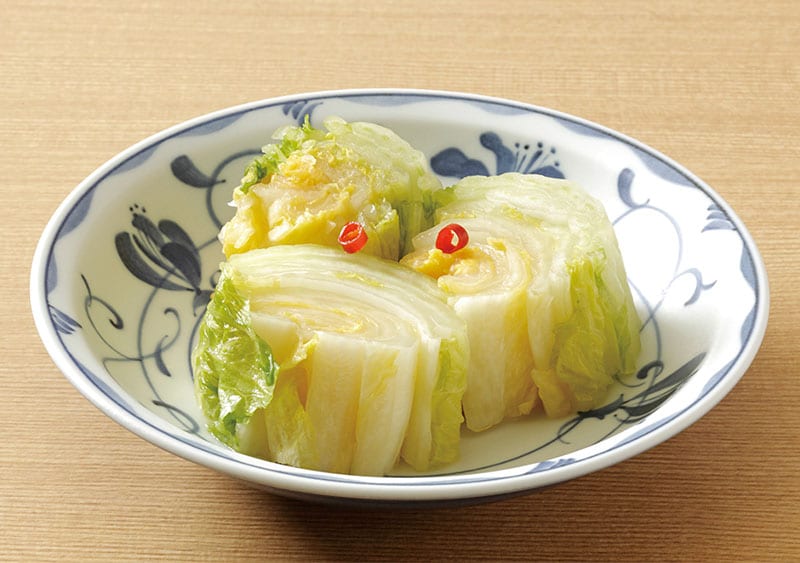
Crunchy vegetables like cabbage, cucumber and carrot are cut into bite-sized pieces, placed in a container and massaged with a seasoning liquid. After refrigerating for 15-30 minutes, asa-zuke are ready to eat and have the crispness of fresh vegetables. Typical seasoning liquids are soy sauce-based, salt-based, or dashi-based, with one’s preferred spices and ingredients added. While it’s easy to create a favorite seasoning liquid based on personal taste, a wide range of convenient ready-made asa-zuke seasoning mixes are sold in stores.
Shiokoji-zuke
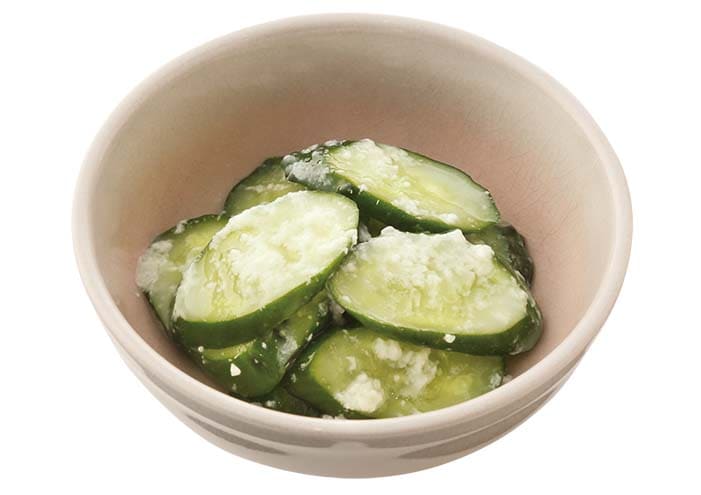
Shiokoji is a traditional Japanese fermented seasoning made with rice koji that has been fermented and matured with salt and water; preparation of these pickles usually involves using a pre-made shiokoji. Cut-up vegetables are mixed with shiokoji and refrigerated. Pickled for just one or two hours, the tsukemono have a light, refreshing texture, similar to asa-zuke. If pickled overnight, the result is a softer texture. Enzymes in the koji elicit the natural umami, sweetness and aroma of vegetables.
Gari sweet pickled ginger
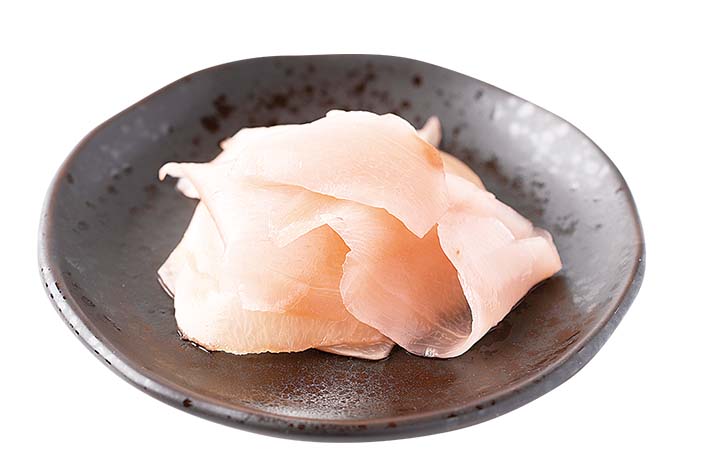
Popular sweet pickled ginger, called gari at sushi restaurants, is made using tender young ginger, which has a mild spiciness. The ginger is thinly sliced along its fibers, blanched in boiling water, then drained. The ginger slices are placed in a container together with a mixture of vinegar, sugar and salt, then pickled in the refrigerator for half a day. This results in a refreshing sharp taste that makes gari the perfect palate cleanser between servings of sushi.