
Nashi Japanese Pear
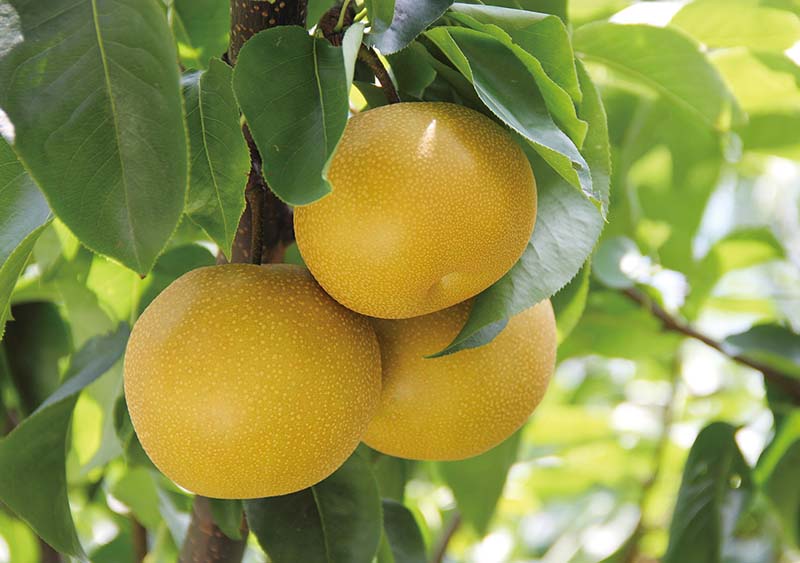
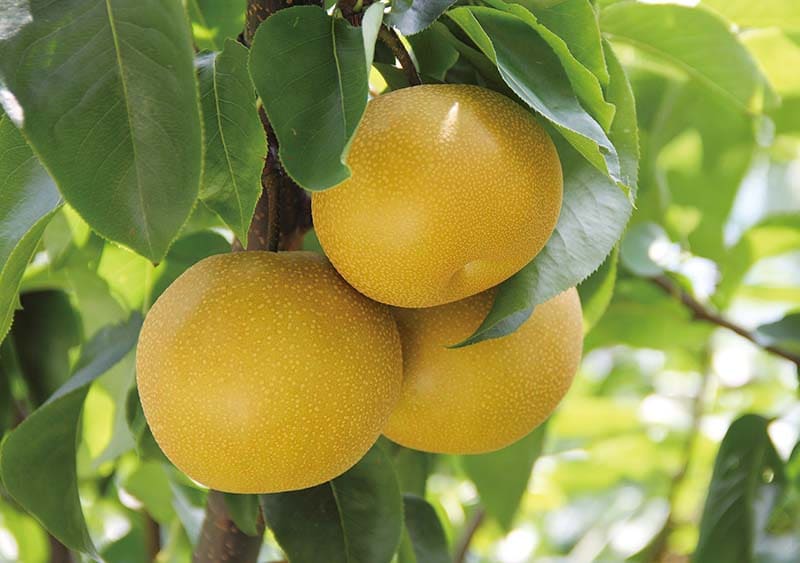
Nashi Japanese pears are in season from late summer to autumn. Unlike European pears, nashi ripen fully on the tree rather than after harvest. Nashi are distinguished by their round shape and juicy, yet firm bite. Their crisp-textured flesh is characterized by high level of sweetness and mild acidity.
Nashi were likely cultivated in Japan as early as the Yayoi period (ca. 400 BCE-300 CE). During the Edo period (1603-1867), extensive cultivar development gave rise to regional varieties with distinctive flavors, textures and appearance, which laid the foundation for the wide range of nashi enjoyed today.
Among the best-known of these are the Kosui, prized for its exceptional sweetness; the Hosui, with a well-balanced sweetness and acidity; the Niitaka, recognized by its large size; and the Nijusseiki, refreshingly tart and gently sweet.
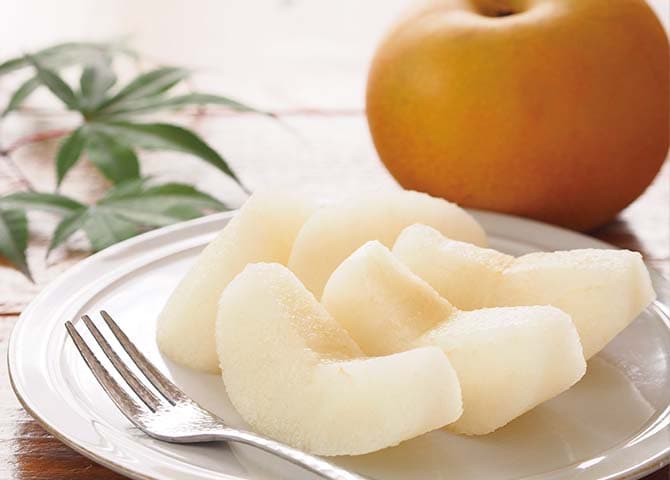
Major production regions include Chiba, Ibaraki, Fukushima and Tochigi prefectures, where differences in climate and soil contribute to subtle variations in flavor and texture. Japanese pears are usually enjoyed fresh, chilled and peeled. They are used in salads and desserts, as well as in juices, jams and various sweets.