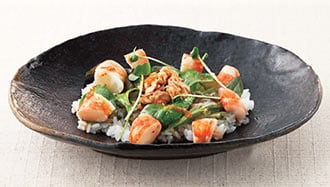

Glassware
The third installment of our series on Japanese Tableware focuses on glassware.
During the sixteenth century, merchant ships from Portugal and Spain arrived in Japan to establish overseas trade routes. They carried with them various goods, including glassware which sparked considerable interest throughout the country. Records indicate that in 1551, Jesuit priest and missionary Francis Xavier presented Ouchi Yoshitaka, daimyo of what is now Yamaguchi Prefecture, with “clear glass vessels, a mirror and eyeglasses of extraordinary beauty.” We can imagine how the clarity and brilliance of such glasswork must have appeared to the Japanese of that time as embodying the sophistication of foreign culture.
In the early seventeenth century, Japan began two centuries of isolation by closing off its borders to most countries. Nagasaki was designated to serve as the country’s only trading port and point of contact with the West. It was here where European and Chinese glassware was introduced, and as their production techniques came to be understood, Japanese artisans were inspired to develop their own unique glass forms and aesthetic. This moment in time is considered the dawn of Japanese glassware.
Decorative motifs
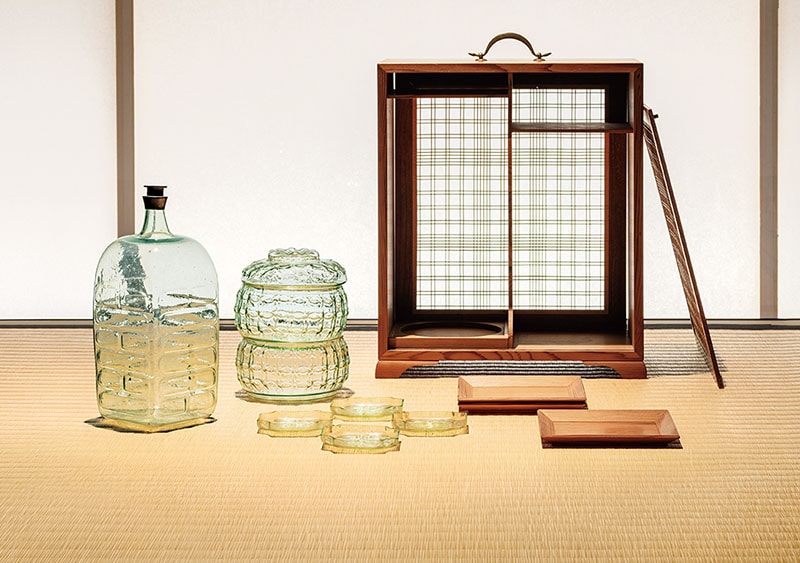
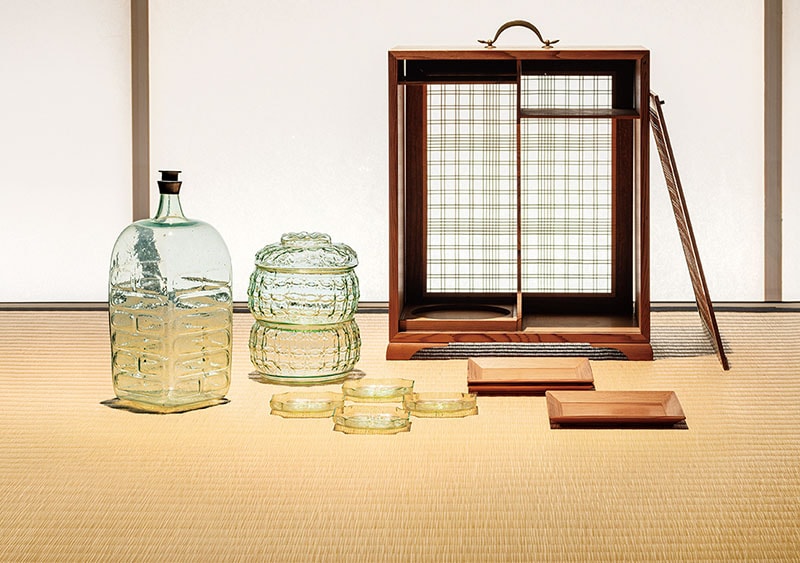
“The Picnic Set” (late 17th C) is a fine example of Japanese glassware dating from this early era. The set was designed for Japanese cherry blossom viewing and other excursions where food and drink were enjoyed outdoors. The sake bottle, tiered food vessel (jubako) and serving dishes, which had traditionally been made of ceramic or lacquerware, are instead crafted in glass. All the pieces were designed to fit neatly into a wood carrying case with a lid and handle for easy transport. This glassware is mold-blown and features classic Japanese designs: the tiered glass jubako is decorated with an interlocking circle pattern known as shippo-tsunagi, referring to shippo, or “seven treasures,” while the serving dishes are adorned in relief with the character for longevity (kotobuki). These traditional auspicious motifs symbolize good fortune and celebration, and their exquisite detail, complemented by the fine workmanship of the wood carrier, suggests that this was an exceptionally luxurious tableware set.
Most early Japanese glasswork was decorated in such a way as to reveal floral or scrolled patterns in relief when the glass was blown into the metal mold. The undulations visible on the surface of the glass are the result of rapid cooling when molten glass came into contact with the mold, an effect that lends the piece a soft, delicate appearance with subtle shadows.
Serving on glassware
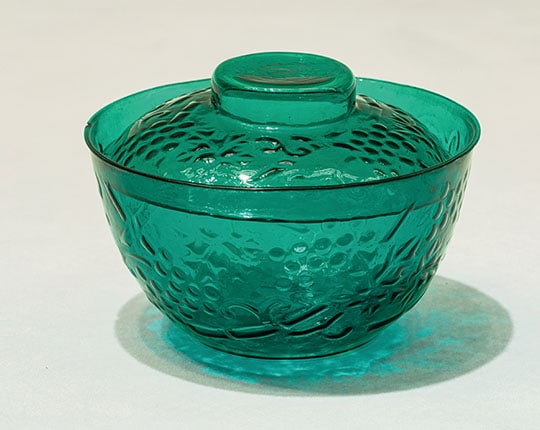
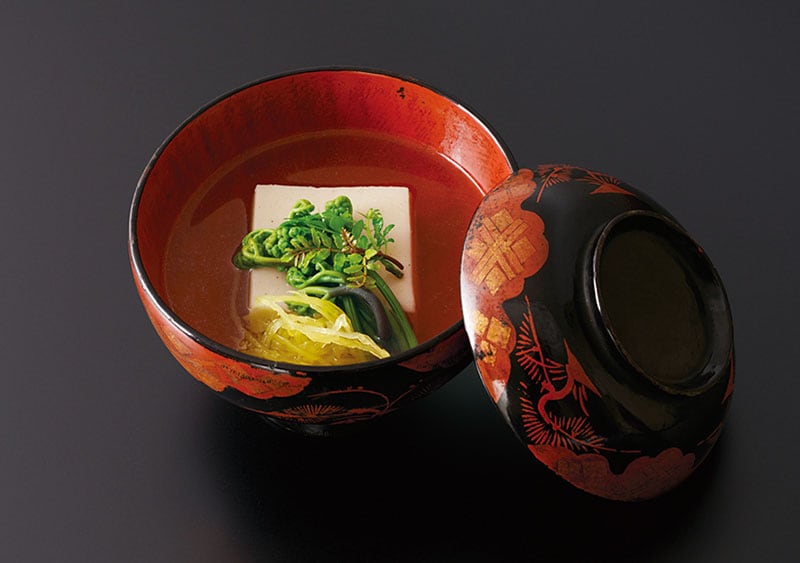
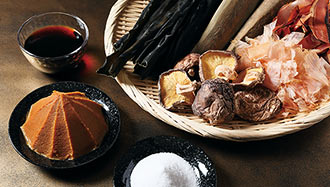
What kinds of food would have been served on such elegant tableware? One example can be seen on the menu for a tea gathering held in July 1717, hosted by court noble and cultural leader Konoe Iehiro (1667–1736). The dishes for this summer repast began with carp sashimi, rice and soup, followed by a dish described as “lidded bidoro bowl.” Bidoro, a Japanese loan word that originates from the Portuguese vidro (glass), refers to glassware originally imported into Japan in the sixteenth century and later came to encompass Japan-made glass products as well. The lidded bidoro bowl held an arrangement of refreshing tofu and green peas—no doubt just slightly visible through the cool-looking glass. This dish was served with a traditional seasoning sauce called irizake, made by simmering umeboshi pickled plums, kombu and katsuobushi bonito flakes in sake to flavor the tofu. Next on the menu came grilled ayu sweetfish, and a clear soup of crane meat, burdock root and hasuimo Japanese taro stalk. The inclusion of crane meat, considered the finest delicacy at the time, signals that no expense was spared, while the use of a bidoro bowl at such an elevated occasion suggests that glass tableware was considered suitable for this highly refined menu.
At another tea gathering in May 1727, Iehiro used a glass vessel to serve sweets that accompany tea at the conclusion of the event. The presentation involved a celadon bowl filled with water, into which a glass container was placed. The glass vessel held sugar candies called konpeito and was covered with a lid of fresh cedar wood. Water in a light blue celadon bowl and a plain wood lid on a glass dish—these are classic aesthetic choices intended to evoke a sense of refreshment and coolness. Konoe Iehiro used glassware only from May through July to offer his guests a sense of relief from the heat of summer.
Giyaman and kiriko
During the Edo period (1603-1867), other kinds of glass tableware were introduced to Japan in addition to bidoro. Imported glassware and similar pieces made in Japan around this time are known as giyaman, derived from the Dutch word for diamond (diamant). Giyaman was a general term for clear colorless glassware; among these was cut glass, also known as kiriko. Imported cut glass and domestically made cut glass were produced using different techniques: imported cut glass was produced using a rotary tool to cut the glass, while Japanese-made cut glass was crafted by hand, every cut painstakingly hand carved using a metal file. Japanese craftsmen must have thought that giyaman was prized highly enough to justify the exacting efforts required to produce it. Initially made from colorless transparent glass, kiriko later came to be produced in a variety of colors.
Around 1850, Momokawaro, the leading haute cuisine restaurant in Edo (Tokyo), used various giyaman cut-glass dishes. Meals would begin with a yokan sweet bean jelly served on a giyaman cut-glass dish. Diners were served in a room where black lacquered tables were arranged upon a red carpet. The table settings featured drinking glasses, dishes, sake flasks and chopstick holders—all of giyaman cut glass. Six kinds of side dishes would be served on giyaman vessels, and the meal would progress with marinated carp on a square-shaped giyaman dish, followed by sea bream served on a giyaman plate lined with a bamboo mat, concluding with soup, rice and pickled vegetables.
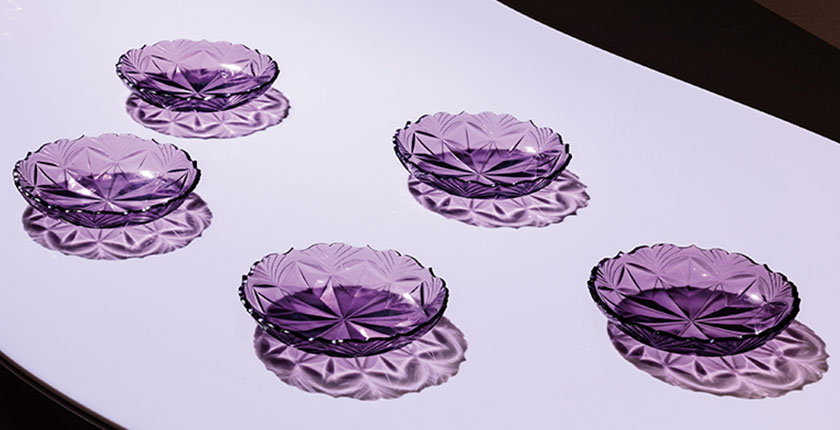
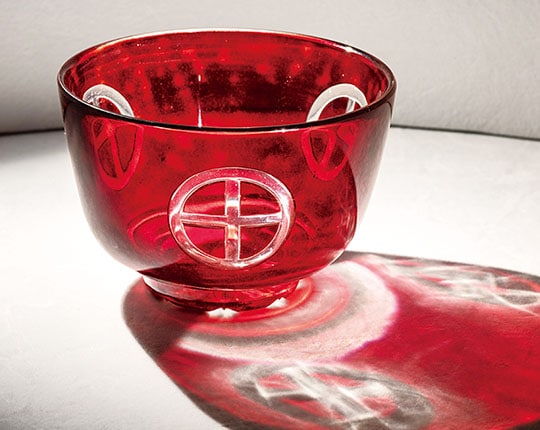
From the time of its earliest production in Japan, glassware has been served alongside the finest ceramic and lacquer wares as luxury tableware. With its radiant brilliance and refreshing beauty, glassware has continued to grace Japanese tables from the Edo period to the present day.
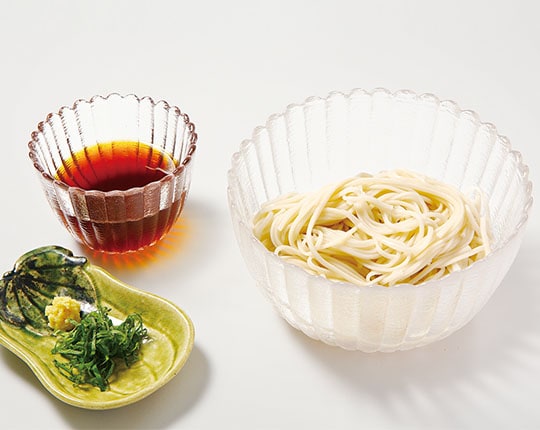
Note: Dates in photo captions reflect current scholarly dating of the works.
Yoko Azuma was born in 1959. A specialist in glass crafts, she is currently specially appointed curator at the MIHO MUSEUM, Shiga Prefecture. Her numerous curated exhibitions include: “The Spirit of Japanese Glass: From Magatama to Vidro/Diamant” (2006); “Ancient Glass: Feast of Color” (2013); “The Beauty of Japanese Glass: The Bindeisha Collection” (2017); and “Ancient Glass: Brilliant Design, Stunning Technique” (2024). She is a board member of the Association for Glass Art Studies, Japan.