
Yuzu

Yuzu is a fragrant citrus fruit introduced from China centuries ago. Records indicate that by the sixteenth century, yuzu was already being enjoyed at home in the form of yuzu-miso paste. Today it is widely used and has become integral to Japanese cuisine. Nowadays, Kochi Prefecture accounts for roughly half the country’s yuzu harvest.
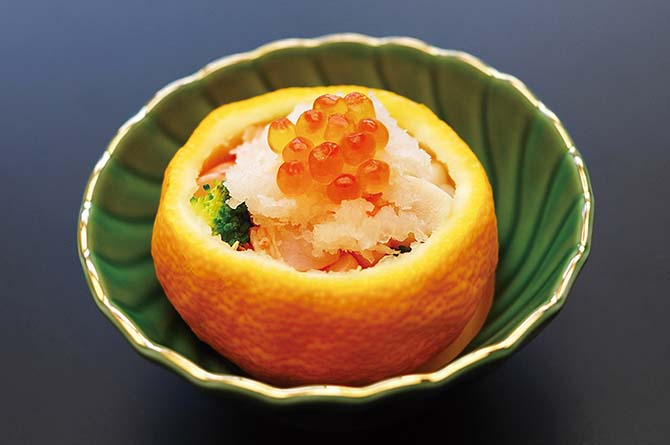
Yuzu peel, juice and zest add a complex and intense citrusy fragrance. Sliced peel is sprinkled over udon or soba noodles as a condiment. The juice is the base for yuzu-ponzu citrus-flavored soy sauce, a seasoning or dipping sauce for hot pot. Hollowed-out yuzu fruit becomes an aromatic serving vessel called yuzu-gama (“yuzu-pot”), inviting diners to enjoy its flavor and scent. Yuzu kosho is a paste of yuzu peel, chili pepper and salt that adds a citrusy, spicy kick to foods. Yuzu is also popular in sorbets, cakes and jams that highlight its tangy taste and refreshing aroma.
Yuzu carries strong seasonal associations, including the body-warming tradition of yuzu baths. On the winter solstice, whole yuzu citrus are floated in a hot bath where the heat releases fragrant, natural oils from the fruit, a custom believed to warm the body and ward off illness through the cold months.