

Miso Soup with Kabocha and Japanese Eggplant
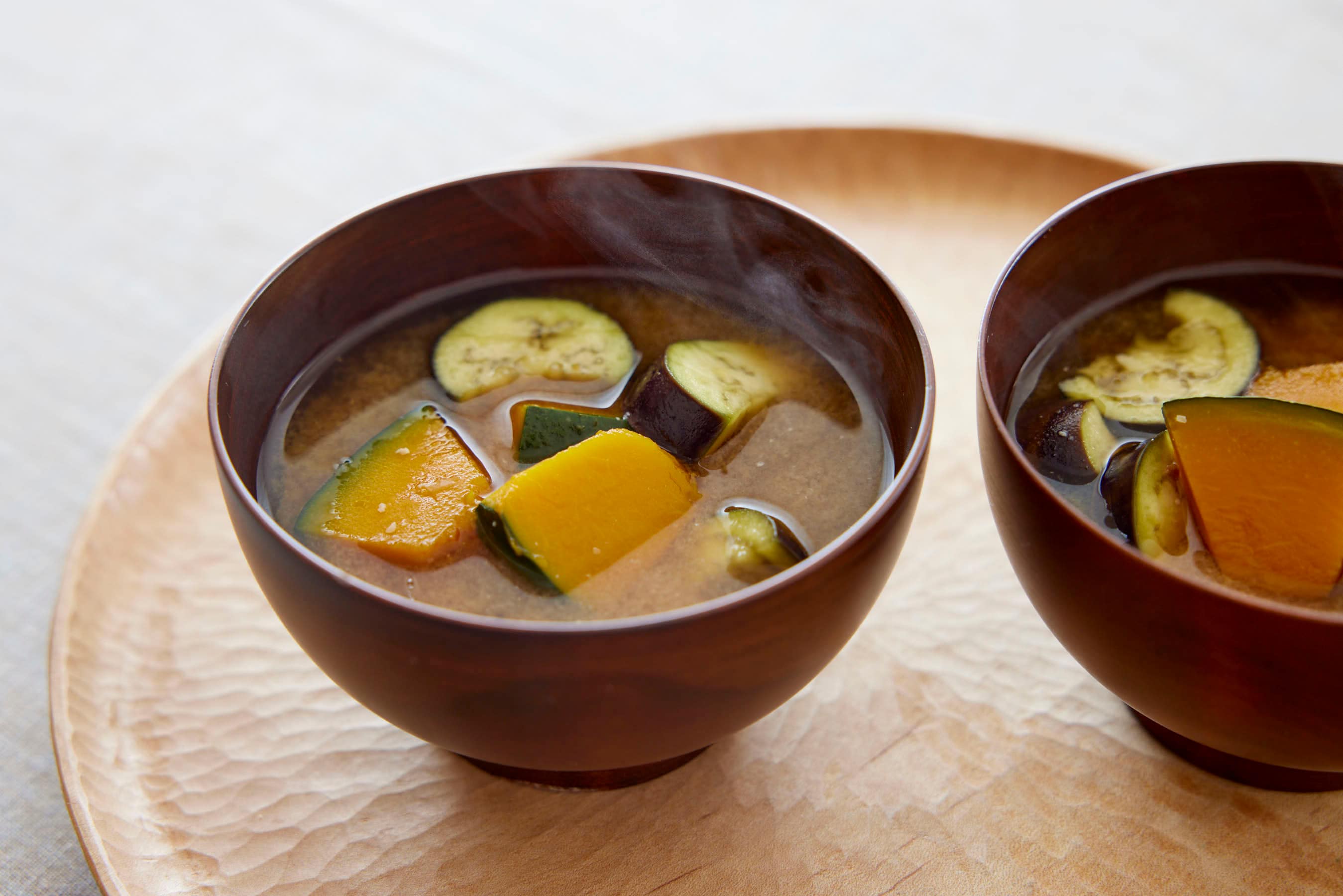
Miso soup is a flavorful soup that is essential to Japanese home cooking. It is enjoyed with seasonal vegetables and other ingredients of your choice. Here, we introduce miso soup made with kombu dashi.
- by Yuko Ihara
Table of Contents
What is Miso Soup?
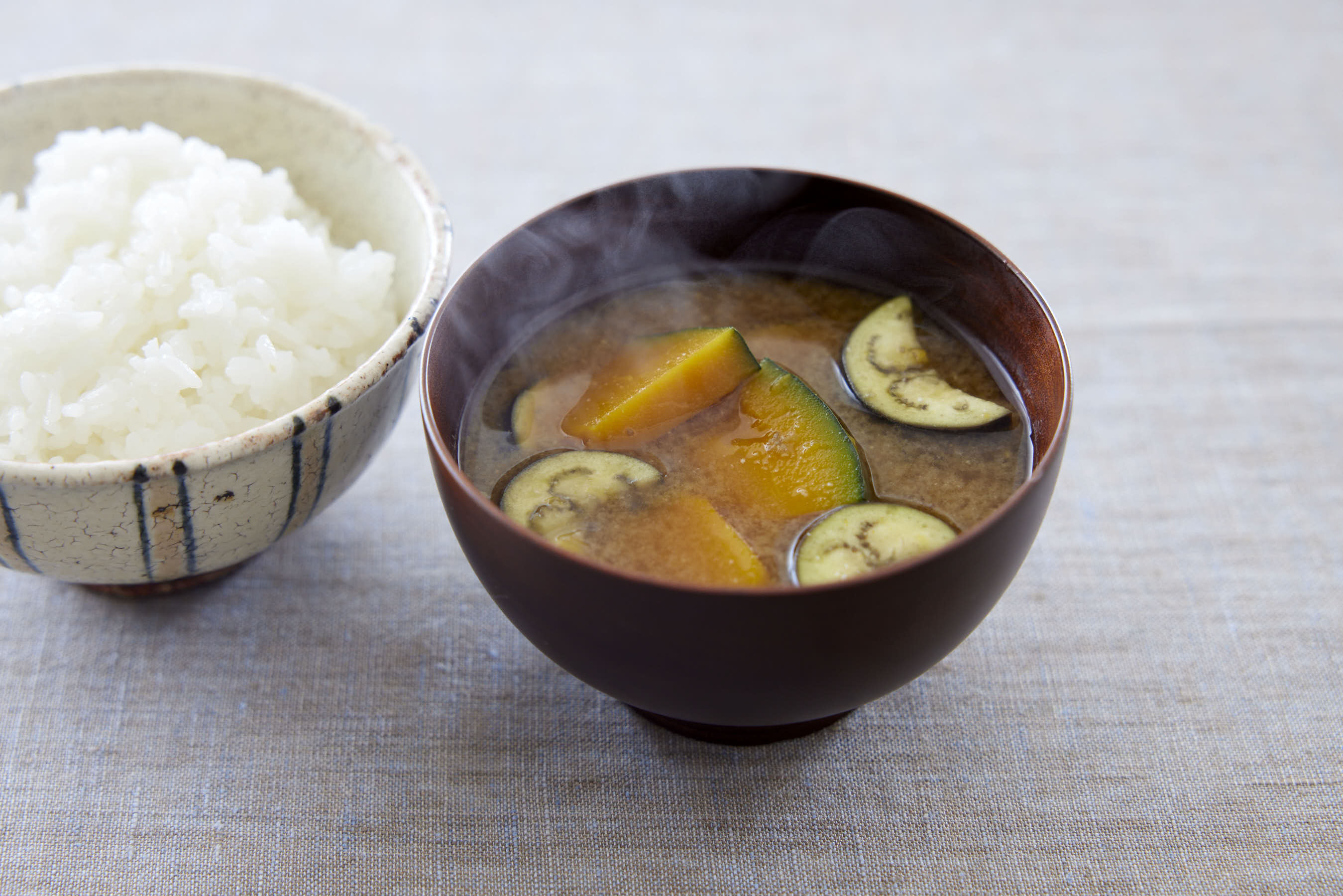
Miso soup (味噌汁) is a soup made by simmering ingredients in dashi and seasoning it with miso, a traditional Japanese seasoning. It is widely enjoyed as an everyday home-cooked dish, served together with rice. The cooking method is simple, but the flavor changes depending on the type of dashi and miso used, allowing for many different variations.
The Secret to Delicious Flavor of Miso Soup
Miso is a fermented seasoning. It has the rich flavor of soybeans and is high in amino acids, giving it strong umami that helps bring the overall flavor of the dish together.
Things to Remember When Making Miso Soup
Turn off the heat shortly after adding the miso
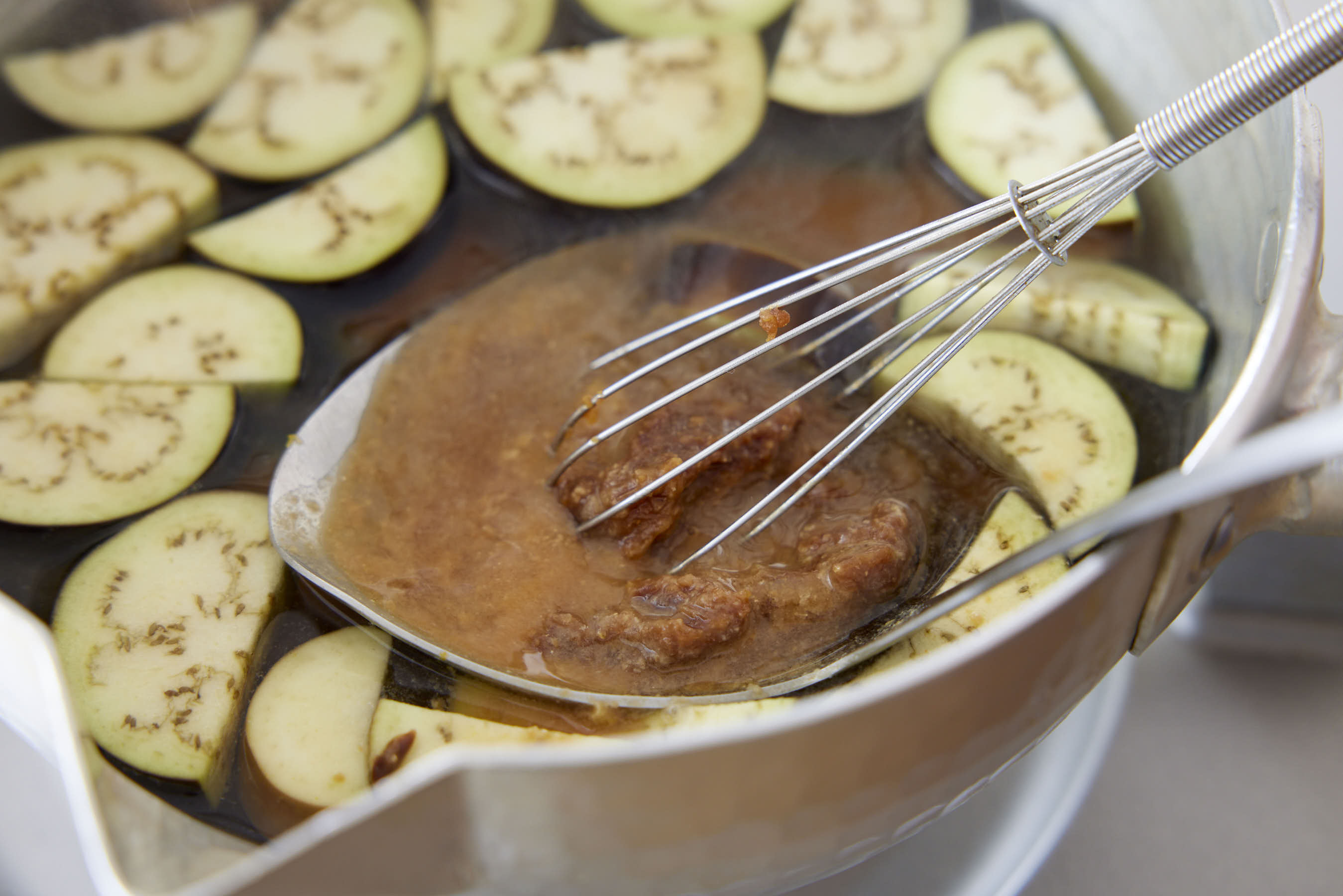
If miso is simmered for too long, its aroma will fade, so dissolve it into the soup at the final stage, after the ingredients are cooked through. Then turn off the heat just before it comes to a boil again. This state just before boiling is called “niebana (煮えばな)”, and it is considered an important moment when the aroma of miso gently spreads.
Ingredients (Servings: 2):
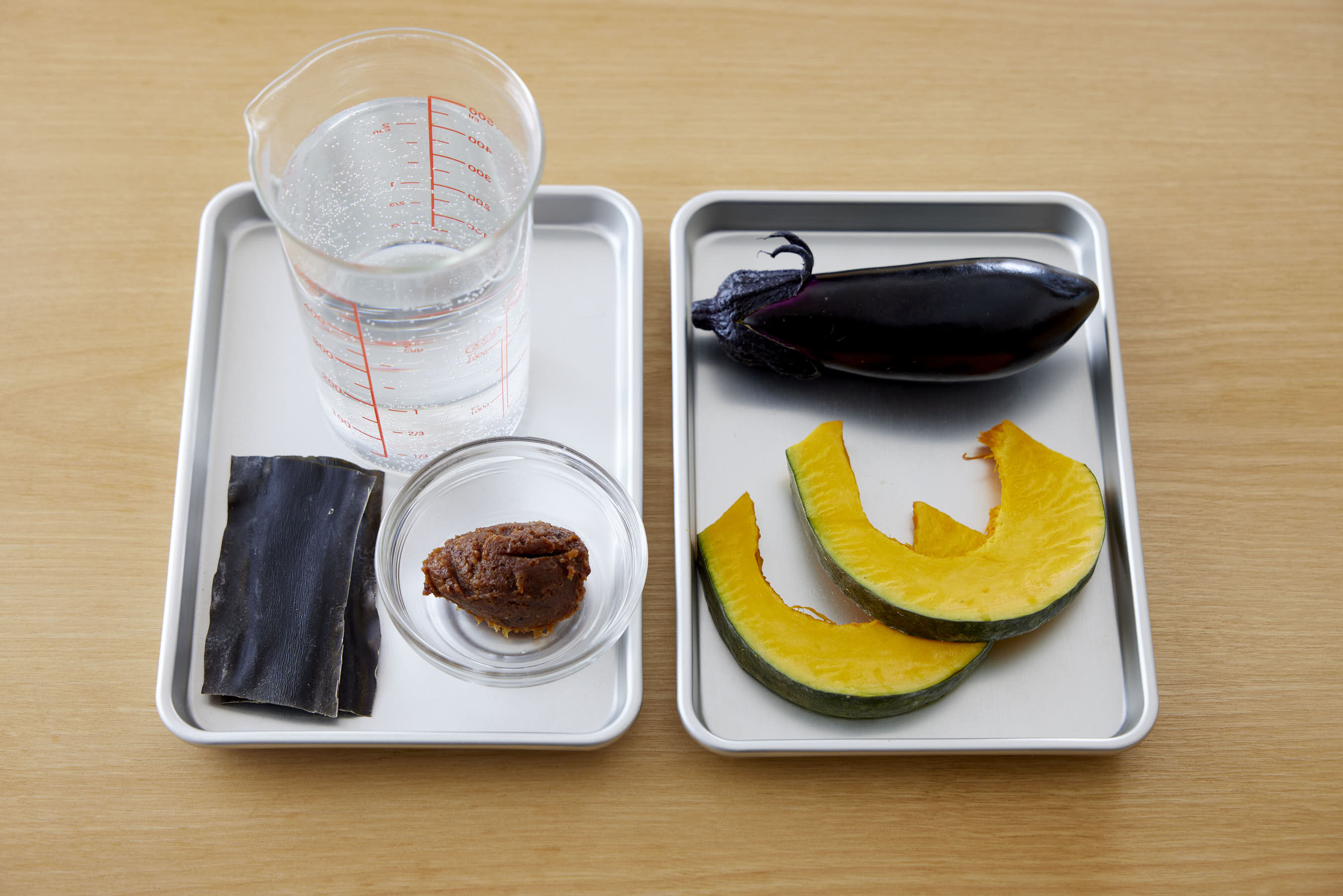
Kombu Dashi:
Kombu - 10g (0.4 oz.)
Water - 500ml (16.9 fl oz.)
*Use 300ml of the prepared kombu dashi
Kabocha - 60g (2.1 oz.)
Japanese eggplant - 1 (80g / 2.8 oz.)
Miso - 1 1/2 Tbsp
Calories and Cooking Time

* Nutrition facts are for one serving.
* Excludes the time for soaking the kombu in water.
How to Make the Kombu Dashi
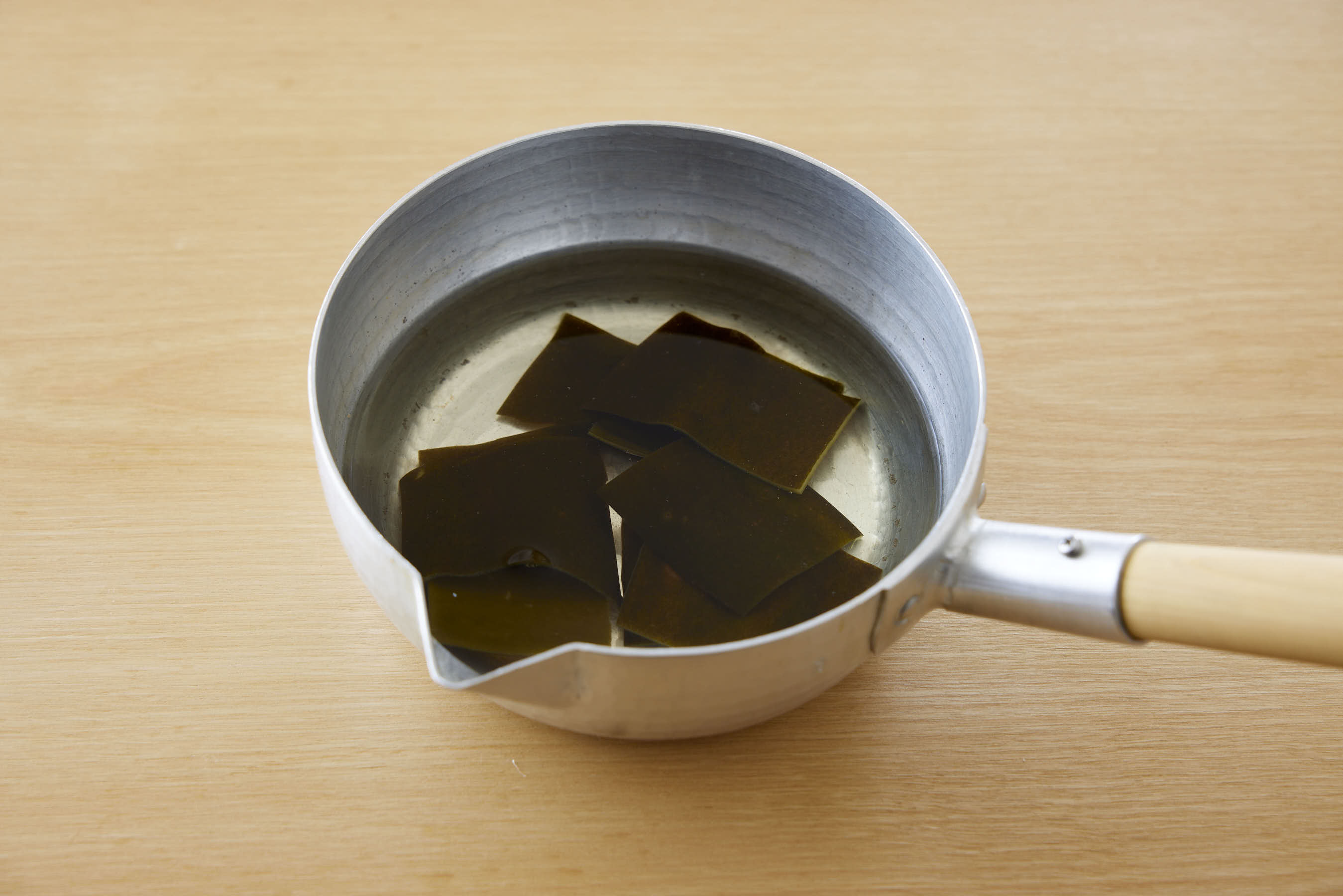
- 1Put the kombu and water into a pot and let it sit for 3 hours.
- TipsUnlike katsuobushi (dried bonito flakes) and kombu dashi—which combines kombu with bonito flakes—dashi made with kombu alone has a refined and gentle flavor. To draw out as much umami as possible, soak the kombu in water for a long time before cooking.
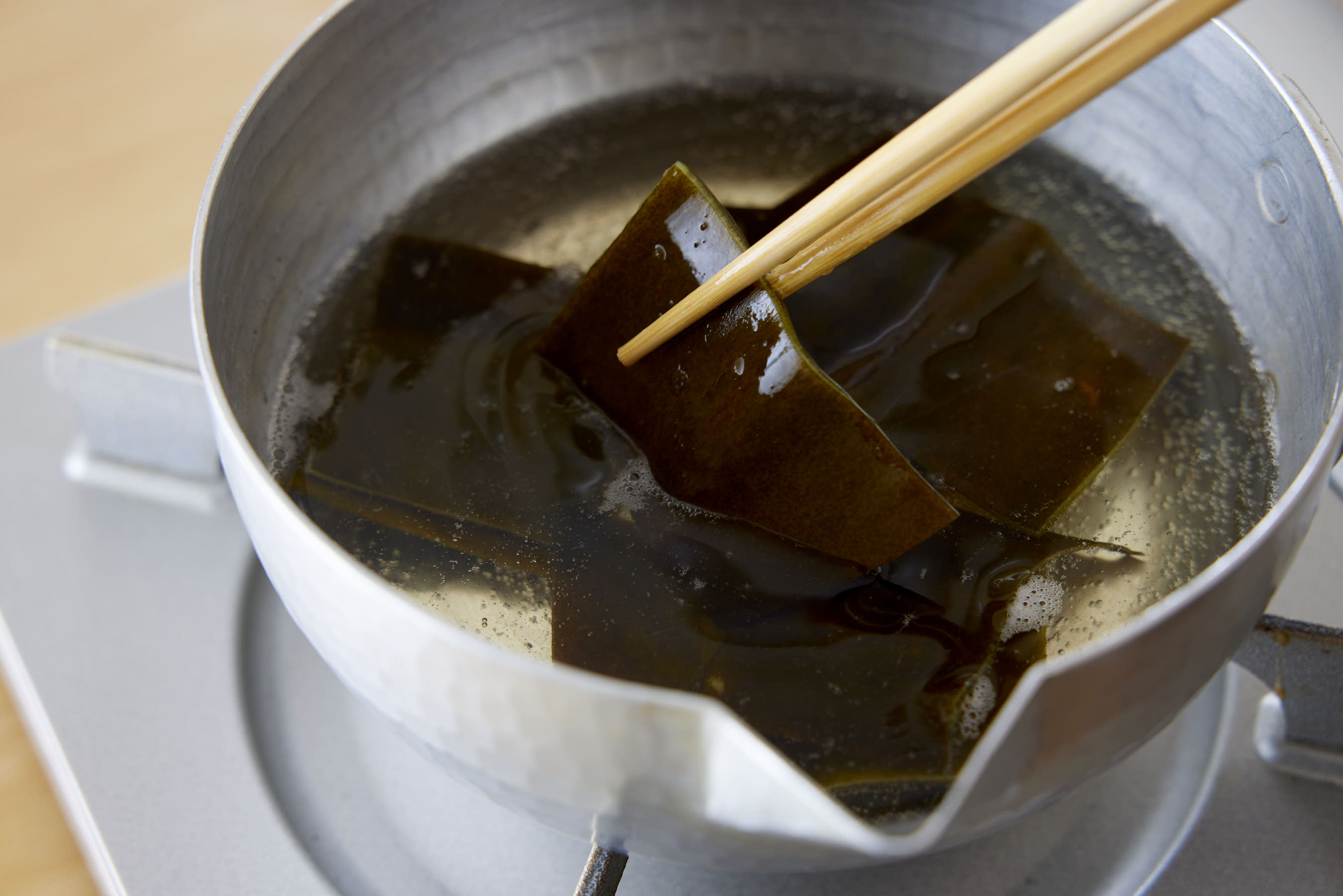
- 2Place the pot with the kombu over medium-low heat, turn off the heat just before it comes to a boil, and remove the kombu. A good guideline is when small bubbles appear around the inside edge of the pot.
- TipsThe kombu used to make dashi is edible, so don’t throw it away. You can cut it into bite-sized pieces to be used in soups and simmered dishes.
Watch video for making the kombu dashi
How to Make the Miso Soup
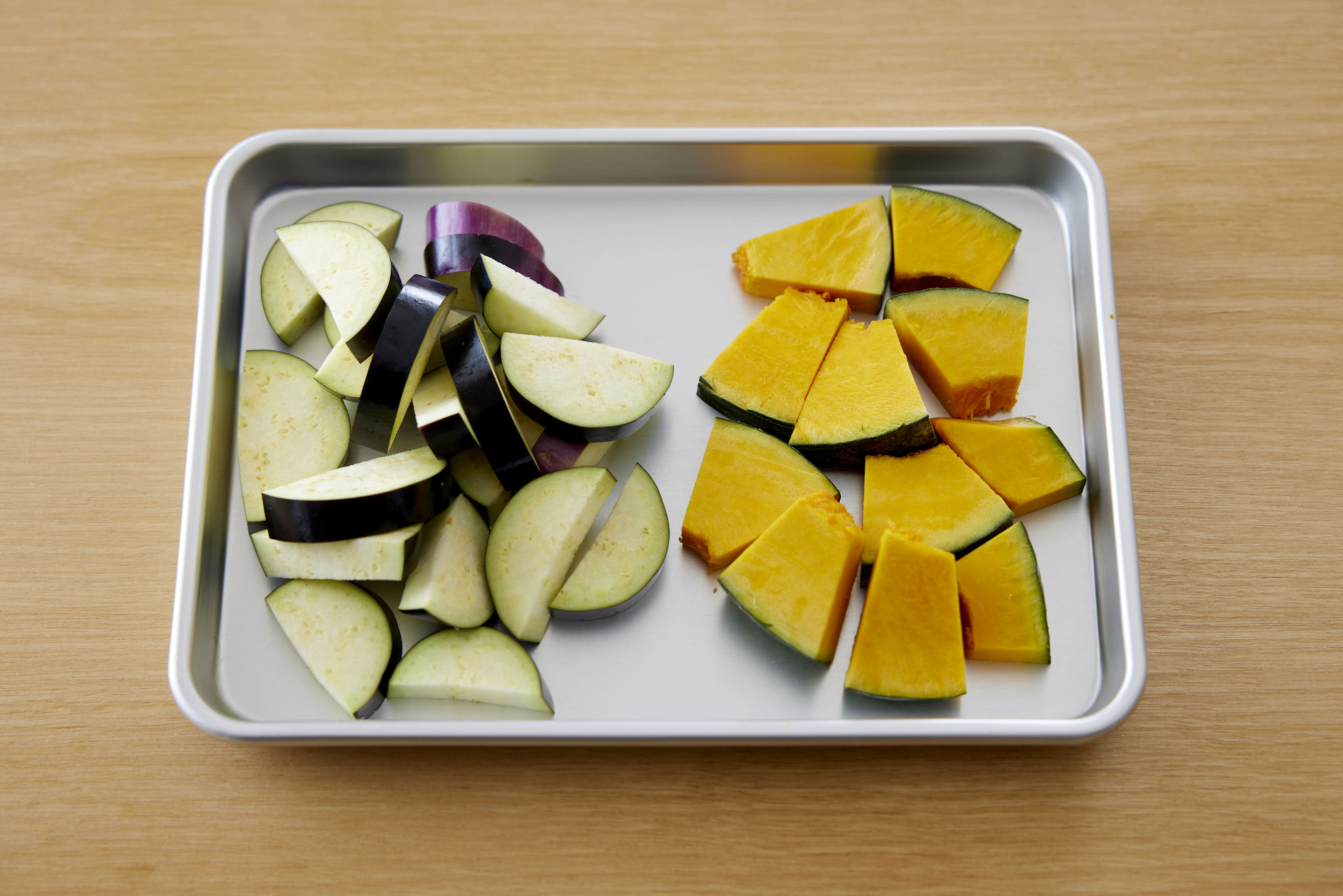
- 1Cut the kabocha into easy-to-eat pieces. Cut the eggplant into 1 cm (0.4 in.) half-moons.
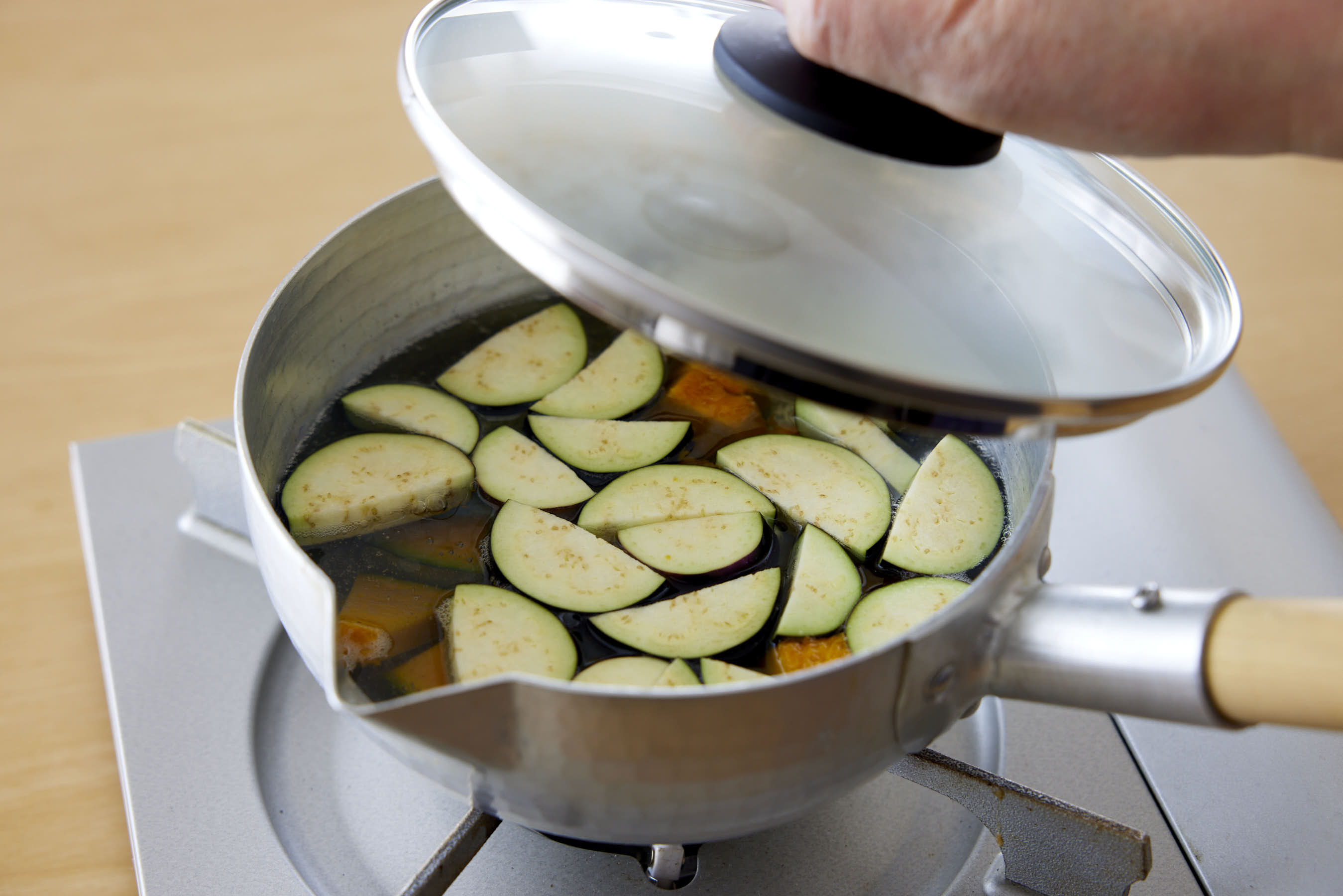
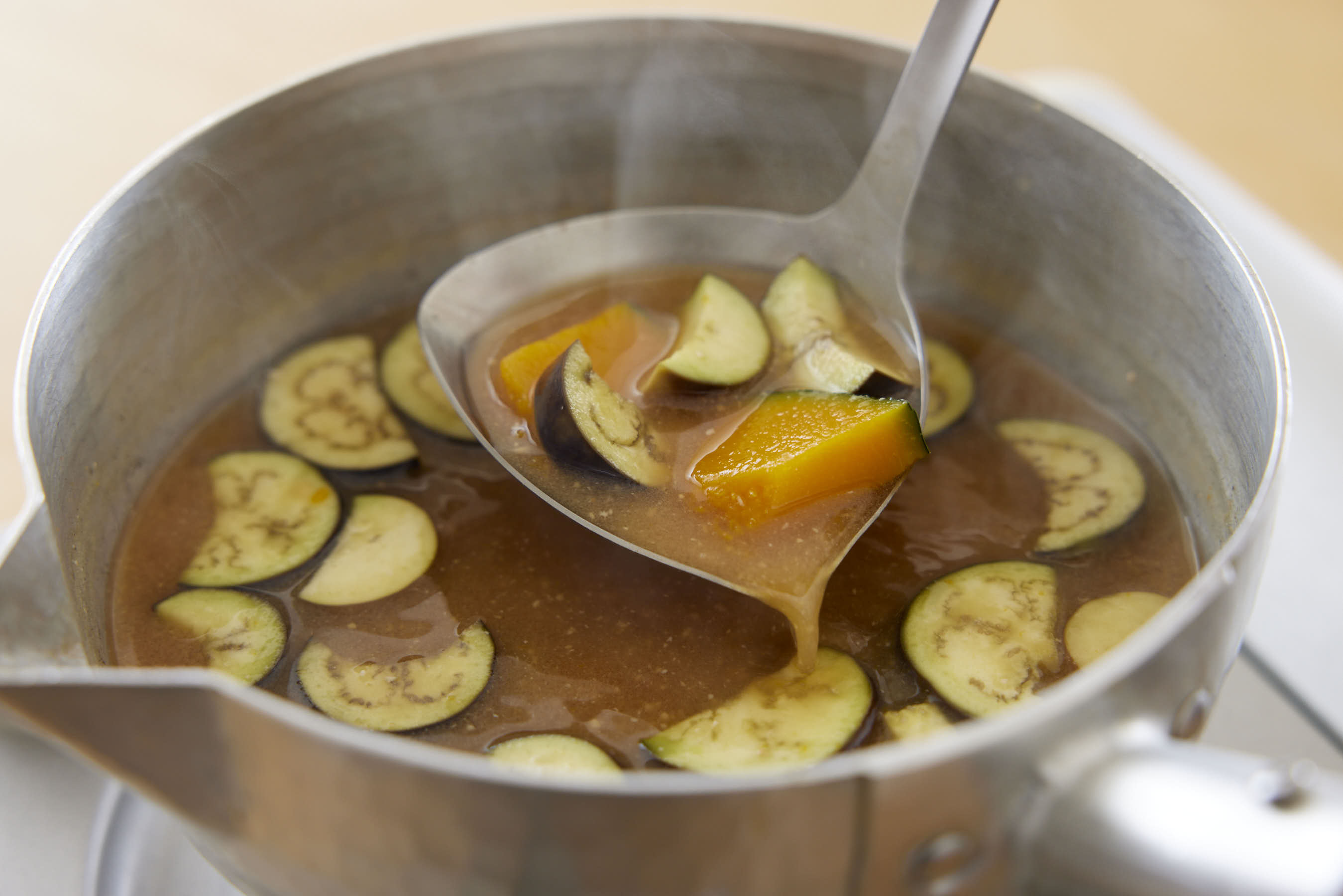
- 2Put 300 ml (10.1 fl oz.) of the kombu dashi from step 1 into a pot and heat over medium heat. When it starts to gently bubble, add the kabocha and eggplant, cover, and simmer over low heat for about 4 minutes.
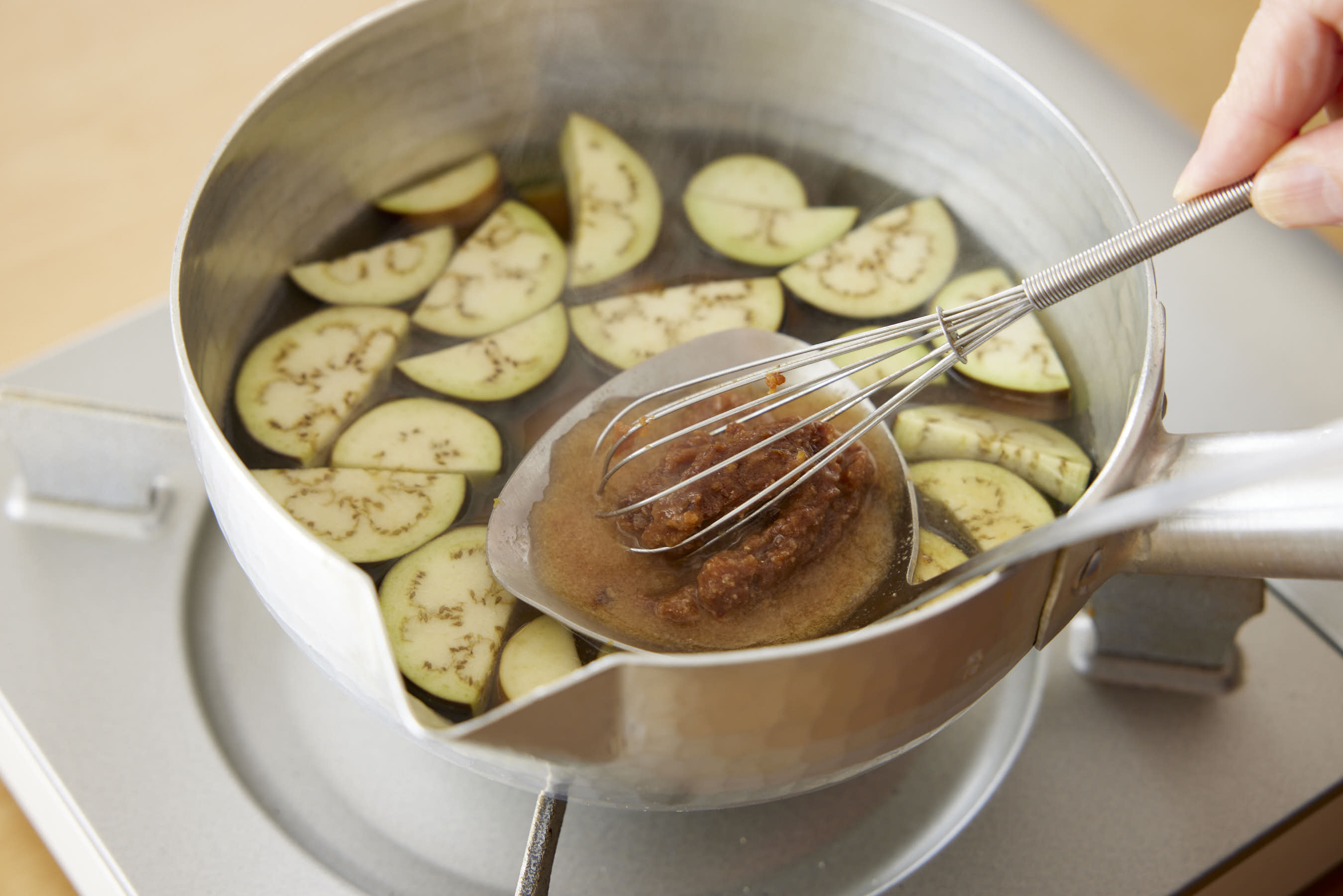
- 3Place the miso in a ladle and gradually dissolve it into the soup in the pot. Stir everything together, heat over medium heat, and turn off the heat just before it comes to a boil.
- TipsBe careful not to simmer the miso for too long, as its aroma will fade. Turn off the heat once the pot begins to give off the gentle aroma of miso.
Watch video for making the miso soup
FAQ
What types of miso are there?
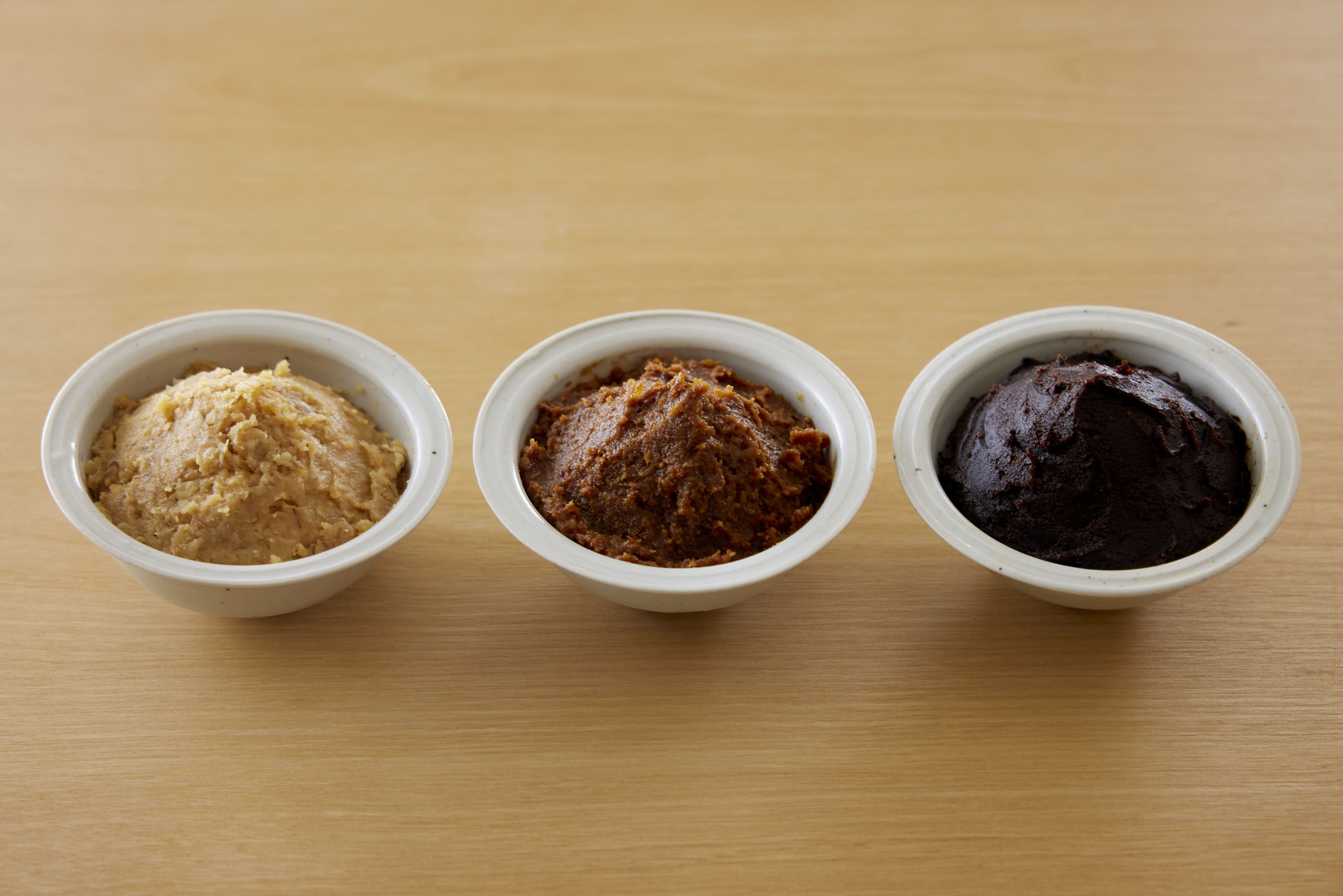
Miso is a fermented food made from “koji” (steamed grains cultivated with koji mold), soybeans, and salt. It can be divided into barley miso, made with barley koji (left in the photo); rice miso, made with rice koji (center); and soybean miso, made by adding koji starter directly to soybeans (right). The color and flavor vary greatly depending on the salt content and production method, and many different types of miso exist throughout Japan. One of the appeals of miso is the enjoyment of finding the flavor you like best.
What vegetables go well with miso soup?
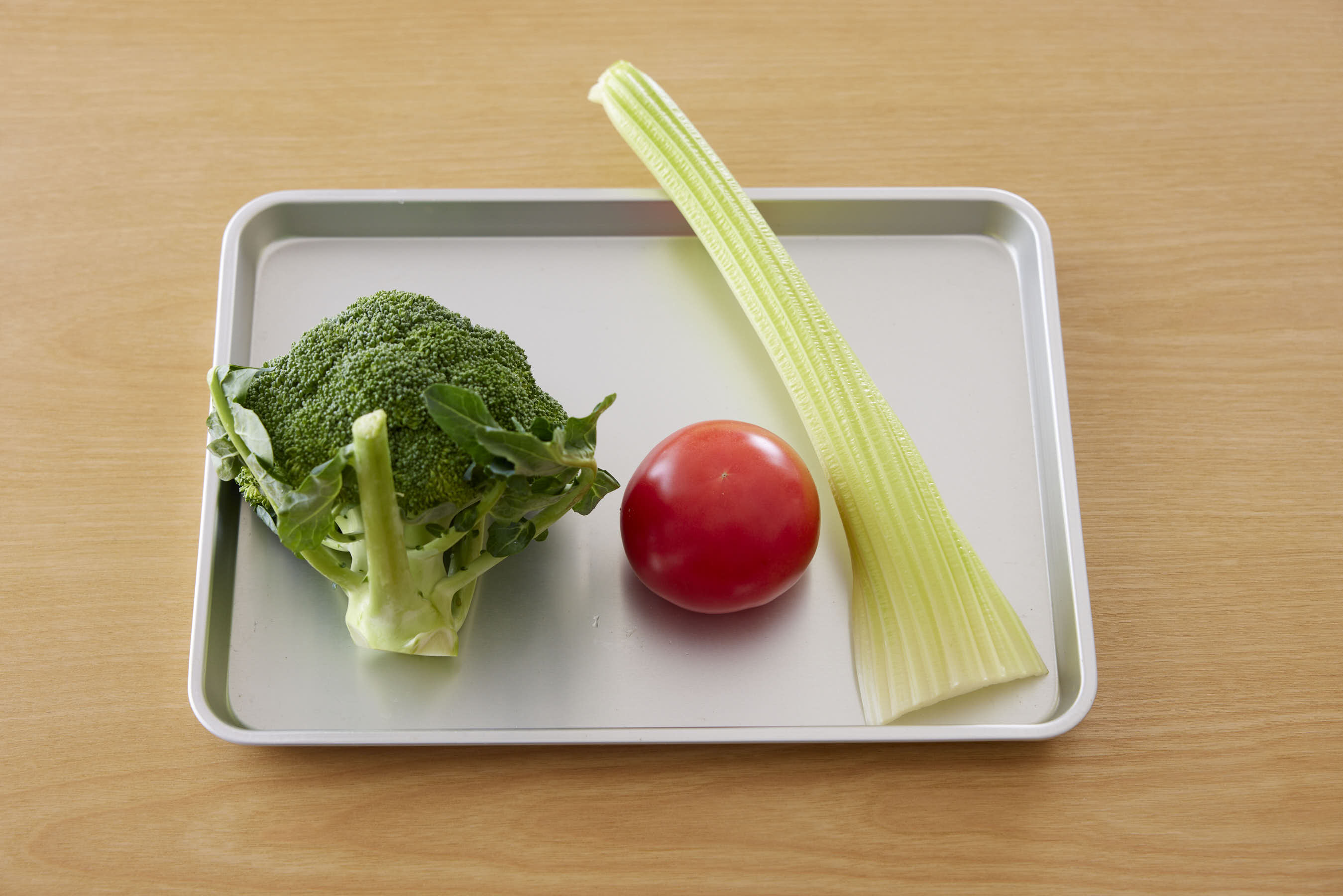
There are very few vegetables that do not go well with miso soup. Potatoes and other root vegetables, as well as leafy greens, work well, and you can also make delicious miso soup with vegetables not commonly used in Japanese cuisine. Celery, tomatoes, and broccoli are also recommended ingredients for miso soup.
Making Kombu Dashi Without Heat
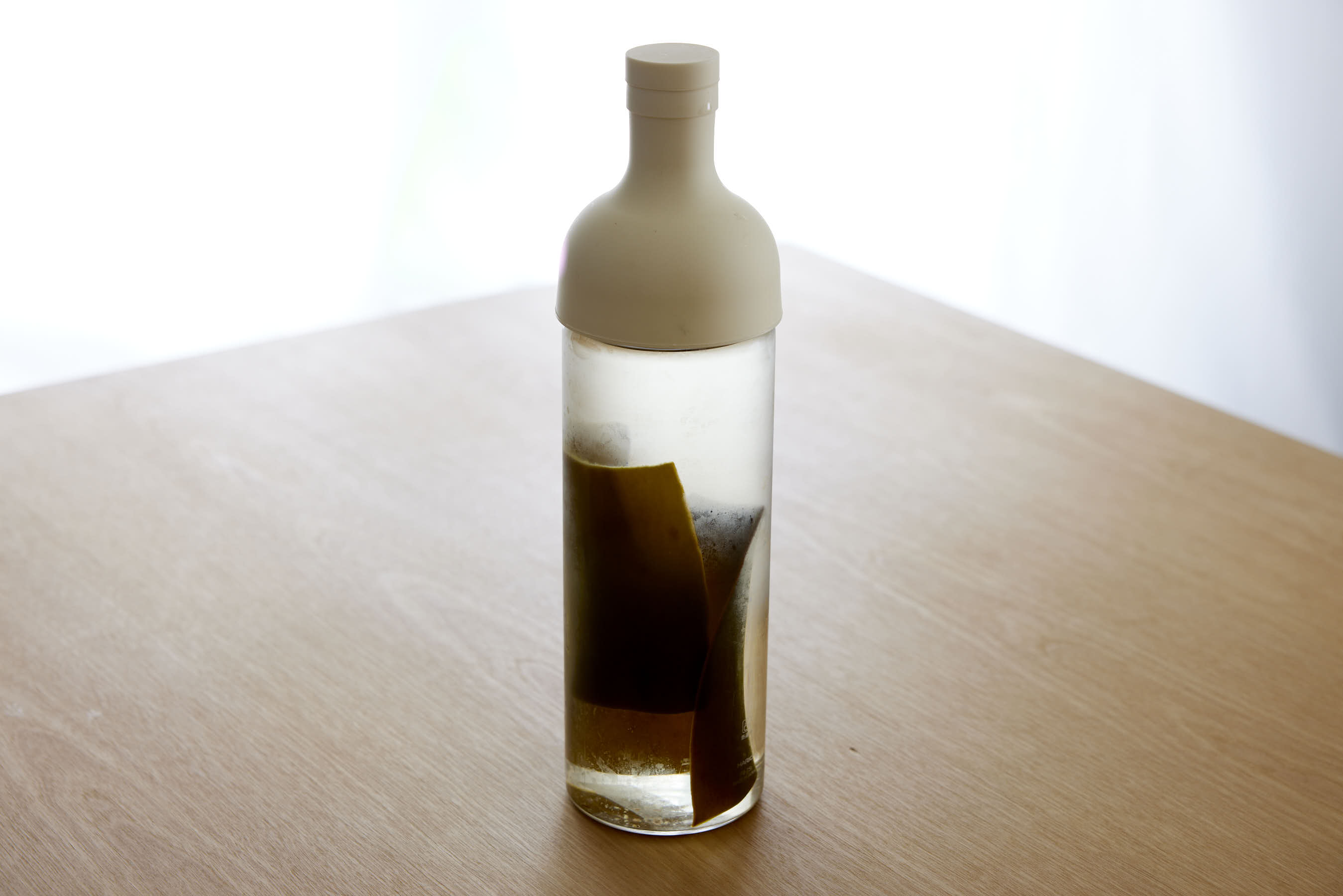
Kombu dashi can also be made simply by soaking kombu in water for a long time. Just put water and kombu in a bottle and leave it in the refrigerator overnight. Compared with dashi made by simmering, it has a cleaner, lighter flavor. Use it up within about 2 to 3 days.
About the Recipe Author

Yuko Ihara
Having lived in England and the U.S., Yuko Ihara is well-versed in a wide range of culinary genres. As a culinary researcher, she creates dishes for magazines and books, develops corporate menus, and also engages in product development and food consulting. She introduces easy-to-follow tips on how to make delicious food at home, emphasizing the importance of seasonality and healthful eating. When travelling, she loves to search for delicious vegetables and ingredients.
Instagram: @iharayukoo
About Washoku Lesson
Washoku Lesson is special content offering detailed and easy-to-understand explanations, including tips for making classic Japanese dishes as well as the many ways of enjoying these, and introductions to special Japanese cooking utensils and annual events.

Related Recipes
 10min
10min 43kcal
 512mg
512mg
- 10min
- 79kcal
- 800mg
- 15min
- 361kcal
- 900mg
- 25min
- 152kcal
- 1000mg